
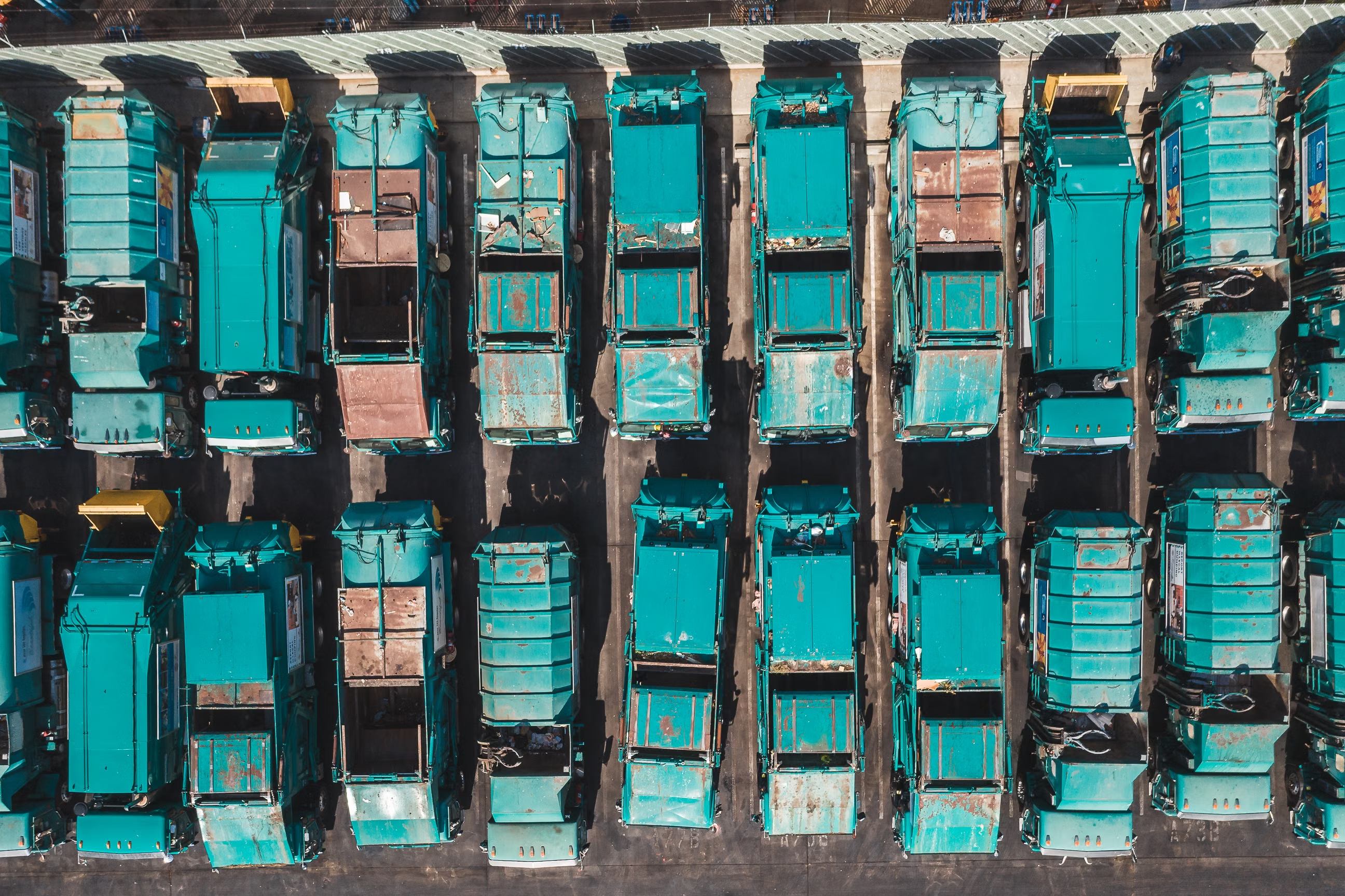
HEADLINE
‘Lagos recorded 1,866 waste truck trips in seven days’
OPENING HOOK
Managing refuse in a mega-city of over twenty million residents requires industrial-scale logistics, where every single truck movement directly impacts public health and urban drainage.
WHAT HAPPENED
The Lagos Waste Management Authority (LAWMA) recorded 1,866 waste truck trips over a span of seven days, successfully evacuating more than 18,660 metric tonnes of municipal solid waste across various residential and commercial zones in Lagos State.
WHO ARE THE KEY PLAYERS
Lagos Waste Management Authority (LAWMA), the state government agency responsible for waste management policy and operational oversight in Lagos State. Private Sector Participants (PSPs), the licensed waste collection operators contracted to service residential and commercial tenements across the metropolis.
UNDERSTANDING THE LOCATION
Lagos State, located in the South-West geopolitical zone of Nigeria, serves as the country's commercial nerve centre. Its high population density, intense commercial activities, and coastal topography make efficient municipal waste collection essential for preventing localized flooding and waterborne diseases.
BACKGROUND AND CONTEXT
Urban waste management in Lagos has evolved through successive administrative reforms aimed at moving away from indiscriminate dumping towards containerized collection and controlled landfill disposal. The state relies on a public-private partnership model involving LAWMA as the regulator and private operators handling primary and secondary collection.
EXPLAINING IMPORTANT REFERENCES
Municipal solid waste refers to everyday items discarded by the public, such as food packaging, plastics, and domestic refuse. Metric tonnes represent a unit of mass equal to 1,000 kilograms, used here to measure the massive volume of debris cleared from streets and transfer loading stations.
IMPACT ANALYSIS
Clearing over 18,660 metric tonnes of refuse within a week helps prevent blocked drainage channels, which are a primary cause of flash floods during heavy rainfall in low-lying coastal areas like Lagos. Consistent evacuation also reduces the proliferation of disease vectors such as mosquitoes and rodents, protecting public health.
WHAT HAPPENS NEXT
LAWMA is expected to maintain monitoring of PSP collection schedules and enforce compliance across residential and commercial districts to sustain urban sanitation standards.
HERO PERSPECTIVE
LAWMA documented 1,866 waste truck trips clearing 18,660 metric tonnes over seven days in Lagos State. This operational output illustrates the massive logistical tonnage required to service Nigeria's most densely populated commercial hub.
CLOSING
Sustained urban sanitation in Lagos depends on continuous operational coordination between state regulators, licensed private waste collectors, and residents observing proper disposal habits.