
HEADLINE
Srebrenica Commemorates 31 Years Since Genocide, Ten Newly Identified Victims Laid to Rest
OPENING HOOK
Three decades after one of Europe's darkest chapters since World War II, Srebrenica once again became a focal point for remembrance, grief, and the enduring quest for justice, as thousands gathered to mark the 31st anniversary of the genocide.
WHAT HAPPENED
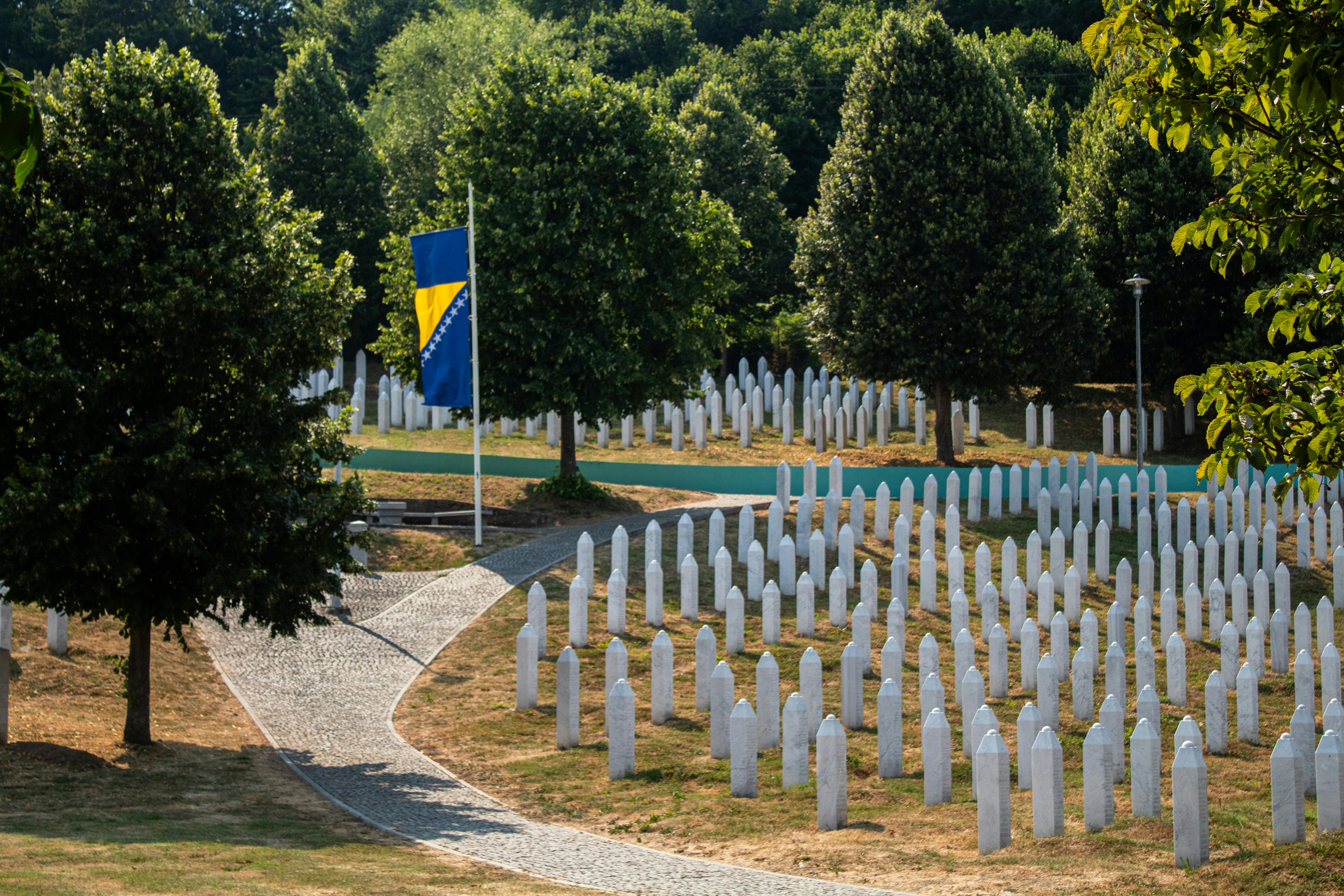
On this solemn occasion, ten newly identified victims of the Srebrenica genocide were laid to rest at the Potočari Memorial Centre and Cemetery, joining thousands already interred. The ceremony drew large crowds, including survivors, family members, and international dignitaries, all united in remembering the more than 8,000 Bosnian Muslim men and boys executed in July 1995. The annual commemoration serves as a powerful testament to the lives lost and a persistent call for accountability and recognition.
WHO ARE THE KEY PLAYERS
The principal victims of the Srebrenica genocide were the **Bosnian Muslims**, also known as Bosniaks, primarily men and boys from the Srebrenica enclave. The perpetrators were units of the **Army of Republika Srpska (VRS)**, the military force of the self-proclaimed Bosnian Serb Republic, under the command of General Ratko Mladić and political leadership of Radovan Karadžić. The **United Nations Protection Force (UNPROFOR)**, specifically Dutch peacekeepers, were present in Srebrenica, which had been declared a UN 'safe area,' but were tragically unable to prevent the atrocities. International bodies like the **International Criminal Tribunal for the former Yugoslavia (ICTY)** and the **International Court of Justice (ICJ)** have played crucial roles in prosecuting those responsible and officially recognizing the events as genocide.
UNDERSTANDING THE LOCATION
**Srebrenica** is a town and municipality located in eastern Bosnia and Herzegovina, specifically within the Republika Srpska entity. Nestled in a mountainous region, its strategic location and predominantly Bosniak population before the war made it a significant target during the Bosnian War. The **Potočari Memorial Centre and Cemetery**, located just outside Srebrenica, is the primary memorial and burial site for the victims of the genocide, serving as a permanent reminder of the atrocities committed there.
BACKGROUND AND CONTEXT
The Srebrenica genocide occurred in July 1995, during the brutal **Bosnian War** (1992-1995), a conflict that erupted from the breakup of Yugoslavia. Following Bosnia and Herzegovina's declaration of independence, Bosnian Serb forces, with support from Serbia, initiated a campaign to create an ethnically pure Serb state, leading to widespread ethnic cleansing. Srebrenica, a Bosniak-majority enclave, was declared a United Nations 'safe area' in 1993, theoretically under the protection of UN peacekeepers. However, in July 1995, Bosnian Serb forces overran the enclave, separating Bosniak men and boys from women and children, and systematically executing them over several days, burying them in mass graves.
EXPLAINING IMPORTANT REFERENCES
**Genocide** is defined under international law as acts committed with intent to destroy, in whole or in part, a national, ethnic, racial, or religious group. The International Criminal Tribunal for the former Yugoslavia (ICTY) and the International Court of Justice (ICJ) have both formally ruled that the massacre at Srebrenica constituted an act of genocide. The **Bosnian War** was an international armed conflict that involved Bosnia and Herzegovina, and the self-proclaimed Bosnian Serb and Bosnian Croat entities, with significant external involvement. The **UN Protection Force (UNPROFOR)** was the first large-scale UN peacekeeping mission in the former Yugoslavia, established in 1992, tasked with ensuring the security of humanitarian aid and protecting designated 'safe areas,' a mandate it struggled to fulfill in Srebrenica. The **International Criminal Tribunal for the former Yugoslavia (ICTY)** was a UN court that prosecuted serious crimes committed during the Yugoslav Wars, while the **International Court of Justice (ICJ)** is the principal judicial organ of the United Nations, settling legal disputes between states and giving advisory opinions.
IMPACT ANALYSIS
The Srebrenica genocide left an indelible scar on Bosnia and Herzegovina, fostering deep-seated trauma and mistrust, particularly between Bosniaks and Bosnian Serbs. The annual commemorations are vital for survivors and families seeking closure and justice, yet they also highlight the ongoing challenges in achieving genuine reconciliation. Politically, the legacy of Srebrenica continues to be a point of contention, with some Bosnian Serb political leaders still downplaying or denying the genocide, hindering efforts towards a unified national narrative. Internationally, Srebrenica stands as a stark reminder of the failures of the international community to protect civilians and underscores the importance of humanitarian intervention and international justice mechanisms.
WHAT HAPPENS NEXT
The search for and identification of victims continues, with forensic teams still working to exhume mass graves and identify remains through DNA analysis, meaning more burials are expected in the future. Legal proceedings against lower-ranking individuals involved in the genocide are ongoing in Bosnian courts, ensuring continued accountability. Efforts towards reconciliation, though fraught with difficulties, are pursued by various civil society organizations. However, the political landscape remains complex, with persistent calls for a more unified acknowledgment of the genocide from all ethnic groups in Bosnia and Herzegovina, and continued international pressure to support these transitional justice processes.
HERO PERSPECTIVE
At Leverage On Heroes Media, our editorial angle on the Srebrenica genocide is one of unwavering commitment to truth, remembrance, and the pursuit of justice. We believe that by shedding light on such atrocities, we honour the victims, educate future generations, and reinforce the imperative for humanity to stand against ethnic cleansing and mass violence. This annual commemoration is not just a historical reflection; it is a vital act of defiance against forgetting, a powerful call for accountability, and a solemn pledge to prevent such horrors from ever recurring. Our focus remains on the human cost of conflict and the continuous struggle for peace and reconciliation.
CLOSING
The solemn gathering in Srebrenica serves as a critical annual reminder that the echoes of genocide resonate through generations. As new victims are laid to rest, the world is once again called to reflect on the past, learn from its tragic lessons, and redouble efforts to ensure that 'never again' truly means never again.