
HEADLINE
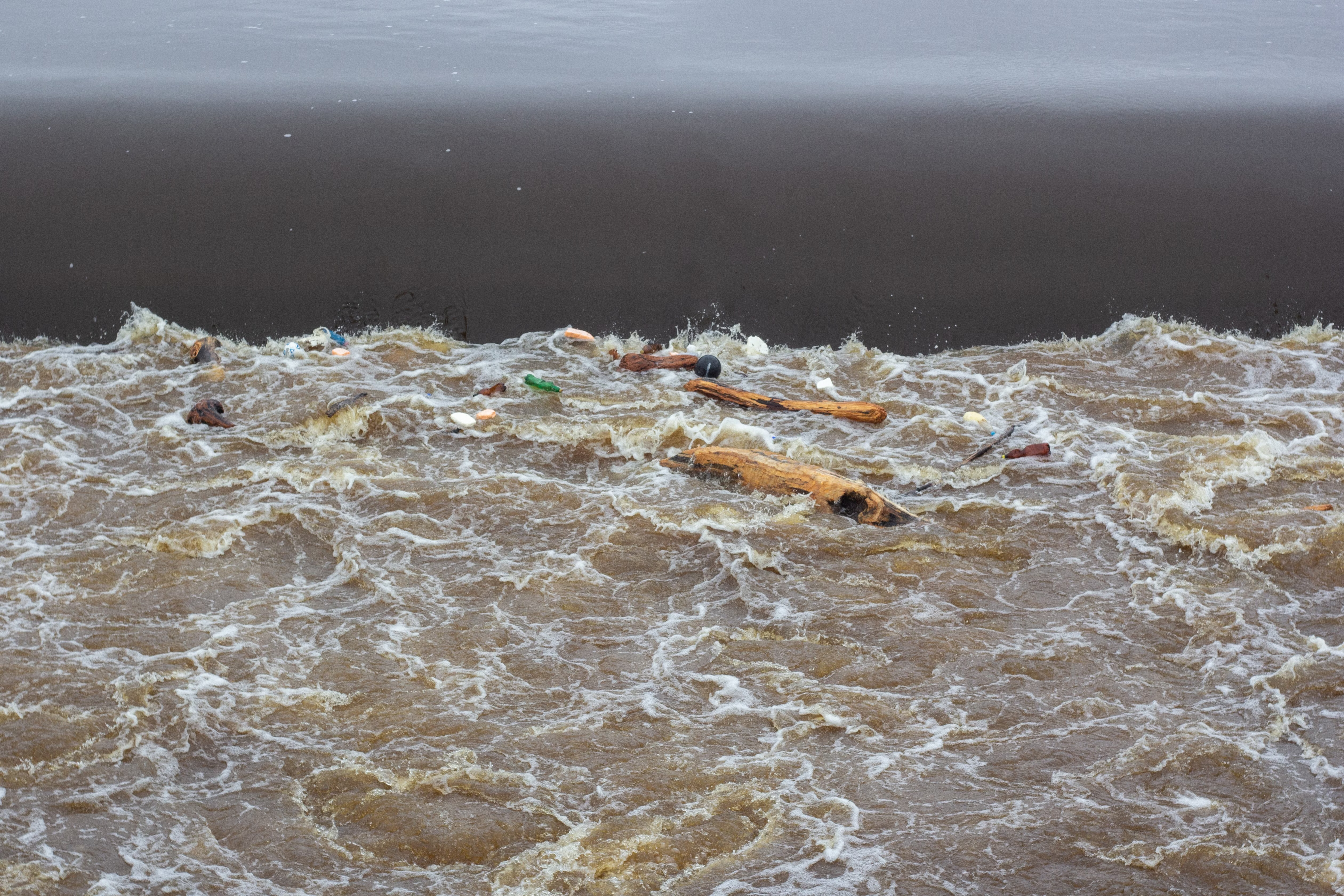
All English Water Bodies Polluted With Toxic Chemicals, Official Data Shows
OPENING HOOK
Imagine going down to your local stream or river, expecting clean water, only to find that every single drop across an entire nation is contaminated with dangerous industrial toxins. Recent official figures from the United Kingdom have revealed a staggering environmental reality that impacts millions of households and aquatic ecosystems.
WHAT HAPPENED
Every single water body in England has been found to be polluted with toxic chemicals, according to new government data released by the Environment Agency. Following a comprehensive six-yearly evaluation of the country's rivers, lakes, and estuaries, inspectors discovered that just 14.3% of surface waters met the threshold for good ecological status. The rigorous testing checked for various pollutants, including persistent synthetic compounds known as forever chemicals and microplastics, measuring them against strict wildlife and public health standards.
WHO ARE THE KEY PLAYERS
The Environment Agency, the non-departmental public body sponsored by the UK government's Department for Environment, Food and Rural Affairs, conducted the assessments. They are tasked with protecting and improving the wider environment in England. Water utility companies operating across the country also feature centrally, as their discharge management practices and infrastructure investments are under intense public and regulatory scrutiny.
UNDERSTANDING THE LOCATION
England, the most populous country within the United Kingdom, features a dense network of rivers, canals, and lakes that have supported industrial and agricultural growth for centuries. This heavy human activity, combined with aging Victorian-era drainage systems, places immense pressure on local water catchments, making pollution dispersion a major geographical and infrastructural challenge.
BACKGROUND AND CONTEXT
Water quality monitoring in England follows strict legislative frameworks, including periodic evaluation cycles designed to track ecological health. Historically, industrial expansion and intensive farming have introduced a cocktail of pollutants into waterways. Over recent decades, public concern has grown regarding the cumulative impact of untreated sewage discharges and agricultural runoff, leading to increased demands for tougher regulatory enforcement.
EXPLAINING IMPORTANT REFERENCES
In environmental reporting, "forever chemicals" refer to per- and polyfluoroalkyl substances, which are synthetic compounds that do not break down easily in the natural environment and accumulate in living tissue over time. "Ecological status" is a technical measure of the health of a water body's structure, chemistry, and biology, assessed by looking at fish, plants, and other aquatic life.
IMPACT ANALYSIS
This widespread contamination poses long-term risks to aquatic biodiversity, freshwater fisheries, and public recreational water use. For households, dealing with heavily polluted raw water increases the cost and complexity of water treatment processes managed by utility providers, ultimately influencing consumer water bills.
WHAT HAPPENS NEXT
Public pressure is mounting for stricter penalties against polluters and accelerated infrastructure upgrades by water companies. Regulators will face increased scrutiny to enforce compliance standards, and policymakers may introduce tighter restrictions on chemical manufacturing and agricultural runoff.
HERO PERSPECTIVE
The Environment Agency's six-yearly evaluation assessed every English water body, finding that only 14.3% achieved good ecological status while 100% tested positive for toxic chemicals and microplastics. This comprehensive benchmark establishes the exact baseline of contamination that regulators and water companies must now address under UK environmental standards.
CLOSING
The revelation that every monitored water body in England carries a chemical burden marks a critical turning point for national environmental policy. How regulators, utility firms, and citizens respond will determine the future health of the country's precious freshwater resources.