
HEADLINE
Breaking Gender Barriers on Two Wheels: How Bogotá is Redefining Urban Cycling
OPENING HOOK
When Eliana González loads her two children and occasionally her dog onto her colourful cargo bike for the morning school run, she is doing much more than just beating the heavy traffic of Colombia's capital.
WHAT HAPPENED
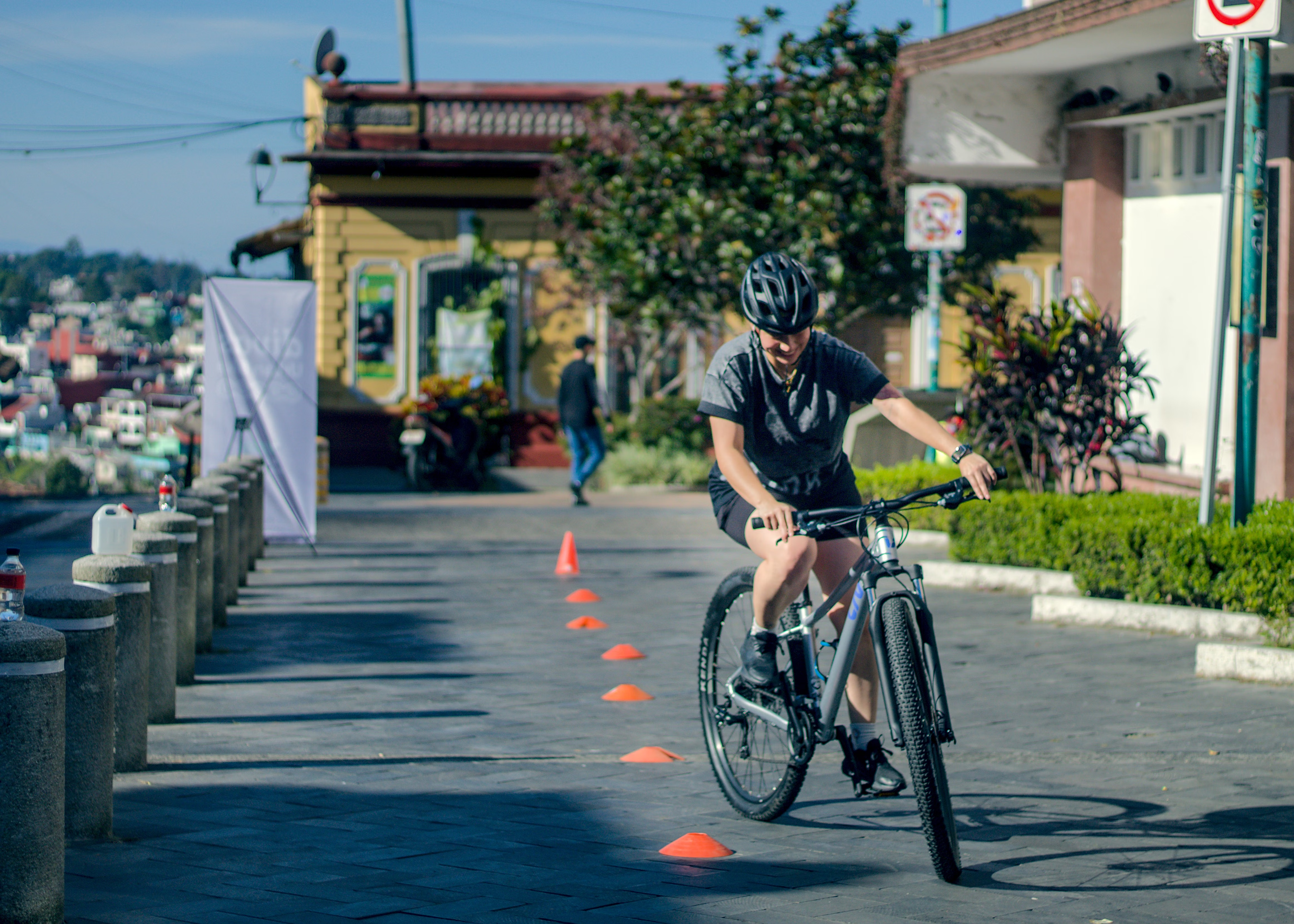
Bogotá, the capital city of Colombia, is actively working to dismantle deep-rooted cultural stereotypes that historically discouraged women from cycling. With statistics showing that women account for less than a third of all daily cycling trips in the metropolis, city authorities and grassroots advocates have rolled out targeted interventions. These include the rapid expansion of protected bicycle infrastructure, specialized cycling academies aimed exclusively at adult women, and the popularization of cargo bikes designed to make domestic errands and child-rearing transport practical on two wheels.
WHO ARE THE KEY PLAYERS
Eliana González stands out as a prominent local resident and daily commuter who utilizes a specialized cargo bike to navigate her family responsibilities without relying on carbon-emitting motor vehicles. Alongside daily commuters like her, municipal transport planners, urban mobility agencies in Bogotá, and community cycling advocacy groups are driving these inclusive initiatives forward.
UNDERSTANDING THE LOCATION
Bogotá is the densely populated high-altitude capital city of Colombia, a major South American nation known for its vibrant culture and challenging mountainous geography. The city has long been celebrated globally for its pioneering 'Ciclovía' tradition—where main roads are closed to cars every Sunday to make space for pedestrians and cyclists—making it a unique urban laboratory for sustainable transport policies.
BACKGROUND AND CONTEXT
Historically, urban mobility planning across many Latin American cities has been male-centric, focusing primarily on moving people from suburban residential zones to central business districts during peak morning and evening hours. Bicycles were frequently viewed through a lens of manual labour or recreational sport for men rather than safe, everyday transport for caregivers. Over the past decade, municipal administrations have sought to transform Bogotá into a global cycling hub, yet persistent safety concerns and traditional gender roles meant that female ridership lagged significantly behind male participation.
EXPLAINING IMPORTANT REFERENCES
A cargo bike is a heavy-duty bicycle equipped with a front or rear compartment specifically built to carry loads, groceries, or young children securely. In urban planning terms, modal share refers to the percentage of travellers using a particular type of transportation, such as walking, cycling, buses, or private cars.
IMPACT ANALYSIS
By intentionally designing safer corridors and offering instructional support, the city is gradually shifting cultural attitudes regarding who belongs on the road. For many families, shifting routine journeys to bicycles reduces household transport expenditure—comparable to easing the pinch of rising fuel and transport costs in developing urban centres worldwide—while simultaneously lowering carbon emissions and easing chronic traffic congestion.
WHAT HAPPENS NEXT
City planners intend to scale up the construction of protected cycling corridors to connect peripheral neighbourhoods directly with commercial hubs. Future developments will likely feature expanded bike-parking facilities at public transport interchanges and continued subsidized training programs to ensure women across all socioeconomic backgrounds can access safe, affordable mobility.
HERO PERSPECTIVE
In Bogotá, where historical data indicates that less than a third of cycling journeys are undertaken by women, municipal authorities are actively challenging the notion that bicycles are exclusively for men through dedicated lane expansions and riding classes. These targeted infrastructural and educational investments directly address the safety and cultural barriers documented in local mobility surveys. Sustained monitoring of these community-led interventions will determine whether inclusive urban transport models can successfully reshape gender dynamics in densely populated metropolitan areas.
CLOSING
The shift happening on the streets of Bogotá proves that sustainable urban mobility requires looking beyond asphalt and concrete to address the social structures that govern daily life.