
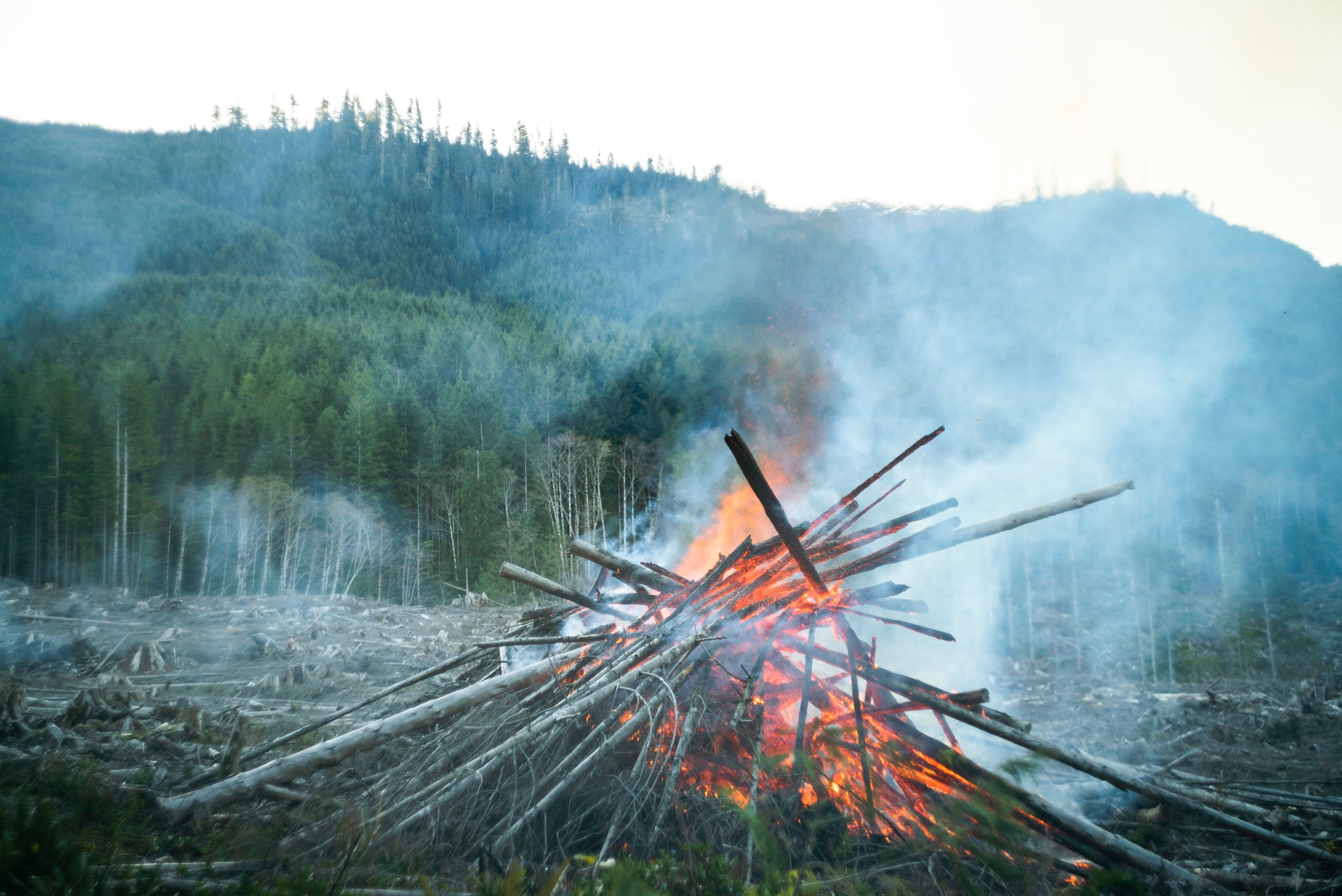
HEADLINE
Climate Change Doubled Severity of Canadian Wildfires in NWT and Ontario, Study Finds
OPENING HOOK
When the skies turned an apocalyptic orange over parts of North America, it was not just a seasonal anomaly, but a direct consequence of a warming planet.
WHAT HAPPENED
A new rapid scientific assessment has concluded that human-induced climate change has roughly doubled the likelihood of severe wildfires occurring in the Northwest Territories and Ontario, Canada. Researchers emphasized that the ongoing reliance on coal, oil, and gas continues to drive extreme weather conditions across the globe, turning vast forested regions into tinderboxes during dry seasons.
WHO ARE THE KEY PLAYERS
The assessment was conducted by international climate attribution scientists who specialize in rapidly evaluating the role of global warming in extreme weather events. Governments in Canada, including provincial and territorial administrations, are primarily tasked with emergency response and fire management.
UNDERSTANDING THE LOCATION
The Northwest Territories and Ontario represent two massive, ecologically diverse regions in Canada. The Northwest Territories is located in northern Canada, characterized by vast subarctic boreal forests and sparse populations, while Ontario is Canada's most populous province in the east, featuring extensive timberlands that border the Great Lakes.
BACKGROUND AND CONTEXT
Wildfires are a natural part of boreal forest ecosystems, clearing dead brush and enabling certain species of trees to release seeds. However, rising global temperatures, prolonged droughts, and early snowmelts have dramatically extended the traditional wildfire season, leading to blazes that are hotter, faster, and much harder to contain.
EXPLAINING IMPORTANT REFERENCES
Rapid attribution analysis is a specialized scientific method used to determine whether and to what extent human-caused climate change influences specific extreme weather events shortly after they happen. Boreal forests are northern circumpolar forests dominated by coniferous trees like pines and spruces, which store massive amounts of carbon in their soil.
IMPACT ANALYSIS
For communities living near these forested regions, the recurring threat of smoke and fire disrupts daily life, forces mass evacuations, and poses serious health risks due to poor air quality. Economically, governments spend billions of dollars on firefighting operations, emergency housing, and infrastructure repairs, straining public budgets.
WHAT HAPPENS NEXT
As global temperatures continue to rise, scientists warn that extreme fire seasons will become the new normal unless aggressive global emissions reductions are implemented. Policymakers face mounting pressure to accelerate the transition toward renewable energy sources while upgrading local emergency response frameworks.
HERO PERSPECTIVE
The rapid analysis focusing on the Northwest Territories and Ontario highlights how modern climate science can quantify human impact on extreme weather events with alarming precision. By establishing that global warming has doubled the probability of these intense fires, the findings challenge policymakers to reconcile long-term fossil fuel consumption with immediate ecological survival.
CLOSING
The scientific consensus remains clear that mitigating future wildfire disasters requires urgent, coordinated international action to curb greenhouse gas emissions and protect vulnerable ecosystems.