
HEADLINE
Firefighters Contain Spokane Wildfires as Thousands Remain Evacuated Amid Weather Warning
OPENING HOOK
When shifting weather offers a brief window of relief, emergency responders race against time to hold the line before the next environmental storm hits.
WHAT HAPPENED
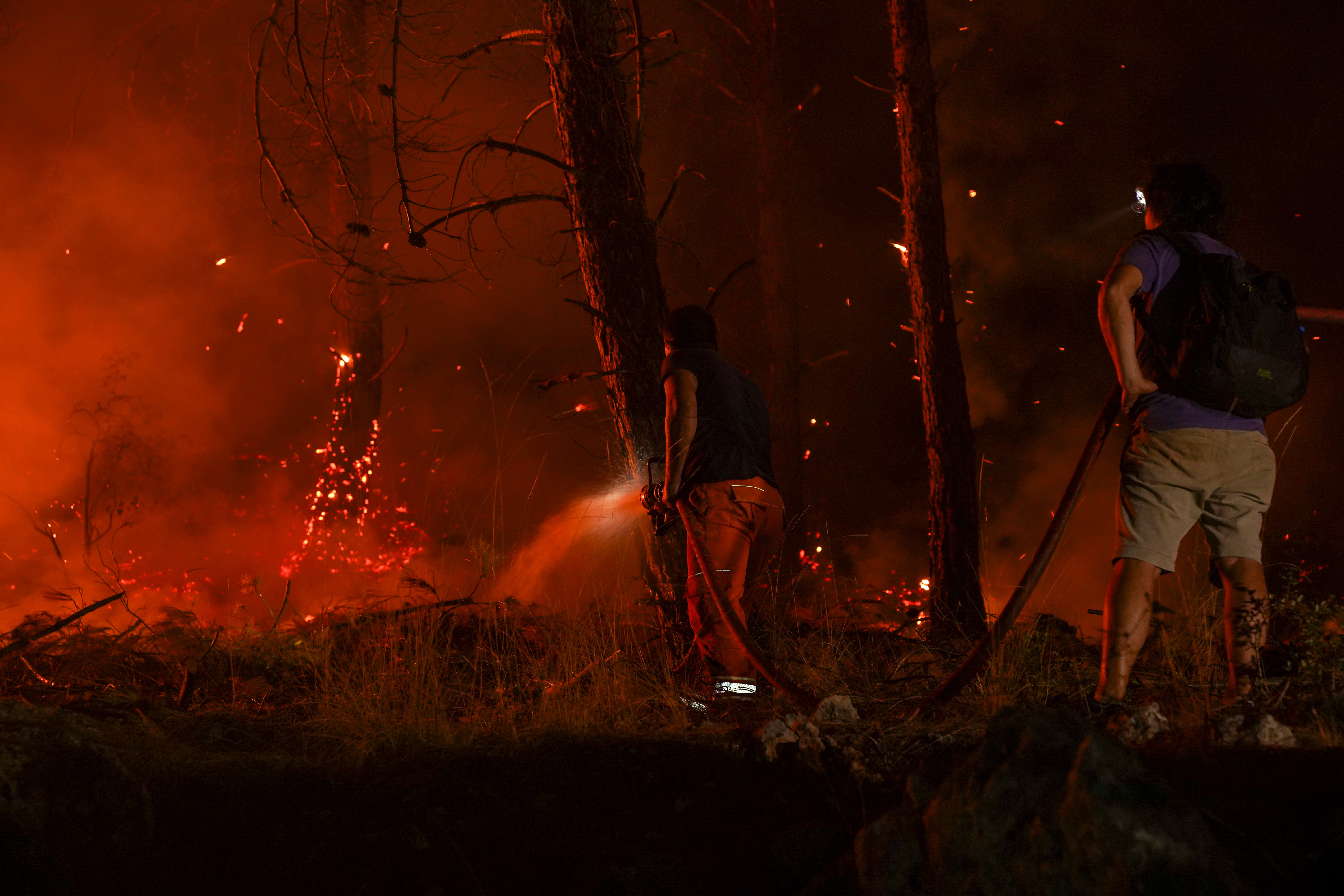
Firefighting crews have successfully taken advantage of a temporary drop in temperatures to gain ground on aggressive wildfires raging around Washington state's second-largest city. Tens of thousands of residents remain displaced from their homes under mandatory evacuation orders as emergency personnel construct containment lines. However, weather forecasters warn that this respite will be short-lived, with hotter, drier, and windier conditions expected to return imminently.
WHO ARE THE KEY PLAYERS
Local and regional firefighting agencies, including municipal fire departments and state forestry divisions, are leading the suppression efforts. Incident commanders coordinate daily strategies to deploy ground crews and aerial water drops, while local law enforcement manages community evacuations and road closures.
UNDERSTANDING THE LOCATION
Spokane is the second-largest city in Washington state, located in the Pacific Northwest region of the United States. The surrounding area features a mix of dense timber, dry grasslands, and rolling hills that become highly combustible during dry summer months, making the region increasingly vulnerable to fast-moving brush and forest fires.
BACKGROUND AND CONTEXT
Wildfires in the western United States have grown increasingly destructive over recent decades due to prolonged drought conditions, climate shifts, and dense forest overgrowth. Emergency response agencies rely heavily on rapid deployment and favorable weather windows to prevent small lightning strikes or human-ignited blazes from expanding into catastrophic regional disasters.
EXPLAINING IMPORTANT REFERENCES
Evacuation orders are official directives issued by local emergency management authorities requiring residents to leave danger zones immediately to protect human life. Containment refers to the percentage of a fire perimeter that firefighters have surrounded with physical barriers, such as cleared dirt lines or natural water bodies, to stop its spread.
IMPACT ANALYSIS
While the immediate containment progress reduces the threat of property destruction in the short term, prolonged displacement strains local community resources and temporary shelters. Businesses face economic disruption, and residents endure intense anxiety regarding the safety of their homes. Additionally, heavy smoke plumes continue to degrade regional air quality.
WHAT HAPPENS NEXT
Emergency crews are prioritizing the reinforcement of containment lines before the anticipated return of high temperatures and strong winds. Once weather conditions permit and safety assessments are completed, local authorities will outline phased re-entry plans for evacuated residents to return home safely.
HERO PERSPECTIVE
Emergency response crews working around Spokane in Washington state have leveraged cooler weather to establish critical containment lines, even as tens of thousands of residents remain evacuated. This operational window underscores the fine margin between stabilization and renewed crisis in modern wildfire management.
CLOSING
As meteorological forecasts point toward a return of severe fire weather, public safety agencies urge all displaced residents to remain patient and strictly adhere to ongoing evacuation advisories until official clearance is given.