
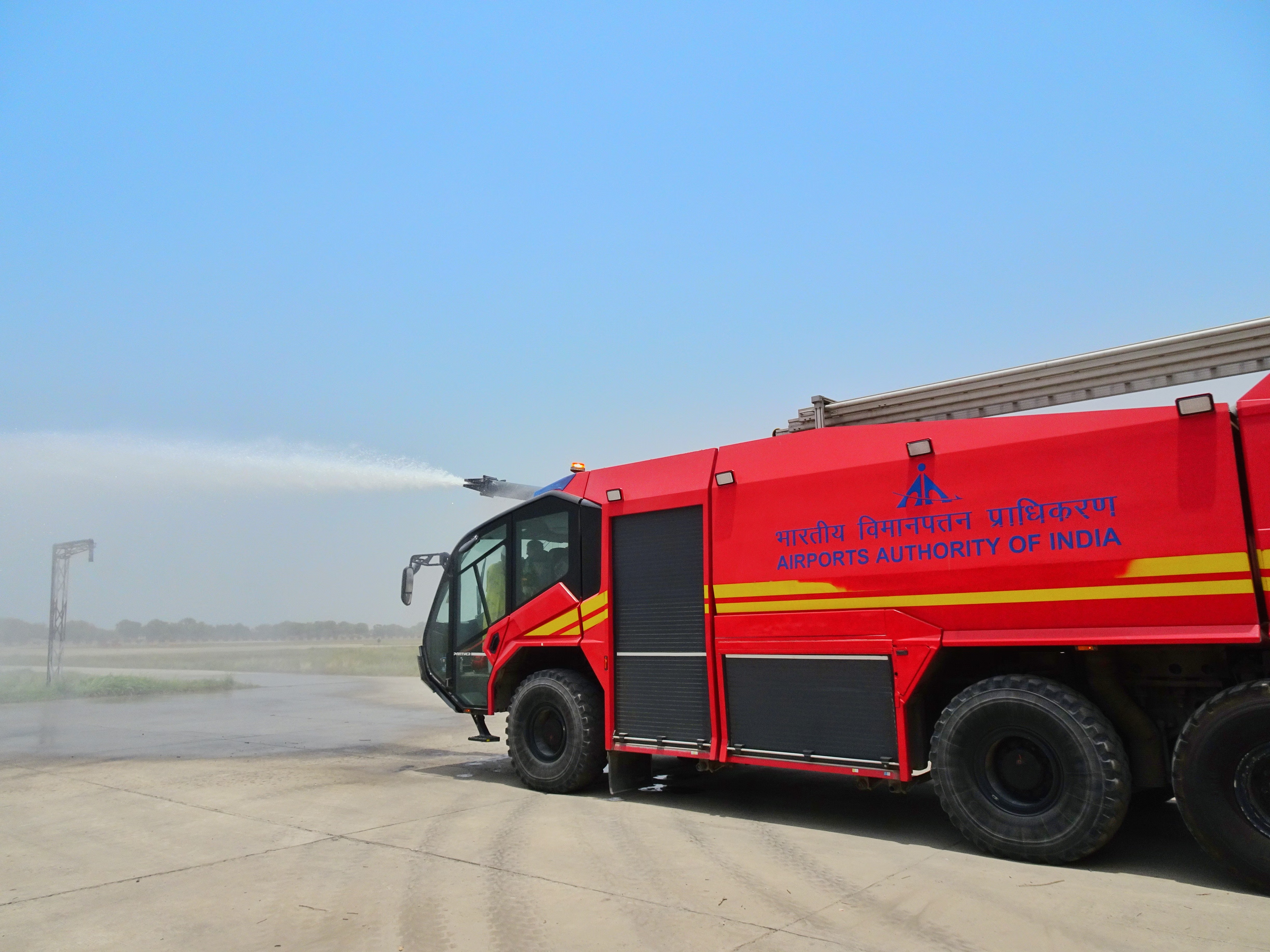
HEADLINE
FAAN Backtracks, Confirms No Fire Incident at Lagos Airport's Terminal 2
OPENING HOOK
Travelers and airport workers experienced momentary panic before aviation authorities clarified that thick smoke billowing from a major transport hub was merely a safety mechanism kicking in, not an emergency blaze.
WHAT HAPPENED
The Federal Airports Authority of Nigeria (FAAN), the agency responsible for managing the country's commercial airports, has retracted earlier reports of a fire outbreak at the Murtala Muhammed International Airport (MMIA) Terminal 2 in Lagos. Initially, concerns arose following reports of smoke within the terminal building. However, FAAN officials quickly intervened to clarify that the smoke was actually triggered by a sudden discharge from the facility's automated fire suppression system. Authorities confirmed that normal flight and passenger processing operations have fully resumed without any disruption to schedules.
WHO ARE THE KEY PLAYERS
The primary institution involved is the Federal Airports Authority of Nigeria (FAAN), the federal body operating under the Ministry of Aviation and Aerospace Development, tasked with safeguarding and maintaining airport infrastructure across the nation. Airport management personnel and safety marshals stationed at the Lagos terminal also played critical roles in containing the panic, inspecting the affected zones, and verifying that the fire suppression mechanism was the sole source of the smoke.
UNDERSTANDING THE LOCATION
The incident occurred at the Murtala Muhammed International Airport Terminal 2, commonly known as MMIA Terminal 2, situated in Ikeja, Lagos State, in the South-West geopolitical zone of Nigeria. As the country's busiest aviation gateway, MMIA handles millions of domestic and international travelers annually, serving as a vital economic artery for business passengers and cargo movement alike.
BACKGROUND AND CONTEXT
Airports in Nigeria operate under stringent safety protocols established by the Nigerian Civil Aviation Authority (NCAA) to prevent catastrophic disasters. Fire suppression systems—which include complex networks of gas or water sprinklers designed to quench potential flames instantly—are routinely installed in modern terminals like MMIA Terminal 2. False discharges, while disruptive, are occasionally triggered by technical glitches, dust accumulation, or high ambient temperatures, prompting swift verification protocols by safety teams.
EXPLAINING IMPORTANT REFERENCES
A fire suppression system is a specialized engineered network built into modern buildings to detect heat or smoke and automatically release extinguishing agents like clean gases or water to stop flames before they spread. FAAN refers to the federal agency overseeing the day-to-day operations, security, and passenger facilitation across all federal government-owned airports in the country.
IMPACT ANALYSIS
While the brief scare caused temporary anxiety among passengers waiting in the departure and arrival lounges, the rapid clarification by airport management prevented flight cancellations or major logistical bottlenecks. Economically, avoiding a prolonged shutdown is crucial for airlines operating out of Lagos, as even a one-hour delay can ripple through national flight schedules, costing operators millions of naira in fuel and passenger compensation.
WHAT HAPPENS NEXT
Engineering teams at MMIA Terminal 2 are expected to conduct a comprehensive diagnostic review of the specific fire suppression zone that triggered the discharge to prevent recurrence. FAAN will likely submit an internal incident report to the aviation ministry, ensuring that the sensor sensitivity is recalibrated without compromising overall safety standards.
HERO PERSPECTIVE
The false alarm at Murtala Muhammed International Airport Terminal 2 underscores the delicate balance between active safety infrastructure and passenger reassurance under FAAN oversight. Prompt institutional communication prevented unnecessary panic and financial losses for airlines operating out of the South-West aviation hub.
CLOSING
As normal activities continue unhindered at the Lagos terminal, the incident serves as a reminder of the vigilance required to maintain complex public infrastructure and communicate transparently during safety alerts.