
HEADLINE
Metro Vancouver and Fraser Valley Under Air Quality Advisory Due to Wildfire Smoke
OPENING HOOK
Residents across southwestern British Columbia are waking up to thick, hazardous hazes as regional authorities issue urgent warnings about drifting wildfire smoke that has sent pollution indexes soaring into the maximum risk categories.
WHAT HAPPENED
Environmental protection authorities have issued a widespread air quality advisory covering Metro Vancouver and the Fraser Valley following a significant influx of wildfire smoke. Monitoring stations in parts of Metro Vancouver recorded air quality ratings reaching Level Nine, while sections of the Eastern Fraser Valley scaled past Level 10+, indicating a very high risk to public health. These elevated readings reflect dangerous concentrations of fine particulate matter, prompting emergency measures and public health advisories to protect vulnerable populations.
WHO ARE THE KEY PLAYERS
Metro Vancouver is the regional local government body that delivers regional services, policy planning, and air quality management across twenty-one municipalities, one electoral area, and one treaty First Nation. The Fraser Valley Regional District manages adjacent municipal interests to the east, cooperating on regional airshed monitoring. Provincial environmental and health agencies work alongside these municipal bodies to issue advisories, track smoke trajectories, and provide medical guidance to local communities.
UNDERSTANDING THE LOCATION
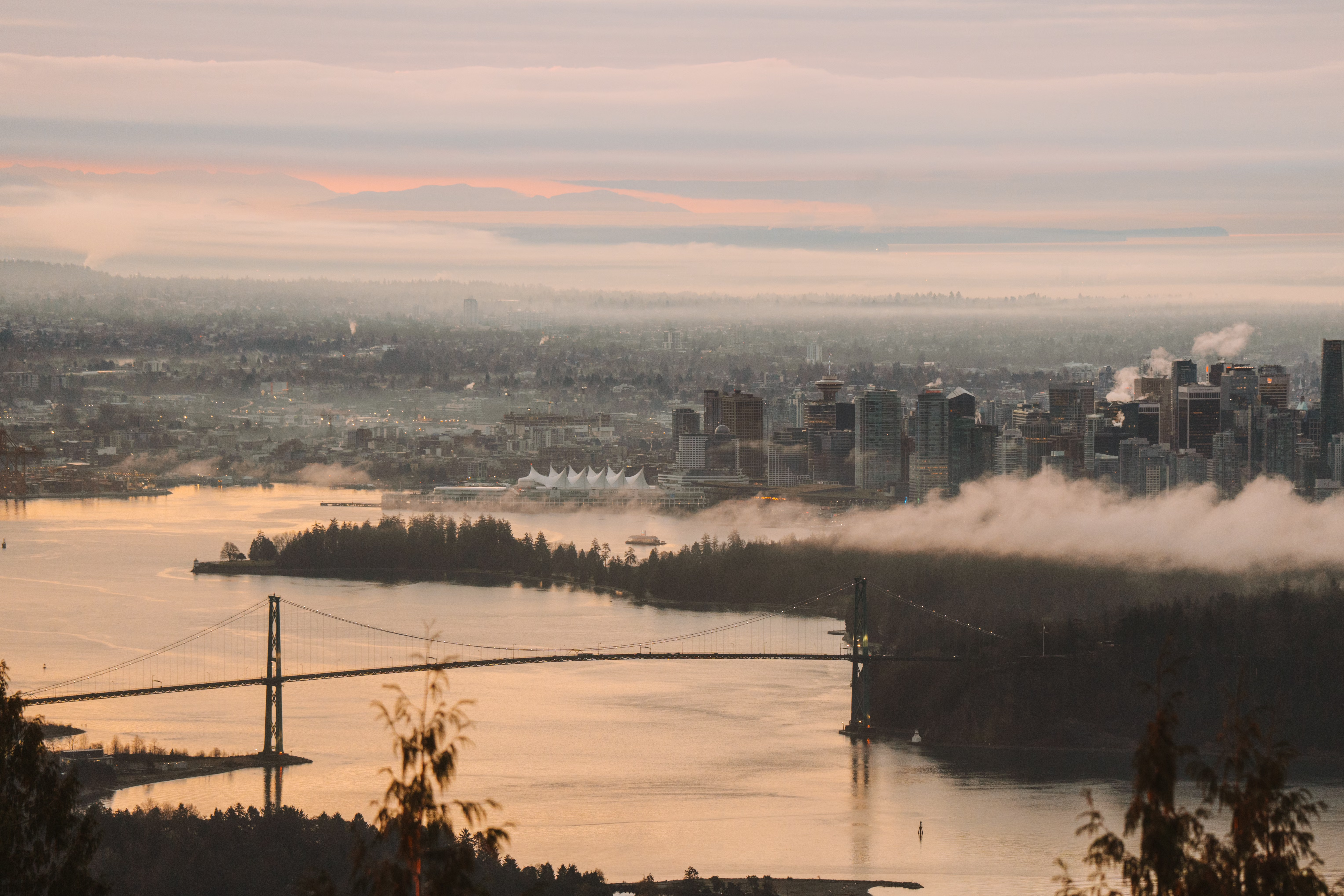
Metro Vancouver and the Fraser Valley form a heavily populated lowland region in southwestern British Columbia, Canada, flanked by the Pacific Ocean and towering mountain ranges. This geographical bowl shape frequently traps air pollutants and wildfire smoke during atmospheric inversion events, preventing normal wind dispersion and concentrating harmful particles close to the ground where millions live and work.
BACKGROUND AND CONTEXT
Wildfire smoke advisories have become an increasingly common summer and autumn reality in western Canada due to prolonged dry spells and rising seasonal temperatures linked to climate shifts. Fine particulate matter, commonly known as PM2.5, consists of microscopic solid and liquid particles suspended in the air that can easily bypass natural human respiratory filters and enter the bloodstream, causing acute and chronic health complications.
EXPLAINING IMPORTANT REFERENCES
Air quality advisory systems use numerical scales to communicate environmental hazards simply to the general public. A rating of Level Nine or Level 10+ on the Air Quality Health Index scale signifies a very high risk, meaning that even healthy individuals may experience symptoms such as eye irritation, sore throats, or coughing, while vulnerable groups are advised to avoid all strenuous outdoor activities.
IMPACT ANALYSIS
This sudden deterioration in air quality disrupts daily outdoor routines, schools, and local businesses, particularly in agriculture and construction sectors where outdoor labor is essential. Healthcare facilities brace for an influx of patients presenting with asthma flare-ups, chronic obstructive pulmonary disease complications, and cardiovascular stress triggered by prolonged exposure to hazardous smoke particles.
WHAT HAPPENS NEXT
Meteorological forecasts will dictate how long the smoke lingers, with relief dependent on shifts in wind patterns or incoming precipitation that can scour the atmosphere clean. Regional authorities will continue to monitor particulate levels continuously and update public health advisories until air quality returns to safe, acceptable thresholds.
HERO PERSPECTIVE
With air quality index readings reaching Level Nine in Metro Vancouver and exceeding Level 10 in the Eastern Fraser Valley, regional authorities are urging residents to take immediate precautionary measures. These extreme particulate concentrations demand strict adherence to health guidelines, particularly for children, seniors, and individuals with pre-existing respiratory conditions.
CLOSING
As western regions navigate increasingly severe wildfire seasons, coordinated environmental monitoring and timely public communication remain vital lifelines for protecting community health against unpredictable natural hazards.