
HEADLINE
FDA Approves Moderna’s Messenger RNA Flu Vaccine After Six-Month Regulatory Clearance Delay
OPENING HOOK
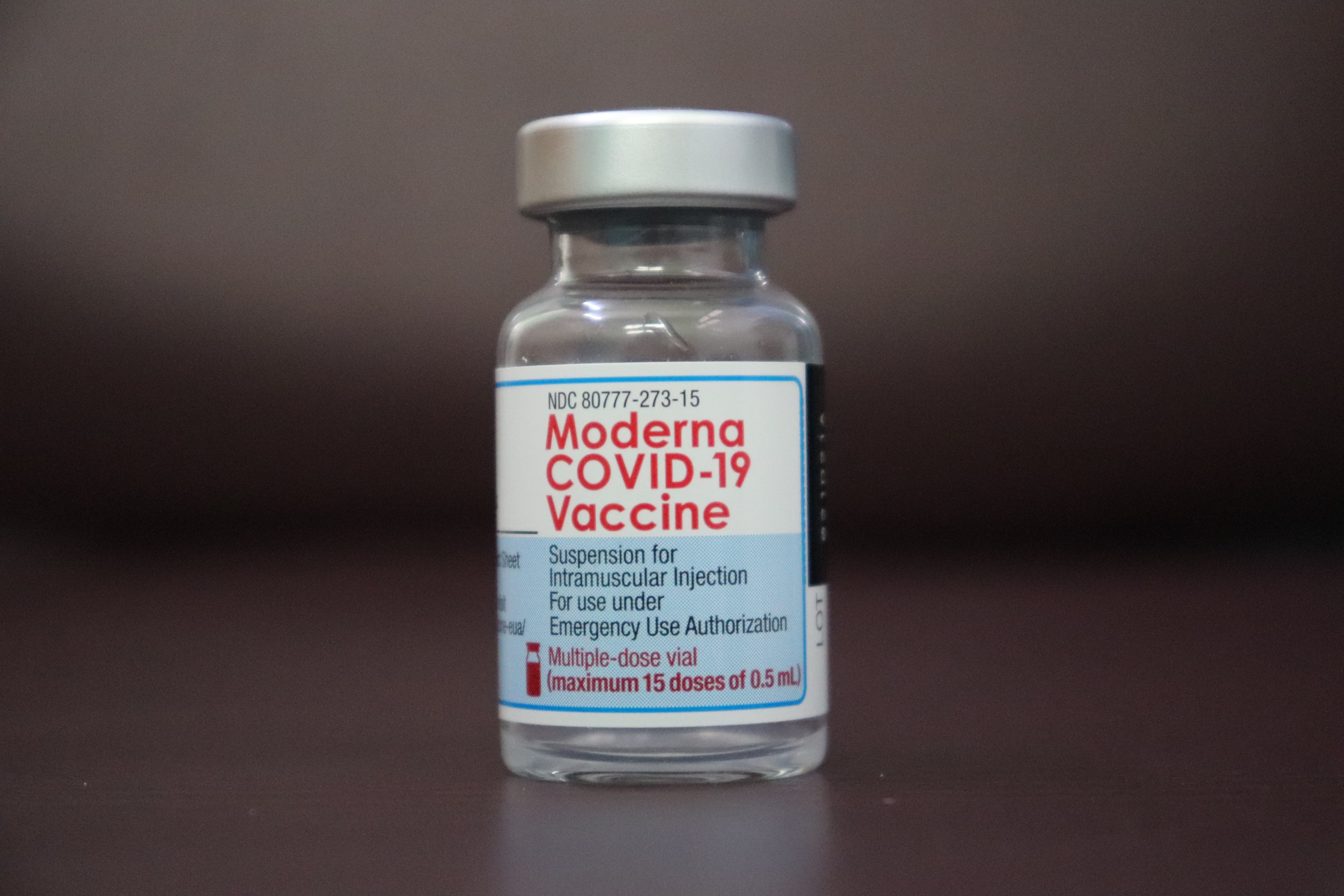
In a landmark development for public health and biotechnology, United States regulatory authorities have approved Moderna’s new messenger RNA (mRNA) seasonal influenza vaccine, marking a major shift in how health systems prepare for annual viral outbreaks.
WHAT HAPPENED
The U.S. Food and Drug Administration (FDA) formally approved Moderna’s novel influenza vaccine after resolving administrative and procedural hurdles that postponed its evaluation. The authorization comes nearly six months after the regulatory agency initially declined to accept the pharmaceutical firm's application for review. With the regulatory clearance now secured, the vaccine maker expands its commercial portfolio beyond coronavirus shots to directly compete in the global seasonal flu market.
WHO ARE THE KEY PLAYERS
- **Moderna Inc.**: A United States biotechnology company headquartered in Cambridge, Massachusetts, known for developing mRNA-based therapeutics and vaccines.
- **U.S. Food and Drug Administration (FDA)**: The federal regulatory body responsible for protecting public health by assuring the safety, efficacy, and security of human drugs, biological products, and medical devices.
- **Centers for Disease Control and Prevention (CDC)**: The national public health agency of the United States, whose advisory committee determines vaccine distribution guidelines and clinical recommendations.
UNDERSTANDING THE LOCATION
The decision originated from the FDA's headquarters in Silver Spring, Maryland. While regulatory clearance applies directly to the United States commercial healthcare market, FDA determinations set international standards. For developing health sectors across Africa, including Nigeria's National Agency for Food and Drug Administration and Control (NAFDAC), FDA authorizations frequently serve as primary reference benchmarks for expedited domestic regulatory evaluations.
BACKGROUND AND CONTEXT
Traditional flu vaccines are produced using decades-old technology requiring influenza viruses to be grown inside chicken eggs or mammalian cell cultures. This traditional manufacturing method requires six to eight months of lead time before a target flu season, making it difficult for manufacturers to adjust if circulating flu strains mutate late in the cycle.
Following the global deployment of mRNA platforms during the COVID-19 pandemic, researchers applied the synthetic genetic sequence technology to seasonal influenza. Moderna submitted its initial Biologics License Application to the FDA, but the regulator briefly refused to file the application due to standard procedural and data format requirements, pushing back the approval timeline by almost six months until full technical compliance was achieved.
EXPLAINING IMPORTANT REFERENCES
- **Messenger RNA (mRNA)**: A genetic instruction set that teaches human cells how to manufacture a harmless protein that triggers an immune response, eliminating the need to inject weakened or inactivated live viruses.
- **Biologics License Application (BLA)**: The formal submission required by the FDA to enable commercial distribution of a biological product in the United States.
- **Cold-Chain Infrastructure**: The specialized supply chain network of temperature-controlled storage freezers and logistics needed to transport sensitive biological medicines without degradation.
IMPACT ANALYSIS
The clearance of an mRNA-based flu shot introduces direct competition to long-standing pharmaceutical giants that rely on egg-based manufacturing, such as Sanofi and CSL Seqirus. The principal advantage of mRNA platform technology is manufacturing speed; producers can synthesize updated vaccines weeks faster than traditional methods when late-emerging viral variants appear.
However, operational adoption presents distinct logistical challenges. Standard egg-based flu shots are stored in routine refrigeration units, whereas mRNA formulations typically demand stricter temperature control. In countries like Nigeria, where power grid instability complicates cold-chain management for primary health centers in rural geopolitical zones, deploying mRNA vaccines requires infrastructure investment compared to traditional formulations.
WHAT HAPPENS NEXT
Following FDA approval, the CDC’s Advisory Committee on Immunization Practices (ACIP) will review clinical trial data to establish formal usage guidelines for the upcoming flu season. Moderna is expected to integrate the shot into its commercial supply chain, while health policy experts monitor real-world effectiveness against circulating strains.
HERO PERSPECTIVE
The FDA's decision grants regulatory authorization nearly six months after the agency initially declined to accept Moderna's filing over application review criteria. By approving this secondary non-COVID mRNA product for commercial distribution, the regulator has formally validated synthetic genetic platform manufacturing for routine seasonal respiratory disease management.
CLOSING
The approval of Moderna's mRNA flu shot represents an evolutionary step in commercial medicine, transitioning novel pandemic-era biotechnology into standard preventative healthcare routines.