
HEADLINE
Your Eyes Don't Lie: New Study Reveals Unique 'Fingerprints' in How You See the World
OPENING HOOK
Imagine stepping into a bustling Lagos market or a quiet art gallery. What first catches your eye, how your gaze travels from one stall to another, or lingers on a particular painting, might not just be a random act of observation. New research is now suggesting that these subtle eye movements are incredibly personal, potentially serving as a unique identifier, much like the patterns on your fingertips or your genetic code.
WHAT HAPPENED
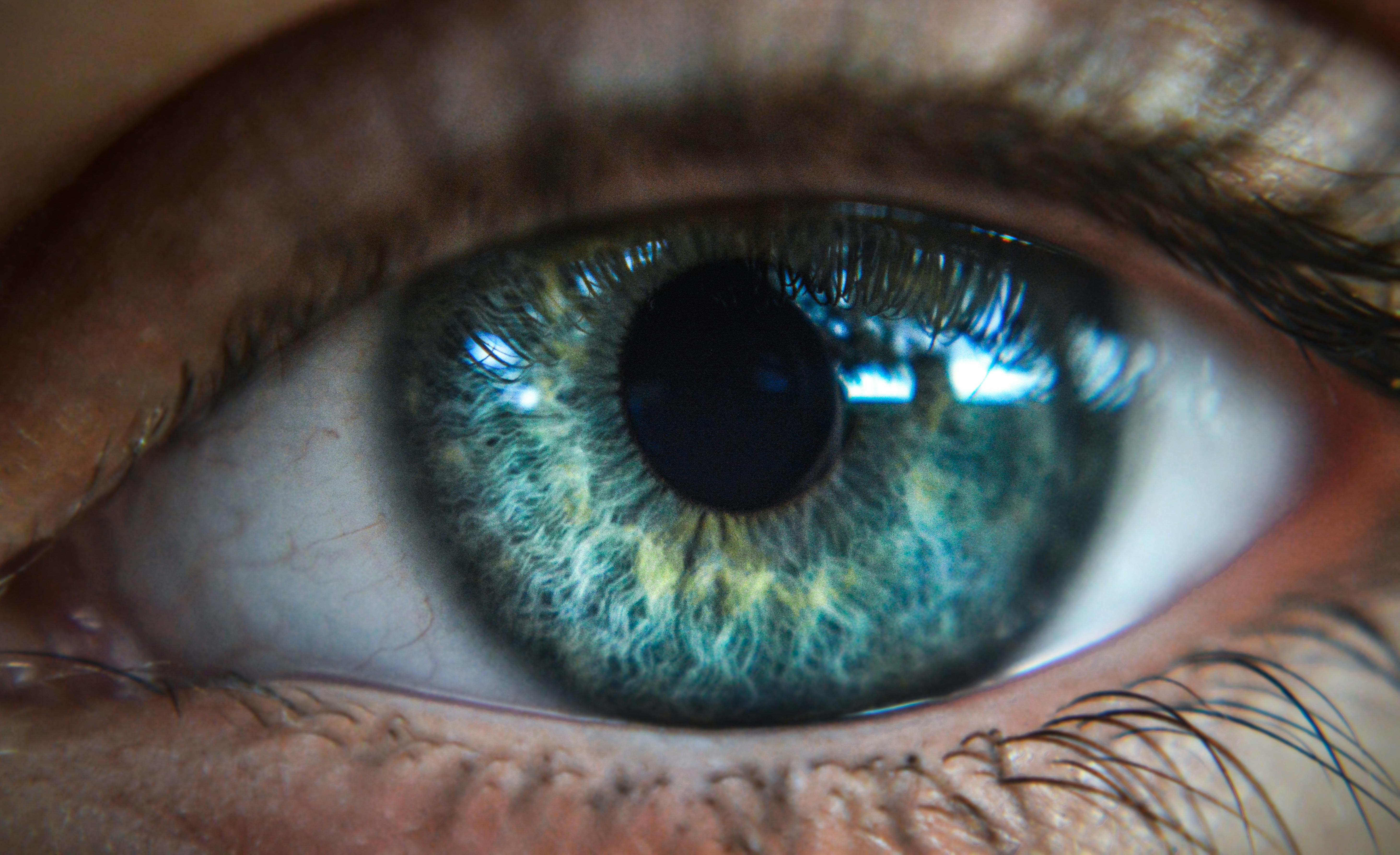
A recent study conducted by researchers at Dartmouth College, published in the esteemed *Proceedings of the National Academy of Sciences*, has unveiled a fascinating discovery: the way people move their eyes to explore unfamiliar scenes or objects holding personal significance is so distinct that it could function as a personal 'fingerprint'. This means your unique visual scanning patterns could potentially be used to identify you.
WHO ARE THE KEY PLAYERS
**Dartmouth College** is a prestigious private Ivy League research university located in Hanover, New Hampshire, United States. Founded in 1769, it is one of the oldest institutions of higher education in the United States, known for its strong programs in the sciences, humanities, and engineering. The researchers involved in this study are faculty and students affiliated with the institution.
The **Proceedings of the National Academy of Sciences (PNAS)** is a highly respected peer-reviewed scientific journal. It is the official journal of the National Academy of Sciences, a private, non-profit society of distinguished scholars established by an Act of Congress, signed by President Abraham Lincoln in 1863. Publishing high-impact research across biological, physical, and social sciences, PNAS is considered a leading voice in global scientific discourse.
UNDERSTANDING THE LOCATION
Dartmouth College is situated in **Hanover, New Hampshire**, a picturesque town in the New England region of the United States. New Hampshire is one of the smaller states, known for its scenic beauty, including mountains and coastlines, and a strong emphasis on education and technology. The research environment at Dartmouth benefits from a focus on innovation and interdisciplinary collaboration.
BACKGROUND AND CONTEXT
The concept of using unique biological characteristics for identification, known as **biometrics**, is not new. For centuries, fingerprints have been used, and more recently, DNA, facial recognition, and iris scans have become commonplace in security and authentication. However, the idea of using eye movements, or **oculomotor biometrics**, adds a new dimension to this field. Previous research has explored how eye-tracking can be used in marketing, user experience design, and even medical diagnostics, but the specific finding of eye movements acting as a unique personal identifier across diverse contexts marks a significant step forward.
EXPLAINING IMPORTANT REFERENCES
**Eye movements** refer to the rapid, unconscious shifts of our gaze as we take in visual information. These include **saccades**, which are quick, jerky movements that jump our eyes from one point to another, and **fixations**, which are brief pauses where our eyes remain relatively still to gather detailed information. The study found that the *pattern* and *sequence* of these saccades and fixations are highly individual.
**Personal 'fingerprints'** in this context is a metaphor. It doesn't mean literal ridges on your eyes, but rather that your eye movement patterns are as distinctive and reliable for identification as a traditional fingerprint or a DNA profile. This uniqueness holds even when observing **unfamiliar scenes** (like a new room) or **objects with personal meaning** (like a photo of a loved one), suggesting a deep-seated, individual cognitive processing style reflected in our gaze.
IMPACT ANALYSIS
This discovery carries significant implications across various sectors. In **security and authentication**, it could lead to new, non-invasive methods of verifying identity, perhaps even continuously monitoring individuals in high-security environments. Imagine a system that can identify you simply by observing how you look at a screen or navigate a space. For **personalized advertising and user experience**, understanding individual eye movement patterns could allow for highly tailored content delivery. In **medical diagnostics**, unique eye movement patterns could potentially serve as early indicators for neurological conditions like Parkinson's disease or Alzheimer's, or even certain psychological disorders. However, the technology also raises serious **privacy concerns**. If our gaze can identify us, then every interaction with a screen or a camera could become a surveillance point, necessitating robust ethical guidelines and data protection protocols to prevent misuse and ensure individual rights are safeguarded.
WHAT HAPPENS NEXT
For this research to move from laboratory finding to practical application, several steps are crucial. Further studies are needed to validate these findings across larger and more diverse populations, including different age groups and cultural backgrounds. The development of more sophisticated and accessible eye-tracking technologies will also be essential. Beyond the technical aspects, there will be a need for public discourse and policy formulation to address the ethical implications of using oculomotor biometrics. Regulators, like Nigeria's National Identity Management Commission (NIMC) or the Nigerian Communications Commission (NCC), might eventually need to consider how such data is collected, stored, and utilized, balancing innovation with the fundamental right to privacy. We might see pilot programs in controlled environments, such as high-security facilities or specialized medical diagnostics, before wider adoption.
HERO PERSPECTIVE
Leverage On Heroes Media views this groundbreaking research with a keen eye on the dual nature of innovation. While the potential for enhanced security, personalized experiences, and even advanced medical diagnostics is undeniable and exciting, particularly for a nation like Nigeria grappling with identity management challenges, the inherent risks to personal privacy cannot be overlooked. Our editorial angle emphasizes that as technology advances, so too must our commitment to ethical frameworks and robust data protection. The 'fingerprint of the eye' offers a powerful new tool, but its deployment must be guided by principles of transparency, consent, and accountability to ensure it serves humanity rather than compromises it.
CLOSING
The revelation that our eye movements are as unique as our fingerprints opens a new chapter in biometric identification. As researchers continue to unravel the complexities of human perception, the challenge for society will be to harness these powerful insights responsibly, ensuring that technological progress goes hand-in-hand with the protection of individual liberties.