
HEADLINE
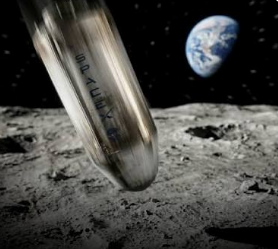
A Derelict SpaceX Falcon 9 Rocket Upper Stage Is Colliding With The Moon
OPENING HOOK
Imagine parking your commercial bus on the highway, walking away, and watching it roll uncontrollably into a major landmark years later; that is the reality playing out in deep space as an abandoned rocket piece hurtles toward the moon.
WHAT HAPPENED
A discarded upper stage of a SpaceX Falcon 9 rocket, which has been drifting aimlessly through space for over a year, is projected to crash into the moon. Independent astronomers tracking orbital paths have calculated that the spent booster is on a direct collision course with the lunar surface, drawing renewed attention to the growing volume of human-made debris accumulating beyond Earth's atmosphere.
WHO ARE THE KEY PLAYERS
SpaceX, officially known as Space Exploration Technologies Corp., is the private American aerospace manufacturer and space transportation services company founded by billionaire entrepreneur Elon Musk. SpaceX designs, manufactures, and launches advanced rockets and spacecraft, having revolutionized the global satellite launch market with reusable rocket technology. Independent astronomical researchers and space trackers, who monitor near-Earth objects and orbital debris, discovered and calculated the trajectory of this specific stray rocket booster.
UNDERSTANDING THE LOCATION
Space, particularly the cislunar space between Earth and the moon, is the vast expanse where this event is unfolding. Unlike Earth-bound incidents that disrupt local traffic or business operations, this collision happens in the silent vacuum of deep space, specifically on the barren surface of the moon, Earth's only natural satellite. While far removed from everyday Nigerian markets or city streets, lunar impacts contribute to our scientific understanding of impact craters and space debris dynamics.
BACKGROUND AND CONTEXT
When commercial space companies launch payloads into deep space, the lower stages of rockets typically return to Earth for controlled landings or ocean splashdowns. However, upper stages that push heavy satellites or scientific instruments into high orbits often lack the remaining fuel required to return home or escape into a stable parking orbit. Consequently, these massive metal shells become space debris, floating endlessly until gravity or planetary bodies pull them in.
EXPLAINING IMPORTANT REFERENCES
A Falcon 9 rocket upper stage is the top section of a two-stage orbital launch vehicle designed to carry cargo and spacecraft beyond Earth's atmosphere. Cislunar space refers to the region of space encompassing the Earth's orbit out to and including the region around the moon. Orbital debris represents abandoned, non-functional human-made objects orbiting the Earth or traveling through the solar system, akin to abandoned broken-down vehicles left stranded on a major expressway.
IMPACT ANALYSIS
While the upcoming lunar crash poses zero physical danger to people living on Earth, it serves as a stark wake-up call for the international space community. Just as Nigerian authorities struggle with abandoned broken-down trailers blocking major federal highways, the global community faces a mounting traffic jam of space junk. Experts warn that unchecked debris in orbit could eventually threaten active communication satellites, which Nigerians rely on for banking, internet connectivity, and telecommunications.
WHAT HAPPENS NEXT
As the rocket stage draws closer to its final destination, astronomers will continue to monitor its exact impact site on the moon's far side or near side. Space agencies worldwide are expected to face mounting pressure to adopt stricter tracking rules and fuel management protocols for deep-space missions, ensuring future rocket parts do not become uncontrolled projectiles.
HERO PERSPECTIVE
At Leverage On Heroes Media, our editorial angle views this celestial event through the lens of corporate and technological responsibility. Just as operators of heavy machinery on Earth must clear their path and manage their waste responsibly, private space pioneers must be held accountable for the cosmic footprint they leave behind in our shared skies.
CLOSING
The impending crash of the Falcon 9 upper stage into the moon highlights the broader reality of our modern technological age: humanity's reach now extends far beyond Earth, and with that expansion comes an urgent responsibility to clean up after our innovations.