
HEADLINE
China Achieves Historic Reusable Rocket Landing, Joining Elite Global Space Powers
OPENING HOOK
The global space race has taken another significant turn as China's state media announced the successful landing of a reusable rocket, a feat previously mastered only by a select few nations and private enterprises. This achievement signals a new era for China's ambitious space program and reshapes the landscape of international space exploration.
WHAT HAPPENED
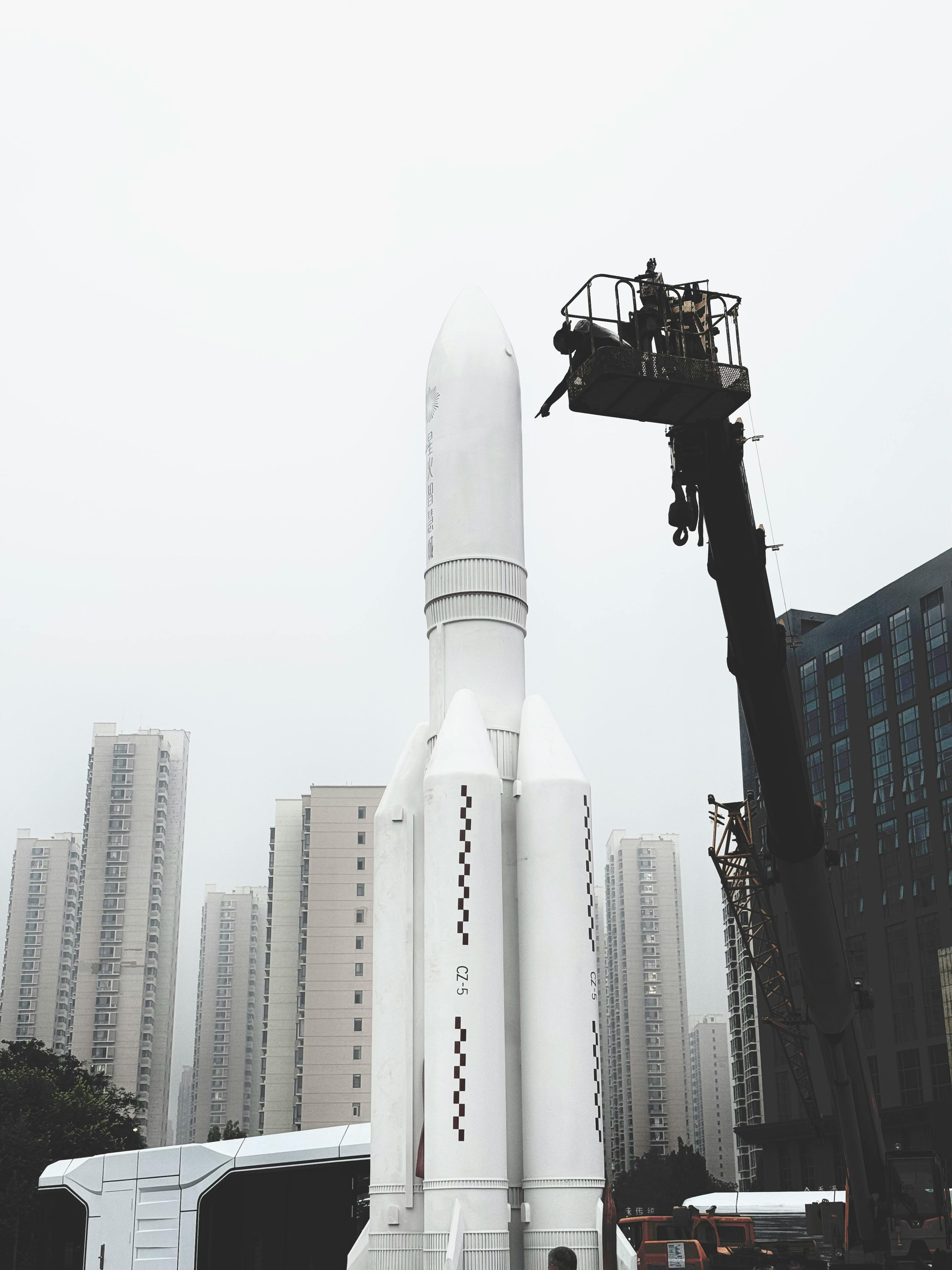
In a landmark development, China's state-controlled media recently reported the successful first-time landing of a reusable rocket. This technological breakthrough places China in an exclusive club, following similar successful landings achieved by American-owned private companies, SpaceX and Blue Origin. The specific details of the mission, including the type of rocket and the exact landing location, were not immediately disclosed by Chinese authorities, a common practice for sensitive technological advancements.
WHO ARE THE KEY PLAYERS
**China**: The People's Republic of China, a major global power, has steadily built a sophisticated and ambitious space program. Driven by national pride, scientific advancement, and strategic interests, China aims to become a dominant force in space, with plans for a permanent space station, lunar missions, and Mars exploration.
**Chinese State Media**: This refers to the various news outlets, television channels, and online platforms directly controlled and operated by the Chinese government. They serve as the official voice for the state, disseminating information and reporting on national achievements, often with a focus on promoting government policies and successes.
**SpaceX**: An American aerospace manufacturer and space transportation services company founded by Elon Musk. SpaceX revolutionized space travel by successfully developing and routinely operating reusable rockets, significantly reducing the cost of space launches. Their Falcon 9 rockets are a prime example of this technology.
**Blue Origin**: Another American privately funded aerospace manufacturer and spaceflight services company, founded by Amazon's Jeff Bezos. Blue Origin is also a key player in the reusable rocket sector, developing its New Shepard suborbital rocket and the larger New Glenn orbital rocket, both designed for reusability.
UNDERSTANDING THE LOCATION
The event itself took place in space, with the rocket returning to a designated landing site within Chinese territory. This achievement highlights the country's growing capabilities in advanced aerospace engineering and ground control. From a broader perspective, it underscores the increasing importance of Earth's orbit and celestial bodies as strategic locations for scientific research, economic exploitation, and geopolitical influence.
BACKGROUND AND CONTEXT
The concept of reusable rockets traces its roots back to early visions of space travel, but it was largely seen as a distant dream until recent decades. Historically, space exploration relied on single-use rockets, where expensive components were discarded after each launch. This made space access prohibitively costly. The modern drive for reusability began in earnest with private enterprises like SpaceX, which demonstrated that rockets could be landed vertically and refurbished for multiple flights, much like a commercial airplane. This innovation drastically reduced launch costs, making space more accessible for scientific, commercial, and even military applications. China's entry into this domain is a natural progression of its long-term strategy to establish itself as a leading space power, building on its achievements in satellite deployment, human spaceflight, and lunar exploration.
EXPLAINING IMPORTANT REFERENCES
**Reusable Rocket**: In simple Nigerian English, imagine a 'molue' or 'danfo' bus that takes passengers from one point to another, drops them off, and then returns to the starting point to pick up more passengers for another trip. That's essentially what a reusable rocket does. Instead of building a brand new rocket for every single journey into space, which is incredibly expensive – like buying a brand new bus for every trip – a reusable rocket is designed to launch, deliver its payload (like a satellite), and then safely return to Earth to be refueled and used again. This significantly cuts down on the cost of putting things into space, making space exploration and commercial ventures more affordable, potentially reducing the cost of a launch from billions of naira to hundreds of millions, much like reducing the market price of transport.
**State Media**: In China, state media refers to news organizations directly owned and controlled by the government. Unlike independent media houses, their primary role is to disseminate official information and promote the government's narrative, especially regarding national achievements and policies.
IMPACT ANALYSIS
This successful landing has profound implications across several fronts. Economically, it promises to lower the cost of space launches for China, making its space program more sustainable and competitive. Cheaper access to space could lead to an acceleration of satellite deployment for communication, navigation, and Earth observation, benefiting various sectors. Geopolitically, it reinforces China's position as a major technological power and intensifies the competition in space, particularly with the United States. This ongoing 'space race' is not just about prestige but also about strategic advantages in communications, surveillance, and potentially even resource extraction. For Nigeria and other African nations, China's advancements could offer opportunities for more affordable satellite services or even future partnerships in space technology, potentially lowering the cost of essential services that rely on satellite infrastructure, like internet access or remote sensing for agriculture.
WHAT HAPPENS NEXT
Following this initial success, China is expected to continue refining its reusable rocket technology, aiming for more frequent and reliable re-flights. This will likely involve further tests, increased payload capacities, and a diversification of reusable rocket types. The global space industry will closely watch China's progress, which will undoubtedly spur further innovation and competition among other spacefaring nations and private companies. We can anticipate a future where launching objects into space becomes significantly more routine and economical, opening doors for new scientific discoveries, commercial ventures, and international collaborations, potentially making satellite technology more accessible to countries like Nigeria.
HERO PERSPECTIVE
Leverage On Heroes Media views China's historic reusable rocket landing as a pivotal moment that underscores the relentless march of human ingenuity and the evolving dynamics of global power. While celebrating this technological achievement, we also emphasize the need for transparency and international cooperation in space, ensuring that these advancements benefit all of humanity, not just a select few. For Nigeria and the African continent, this development serves as a powerful reminder of the importance of investing in science, technology, engineering, and mathematics (STEM) education and fostering indigenous innovation. To truly leverage the opportunities presented by the new space age, we must build our own capacities, rather than merely being consumers of foreign technology. This is an era where heroes are not just those reaching for the stars, but also those building the foundational knowledge and infrastructure on the ground to make our own nations competitive and self-reliant in critical technological domains.
CLOSING
China's first reusable rocket landing marks a significant leap forward in space technology, cementing its status as a formidable player in the global space arena and setting the stage for an even more competitive and innovative future in the cosmos.