Edo State Acquires 10% Equity in Proposed 100MW Ologbo Power Project, Boosting Energy Security and Economic Prospects
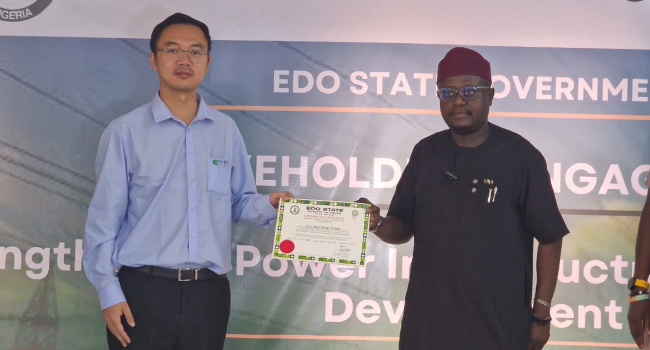
Edo State Government has secured a 10% ownership stake in a planned 100-megawatt power generation facility in Ologbo, a strategic move poised to significantly enhance electricity supply, create job opportunities, and generate revenue for the state.
Leverage On Heroes Media
Image via www.vanguardngr.com (editorial use, news commentary)
HEADLINE
Edo State Acquires 10% Equity in Proposed 100MW Ologbo Power Project, Boosting Energy Security and Economic Prospects
OPENING HOOK
The persistent challenge of inadequate electricity supply has long hampered economic growth and quality of life across Nigeria. In a significant move to address this fundamental issue, Edo State is stepping up its efforts, demonstrating how sub-national entities can actively participate in critical infrastructure development to power their regions.
WHAT HAPPENED
Edo State Government has officially secured a 10 percent equity stake in a proposed 100-megawatt (MW) power project slated for Ologbo, a community within the state. This strategic acquisition means the state will own a tenth of the power plant, allowing it to directly benefit from its operations, influence its direction, and ensure its alignment with local development goals. The project aims to significantly increase the availability of electricity within Edo State, stimulate local economic activity through job creation, and provide a new stream of internally generated revenue for the government.
WHO ARE THE KEY PLAYERS
The primary key player is the **Edo State Government**, led by its executive arm, which initiated and completed this equity acquisition. Their role is pivotal in driving local development and attracting investments. The other crucial player is the **private developer(s)**, the entity or consortium responsible for the design, construction, and operation of the power plant. While not named in the initial report, such projects typically involve experienced energy firms. The **Ologbo community** is also a significant stakeholder, as they will host the project and are expected to be among the primary beneficiaries of the improved power supply and local employment opportunities. Additionally, regulatory bodies like the **Nigerian Electricity Regulatory Commission (NERC)** play an overarching role in licensing and overseeing power projects across the nation.
UNDERSTANDING THE LOCATION
**Ologbo** is a community located in Ikpoba-Okha Local Government Area of Edo State, situated in Nigeria's South-South geopolitical zone. This zone is known for its rich natural resources, particularly crude oil and natural gas, which are often utilized as feedstock for power generation plants. Edo State itself is a key state in the South-South, bordered by Kogi, Delta, Ondo, and Anambra states. Its strategic location makes it a hub for economic activities and a critical transit point, underscoring the importance of reliable infrastructure like electricity for its continued growth.
BACKGROUND AND CONTEXT
Nigeria's power sector has a long history of challenges, marked by insufficient generation, dilapidated transmission infrastructure, and inefficient distribution. Following the privatization of the power sector in 2013, which saw the unbundling of the Power Holding Company of Nigeria (PHCN) into generation, transmission, and distribution companies, the expectation was a significant improvement in electricity supply. However, progress has been slow. State governments, recognizing the limitations of the national grid and the urgent need for reliable power, have increasingly explored independent power projects (IPPs) and partnerships with private investors. This move by Edo State aligns with a growing trend among states to take direct control of their energy destinies, leveraging local resources and private capital to bridge the national power deficit.
EXPLAINING IMPORTANT REFERENCES
* **100MW (Megawatts) Power Project:** A Megawatt is a unit of power, equivalent to one million watts. To put 100MW into perspective for the average Nigerian, this amount of power could potentially supply electricity to tens of thousands of homes, depending on average consumption. For businesses and industries, 100MW represents a substantial and reliable source of energy, capable of powering factories, commercial centers, and large public facilities, significantly reducing reliance on expensive and polluting diesel generators.
* **Equity Stake:** When Edo State secures a '10% equity stake,' it means the state government will own 10 percent of the company or project. This is not just a loan; it represents direct ownership and a share in the project's profits, losses, and decision-making proportional to its stake. This allows the state to have a voice in the project's management and ensures that the benefits derived from the power plant are shared with the citizens through the government's ownership.
* **Revenue Generation:** For the state, revenue generation from this project could come in various forms, including dividends from its equity stake, taxes from the operating company, and potentially levies or fees associated with the project's operation within the state. This revenue can then be reinvested into other public services and infrastructure.
IMPACT ANALYSIS
The securing of a 10% equity in the Ologbo power project carries significant implications for Edo State. Economically, the project promises to stimulate local commerce by providing consistent power, which is crucial for small and medium-sized enterprises (SMEs) that often struggle with high operational costs due to generator reliance. It will create direct and indirect jobs during construction and operation, ranging from engineers and technicians to support staff and local suppliers. Socially, improved electricity access enhances quality of life, supports education through better lighting, and improves healthcare services. Environmentally, if the power plant utilizes natural gas, it represents a cleaner alternative to diesel generators, reducing carbon emissions and air pollution within the community. Furthermore, this initiative could serve as a blueprint for other states looking to attract investment and solve their power challenges, fostering a more decentralized and resilient national power grid.
WHAT HAPPENS NEXT
With the equity secured, the next phases will involve the detailed engineering design, environmental impact assessments, and securing the necessary financing for the construction of the power plant. Regulatory approvals from bodies like the Nigerian Electricity Regulatory Commission (NERC) will also be critical before the commencement of physical construction. Once construction begins, the project will enter a critical period of development, with careful monitoring required to ensure adherence to timelines and budgets. The successful completion and commissioning of the 100MW plant will then usher in an era of enhanced power stability for Edo State, marking a significant step towards energy sufficiency.
HERO PERSPECTIVE
Leverage On Heroes Media views Edo State's proactive acquisition of an equity stake in the Ologbo power project as a commendable act of **local empowerment and strategic development**. This initiative showcases how state governments, rather than solely relying on federal interventions, can champion their own economic growth and enhance citizens' quality of life through direct investment in critical infrastructure. It's a pragmatic step towards energy security, job creation, and sustainable revenue generation, setting a powerful example for other sub-national entities across Nigeria to take ownership of their development challenges.
CLOSING
Edo State's venture into direct ownership within the power sector marks a pivotal moment, signaling a robust commitment to addressing its energy needs and fostering economic prosperity. As the project moves from conception to reality, its success will not only illuminate homes and power industries but also potentially light the way for a new era of state-led development initiatives across the nation.