
HEADLINE
Former President Goodluck Jonathan's Son Graduates from UK University, Igniting Debate on Elite Education
OPENING HOOK
The recent graduation of Ariwera Jonathan, son of Nigeria's former President Goodluck Jonathan, from a prominent United Kingdom institution has once again brought to the fore the enduring trend of Nigerian elites seeking foreign education for their children.
WHAT HAPPENED
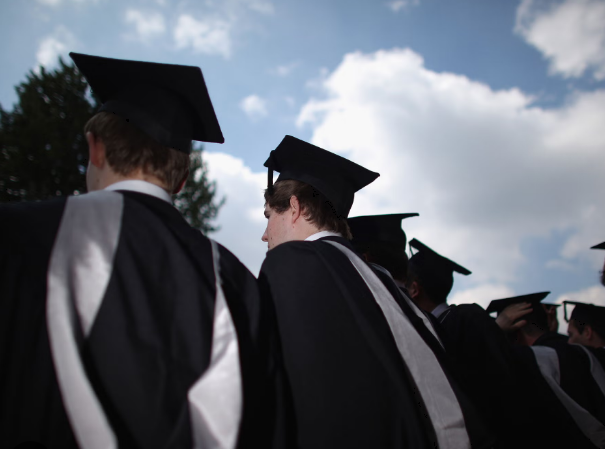
Ariwera Jonathan, son of former Nigerian President Goodluck Jonathan, recently celebrated his graduation from Manchester Metropolitan University in the United Kingdom. His father, Goodluck Jonathan, shared the news, expressing pride in his son's academic achievement and marking a significant personal milestone for the family.
WHO ARE THE KEY PLAYERS
- **Ariwera Jonathan:** The graduating son of former President Goodluck Jonathan. His academic achievement in the UK is the central focus of this report, representing a new generation of Nigerians educated abroad.
- **Goodluck Jonathan:** Former President of Nigeria, who served from 2010 to 2015. A prominent figure in Nigerian politics, he previously held positions as Vice President and Governor of Bayelsa State. The educational pursuits of his children, like those of other public figures, often attract significant public and media attention.
- **Manchester Metropolitan University:** A public university located in Manchester, England. It stands as one of the largest universities in the United Kingdom by student population, offering a wide array of undergraduate and postgraduate courses across various disciplines. Many Nigerian students choose UK universities for their perceived quality of education and international exposure.
UNDERSTANDING THE LOCATION
- **Manchester, United Kingdom:** A major city situated in North West England, Manchester is historically renowned for its pivotal role in the Industrial Revolution. Today, it is a vibrant cultural hub with a substantial student population, owing to its multiple universities. The United Kingdom, as a whole, consistently remains a top destination for Nigerian students seeking higher education, driven by historical ties, the English language medium of instruction, and the perceived high quality and global recognition of its academic institutions.
BACKGROUND AND CONTEXT
The pursuit of foreign education by children of Nigeria's political and economic elite is a deeply entrenched tradition, predating Nigeria's independence. Many of the nation's founding fathers and subsequent leaders received their education abroad. For numerous affluent Nigerian families, a foreign degree is seen as a gateway to enhanced career opportunities, global exposure, and a mark of prestige. Former President Goodluck Jonathan himself has a background in academia, having been a university lecturer before venturing into public service. His family's choice to send Ariwera to a UK university reflects a widely accepted aspiration within certain Nigerian circles, often influenced by concerns over the persistent challenges, including strikes and underfunding, faced by the local university system.
EXPLAINING IMPORTANT REFERENCES
- **UK University:** This term broadly refers to any institution of higher learning within the United Kingdom. For many Nigerian families, securing admission to a UK university signifies access to a globally recognized standard of education, diverse academic programs, and an international learning environment. The financial cost of such education is substantial, often running into millions of naira annually—an amount equivalent to several years' average income for a typical Nigerian worker or a significant business loan for a small enterprise. This high cost largely restricts access to these educational opportunities to affluent families.
IMPACT ANALYSIS
Ariwera Jonathan's graduation, while a personal triumph for him and his family, resonates within a broader national discourse. On one hand, it celebrates the personal success and academic achievement of a young Nigerian on an international stage. On the other hand, it implicitly underscores the persistent disparity in educational opportunities between the privileged few and the vast majority of Nigerian youth. The continuous outflow of Nigerian talent and financial resources for foreign education raises critical questions about brain drain and the urgent need for substantial investment in domestic educational infrastructure. This situation aims to retain local talent and provide quality learning experiences within Nigeria, rather than abroad. It also fuels ongoing discussions about accountability and how the choices made by leaders for their own families reflect on their commitment to strengthening national institutions.
WHAT HAPPENS NEXT
For Ariwera Jonathan, like many international graduates, the immediate future will likely involve career pursuits, potentially leveraging his international degree and global exposure. More broadly, the trend of Nigerian elites educating their children abroad is expected to continue, particularly given the current economic realities and the ongoing challenges within Nigeria's education sector. This will likely keep the conversation alive regarding the funding and revitalization of local universities, as well as the societal implications of a widening gap between those who can afford international education and those who cannot. Policy discussions around improving local university standards and creating incentives for graduates to return and contribute to Nigeria remain crucial for national development.
HERO PERSPECTIVE
Leverage On Heroes Media believes that while individual academic achievements, especially those attained abroad, are commendable, they must serve as a catalyst for critical examination of our nation's educational landscape. The success of young Nigerians on global platforms should inspire, rather than overshadow, the urgent need to elevate the standards of our local institutions. We must ensure that quality education is not a privilege reserved for a select few, but a fundamental right accessible to every Nigerian child. We call for sustained investment and comprehensive reforms that make Nigerian universities competitive and attractive, thereby fostering local talent and driving national development.
CLOSING
As Nigeria continues its journey towards progress, the path forward demands a concerted effort to build an educational system that empowers all its citizens to achieve their full potential, whether through opportunities at home or abroad, ultimately contributing to the nation's collective growth and prosperity.