
HEADLINE
Jetstar and Qatar Airways Near Miss at Sydney Airport Triggers Safety Probe
OPENING HOOK
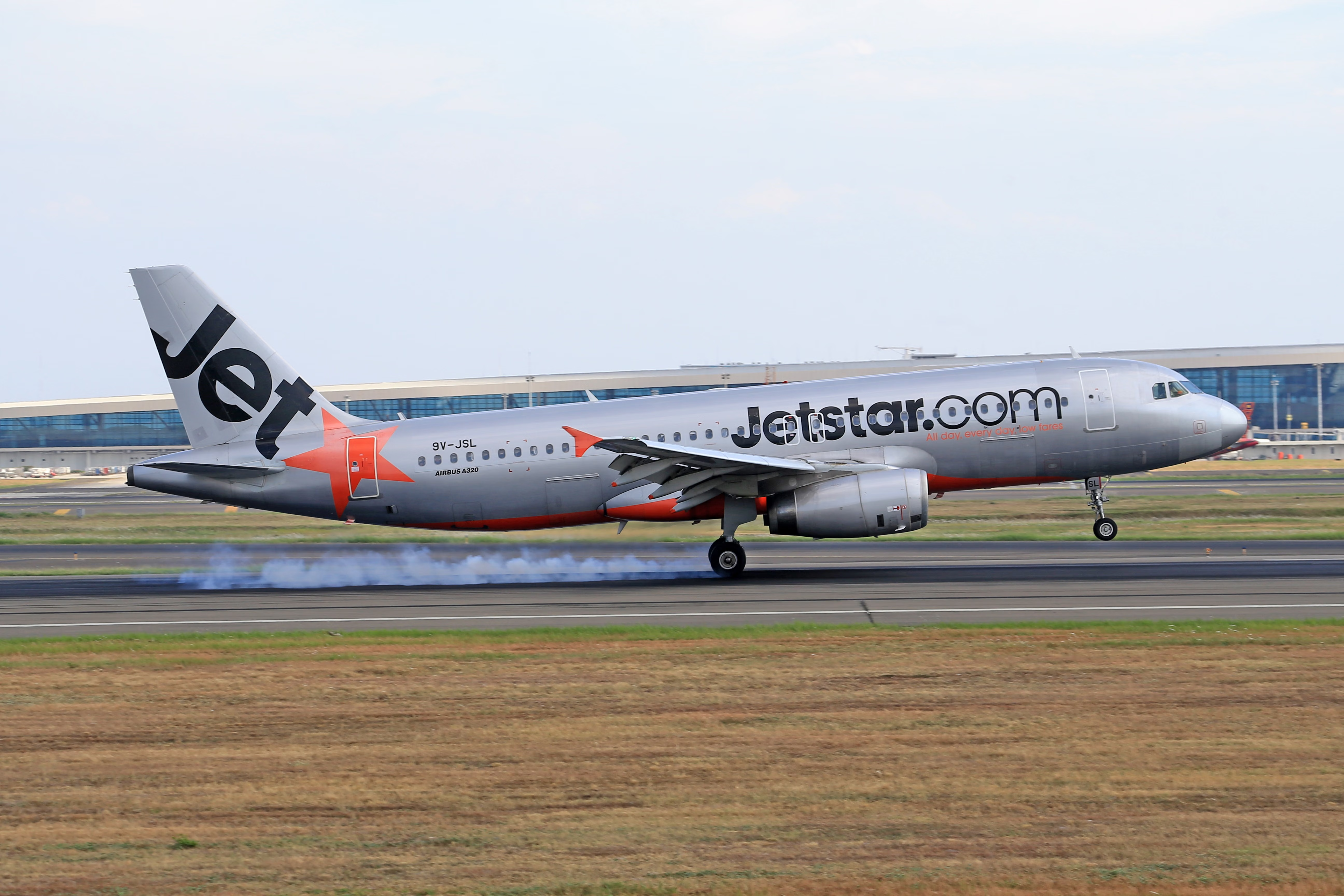
Air safety investigators have launched an urgent inquiry following a tarmac near miss involving a Jetstar domestic flight and a Qatar Airways international jet at Sydney's main aviation hub.
WHAT HAPPENED
On Sunday, a Jetstar aircraft and a Qatar Airways jet came dangerously close to colliding on the tarmac at Sydney Airport in New South Wales, Australia. Australian transport safety authorities immediately opened an official investigation into the incident, which marks the second serious runway or tarmac proximity occurrence at the facility within a two-week period. Air traffic controllers and ground operations are currently under scrutiny to determine how the two commercial carriers were routed into such close proximity.
WHO ARE THE KEY PLAYERS
- Jetstar Airways: A major Australian low-cost airline and a wholly owned subsidiary of the Qantas Group, operating domestic and regional routes.
- Qatar Airways: The state-owned flag carrier of Qatar, operating long-haul international flights out of Doha to major global destinations including Sydney.
- Sydney Airport Corporation: The private entity operating Sydney Kingsford Smith Airport, managing the physical infrastructure, runways, and tarmac zones.
- Australian Transport Safety Bureau: The federal independent agency responsible for investigating transport safety incidents and accidents across Australia.
UNDERSTANDING THE LOCATION
Sydney Kingsford Smith Airport is Australia's busiest aviation gateway, located in Mascot, New South Wales, just eight kilometers from the Sydney central business district. The facility handles millions of international and domestic passengers annually across tightly scheduled parallel and intersecting runways, placing immense pressure on ground traffic management and air traffic control.
BACKGROUND AND CONTEXT
Tarmac incidents and runway incursions—where an aircraft, vehicle, or person is incorrectly situated on a protected area designated for the takeoff and landing of aircraft—represent critical hazards in global commercial aviation. Aviation regulators worldwide enforce strict separation minima on both air routes and ground movements to prevent catastrophic collisions during taxiing, takeoff, and landing phases.
EXPLAINING IMPORTANT REFERENCES
A near miss, formally classified by safety regulators as a proximity occurrence or serious incident, occurs when two or more aircraft come dangerously close to one another without a collision actually taking place. Tarmac safety protocols require constant radar monitoring, visual confirmation by pilots, and precise verbal instructions from air traffic control towers to ensure safe movement across congested airport aprons.
IMPACT ANALYSIS
The recurring nature of these close calls at a premier international hub raises pressing questions regarding ground congestion, staffing levels among air traffic controllers, and communication protocols between airlines and airport operators. For passengers and the broader aviation sector, confidence in ground safety is paramount; repeated incidents risk prompting tighter regulatory audits, increased operational delays as safety buffers are widened, and potential financial penalties for operators found non-compliant with standard operating procedures.
WHAT HAPPENS NEXT
The Australian Transport Safety Bureau will interview the flight crews, review cockpit voice recordings, analyze flight data recorders, and examine air traffic control audio logs from Sunday's event. A preliminary factual report is typically issued within several weeks, followed by a comprehensive final report detailing safety recommendations and any mandatory operational changes for Sydney Airport.
HERO PERSPECTIVE
Australian Transport Safety Bureau investigators are reviewing air traffic control logs and flight data from the Sunday incident at Sydney Kingsford Smith Airport. This event follows a prior proximity occurrence at the same facility within a fourteen-day window, elevating scrutiny on ground separation protocols. Transport authorities have mandated the preservation of all voice recordings to establish the exact sequence of taxi clearances issued to both carriers.
CLOSING
As investigators sift through digital flight data and radio transcripts, the spotlight remains firmly on ground operations at Sydney Airport to ensure rigorous safety standards prevent any future escalation in tarmac proximity risks.