HEADLINE
Nigeria's Minimum Wage Dilemma: A Quest for Realistic Wages Amidst Economic Hardship
OPENING HOOK
The persistent struggle of Nigerian households to meet basic needs in the face of relentless inflation has forced the Federal Government to revisit a critical question: what constitutes a fair and sustainable minimum wage? This move signals an acknowledgment of the severe strain placed on citizens by economic reforms intended to stabilize the nation's finances.
WHAT HAPPENED
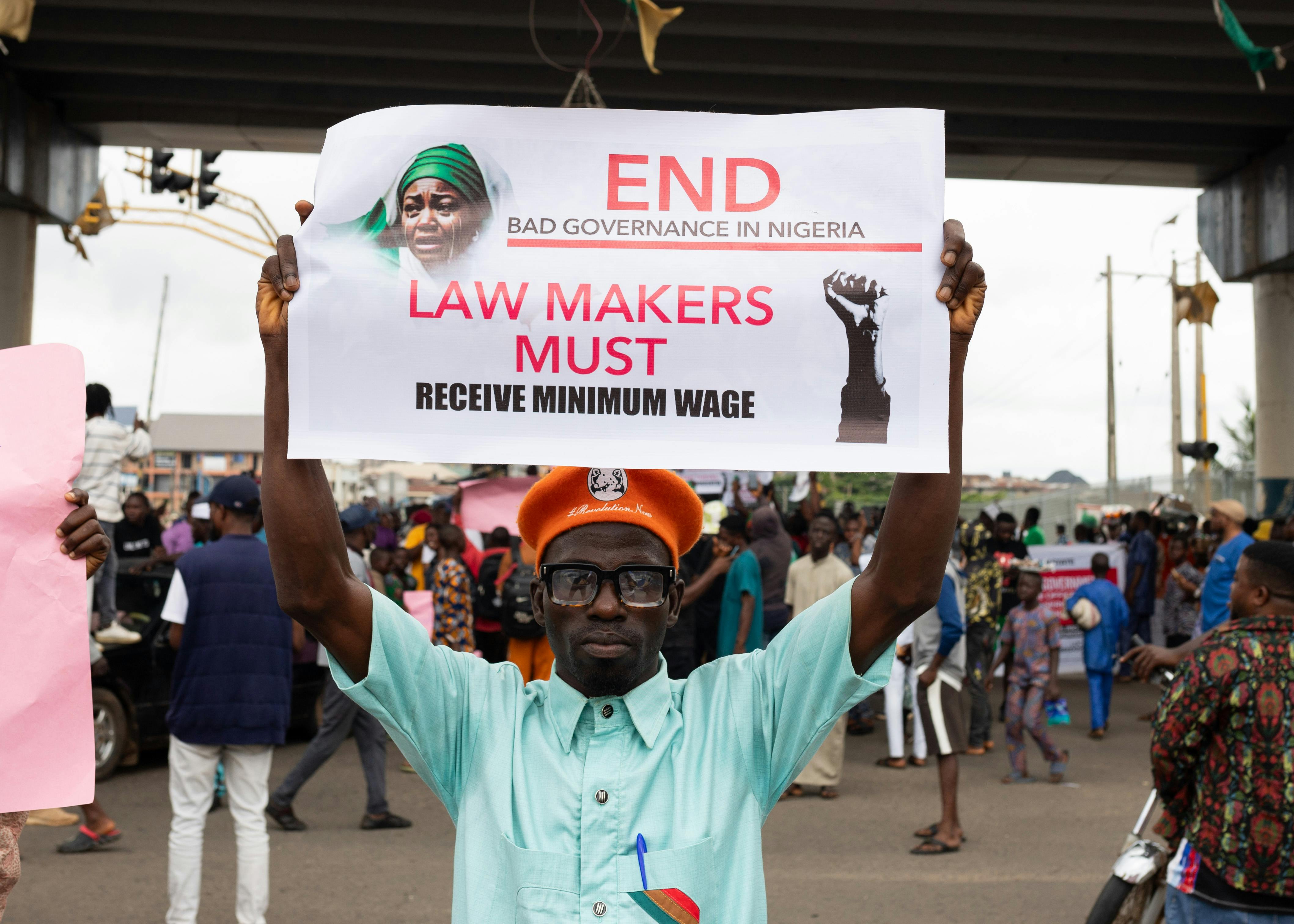
The Federal Government has initiated discussions to review the national minimum wage, a decision spurred by the stark reality that the current N70,000 monthly benchmark, agreed upon in 2024, has been severely eroded by the rising cost of living. This re-evaluation comes as part of ongoing efforts to address the economic fallout from key reforms, including the removal of the petrol subsidy and the unification of exchange rates.
WHO ARE THE KEY PLAYERS
Key players in this unfolding scenario include the **Federal Government of Nigeria**, led by **President Bola Ahmed Tinubu**, whose administration championed the initial economic reforms. The **Nigeria Labour Congress (NLC)**, the umbrella organization for trade unions in Nigeria, represents the interests of workers and has been a vocal advocate for a living wage. The **Organised Private Sector** also plays a crucial role, representing employers who will bear the burden of any new wage increment. The **National Salaries, Incomes and Wages Commission** is the government body responsible for advising on wages and salaries in the public service.
UNDERSTANDING THE LOCATION
Nigeria, Africa's most populous nation and largest economy, is a diverse federation of 36 states and a Federal Capital Territory. The economic implications of a national minimum wage vary significantly across its six geopolitical zones (North-West, North-East, North-Central, South-West, South-East, South-South). The cost of living, including rent, transport, and food prices, differs widely between bustling urban centers like Lagos and Abuja, and more rural areas, making a 'one-size-fits-all' wage a complex policy challenge.
BACKGROUND AND CONTEXT
The current N70,000 minimum wage was a provisional agreement following the initial implementation of President Tinubu's economic reforms in 2024. These reforms, primarily the removal of the petrol (Premium Motor Spirit, PMS) subsidy and the floating of the Naira, were designed to stabilize the economy but led to a sharp increase in inflation. Historically, minimum wage reviews in Nigeria have often been contentious, with labour unions consistently pushing for higher wages to match economic realities, while governments and the private sector grapple with fiscal capacity and potential inflationary pressures. The last significant review before 2024 was in 2019, which set the minimum wage at N30,000.
EXPLAINING IMPORTANT REFERENCES
The **N70,000 minimum wage** refers to the lowest monthly remuneration legally payable to an employee in Nigeria. While seemingly substantial, its purchasing power has significantly diminished. For context, this amount barely covers a bag of rice (which can cost upwards of N50,000), let alone rent, transport, and other essential utilities for a family in many Nigerian cities. **Inflation** is the rate at which the general level of prices for goods and services is rising, and subsequently, the purchasing power of currency is falling. Nigeria has experienced double-digit inflation for several years, exacerbated by the recent economic reforms. These **economic reforms** include the removal of the petrol subsidy, which instantly pushed up transport costs, and the unification of exchange rates, leading to a depreciation of the Naira and higher import costs for goods and services.
IMPACT ANALYSIS
The inadequacy of the current minimum wage has had a profound impact on Nigerian households, pushing many into deeper poverty. Food insecurity, reduced access to healthcare, and inability to afford quality education are direct consequences. For the **Organised Private Sector**, a significant increase in the minimum wage could lead to higher operational costs, potentially impacting employment levels or leading to price increases for goods and services, thus fueling further inflation. Conversely, a realistic living wage could boost consumer spending, stimulate demand, and improve worker productivity and morale. The ongoing discussions highlight the delicate balance between worker welfare and economic stability, with potential for industrial unrest if an acceptable resolution is not found.
WHAT HAPPENS NEXT
A tripartite committee, comprising representatives from the Federal Government, the Nigeria Labour Congress, and the Organised Private Sector, is expected to continue negotiations towards a new, more sustainable minimum wage. The outcome will depend on the government's fiscal capacity, the private sector's ability to absorb increased costs, and the labour unions' resolve. Any new agreement will need parliamentary approval to become law. The long-term implications involve balancing social equity with macroeconomic stability, ensuring that a new wage does not trigger another round of inflationary spirals or stifle job creation, particularly for small and medium enterprises (SMEs).
HERO PERSPECTIVE
Leverage On Heroes Media believes that a nation's strength is intrinsically linked to the well-being of its workforce. The current re-evaluation of Nigeria's minimum wage is not merely a fiscal adjustment; it is a moral imperative. Our editorial stance is that for economic reforms to truly succeed, they must translate into tangible improvements in the lives of everyday Nigerians. A minimum wage that is realistic, sustainable, and capable of providing a dignified standard of living is not just a demand from labour; it is a foundational pillar for national development and social justice. We advocate for transparent, empathetic negotiations that prioritize the human element of economic policy.
CLOSING
The journey towards a truly realistic and sustainable minimum wage in Nigeria is fraught with economic complexities and social demands. As negotiations proceed, the nation watches closely, hopeful for an outcome that addresses the immediate hardships faced by millions and lays a stronger foundation for equitable economic growth.