
HEADLINE
President Tinubu Urges Afreximbank to Drive Africa's Industrialization, Citing Nigeria's Economic Reforms
OPENING HOOK
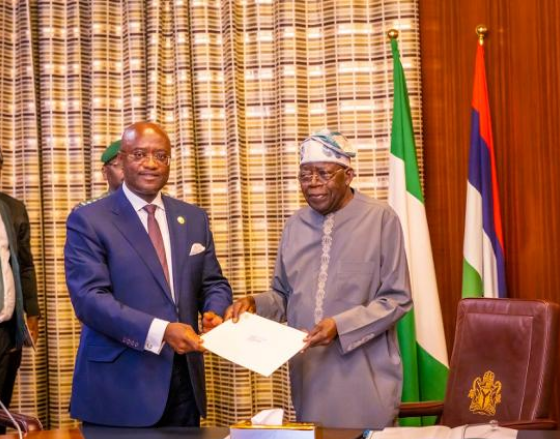
In a significant appeal to foster continental economic growth, President Bola Ahmed Tinubu has challenged the African Export-Import Bank (Afreximbank) to become a more potent catalyst for industrialization across Africa, emphasizing that Nigeria's bold economic reforms are designed to lay a solid groundwork for such ambitious development.
WHAT HAPPENED
President Bola Ahmed Tinubu recently urged the African Export-Import Bank (Afreximbank) to aggressively mobilize financial resources to accelerate Africa's industrialization agenda. He underscored that his administration's recent economic policy shifts, specifically the removal of the petrol (Premium Motor Spirit - PMS) subsidy and the unification of multiple foreign exchange rates, are critical measures aimed at combating systemic corruption and ensuring the long-term economic survival and prosperity of Nigeria.
WHO ARE THE KEY PLAYERS
**President Bola Ahmed Tinubu:** As the current President of Nigeria, he is the chief executive of the Federal Republic of Nigeria and the commander-in-chief of the armed forces. His administration has embarked on a series of economic reforms aimed at restructuring the Nigerian economy.
**Afreximbank (African Export-Import Bank):** This is a pan-African multilateral financial institution established in 1993 to finance and promote intra- and extra-African trade. Headquartered in Cairo, Egypt, it plays a crucial role in providing trade finance solutions and promoting industrial development across the continent.
UNDERSTANDING THE LOCATION
While President Tinubu's call is directed at a continental institution, the immediate context is Nigeria, Africa's most populous nation and largest economy. Nigeria's economic health significantly impacts the broader African landscape. The reforms mentioned, such as fuel subsidy removal, directly affect the daily lives of millions of Nigerians across all six geopolitical zones (North-West, North-East, North-Central, South-West, South-East, South-South), influencing transport costs and market prices. Afreximbank's mandate, however, extends across the entire African continent, aiming to foster economic integration and industrial growth in diverse economies from Accra to Addis Ababa.
BACKGROUND AND CONTEXT
Nigeria has historically grappled with economic inefficiencies, corruption, and a heavy reliance on crude oil exports. The petrol (PMS) subsidy, a long-standing policy, involved the government paying the difference between the landing cost of imported fuel and the pump price, making fuel cheaper for citizens but draining national coffers. Similarly, a system of multiple foreign exchange rates created arbitrage opportunities and distorted the market. Upon assuming office, President Tinubu moved swiftly to end the PMS subsidy and unify the exchange rates, policies he argues are necessary to free up funds for critical sectors and create a more transparent, market-driven economy. These reforms, though causing immediate hardship due to increased costs, are pitched as essential for long-term stability and to attract foreign investment needed for industrialization, a goal shared across many African nations aiming to move beyond raw material exports.
EXPLAINING IMPORTANT REFERENCES
**Fuel Subsidy Removal:** This refers to the Nigerian government's decision to stop paying for the difference between the actual cost of importing petrol (Premium Motor Spirit - PMS) and the price at which it is sold to consumers. Previously, the government spent trillions of naira annually on this subsidy, a sum that could otherwise fund essential services like education and healthcare. The removal has led to a significant increase in the price of PMS, impacting transport fares and the cost of goods across the country.
**Multiple Exchange Rates:** For years, Nigeria operated a system where different foreign exchange rates existed for various transactions (e.g., official rate, parallel market rate, investors' and exporters' window rate). This created opportunities for corruption and made it difficult for businesses to plan. The unification policy aims to consolidate these rates into a single, market-driven rate, promoting transparency and attracting foreign direct investment by simplifying foreign currency transactions.
**Industrialization:** In the African context, industrialization refers to the process of transforming economies from primarily agrarian or resource-extractive bases to more diversified manufacturing and service-oriented economies. This involves developing local industries, adding value to raw materials, creating jobs, and enhancing economic self-reliance. It's seen as a crucial pathway to sustainable development and poverty reduction.
IMPACT ANALYSIS
President Tinubu's call to Afreximbank signals a strategic alignment between Nigeria's domestic economic reforms and a broader continental vision for industrialization. If Afreximbank can effectively mobilize resources, it could unlock significant investment in manufacturing, agro-processing, and technology across Africa. For Nigeria, successfully navigating the current pains of subsidy removal and exchange rate unification could lead to a more stable macroeconomic environment, making it a more attractive destination for Afreximbank-backed projects. However, the immediate impact of the reforms on the average Nigerian has been a rise in the cost of living, with transport and market prices increasing across all geopolitical zones. The success of this vision hinges on the ability of governments to create an enabling environment, manage inflation, and ensure that the benefits of industrialization are inclusive and widely distributed, preventing further economic disparity.
WHAT HAPPENS NEXT
The focus will now be on Afreximbank's response and its capacity to meet this heightened expectation. We should anticipate increased discussions between the bank and African governments, including Nigeria, on specific industrialization projects and financing mechanisms. Domestically, Nigeria's government will need to demonstrate tangible progress in utilizing the savings from subsidy removal for public good and stabilizing the foreign exchange market. Investors, both local and international, will be closely watching for signs of sustained economic stability and policy consistency. Success will likely attract more foreign direct investment, while failure could deepen economic challenges and public skepticism.
HERO PERSPECTIVE
Leverage On Heroes Media views President Tinubu's challenge to Afreximbank as a pivotal moment for Africa. While the immediate economic reforms in Nigeria have introduced significant hardship for citizens, the long-term vision of combating corruption and fostering industrialization is critical for sustainable development. Our editorial angle emphasizes the necessity of transparency and accountability in the deployment of any mobilized funds, ensuring that the benefits of industrialization reach the common person, not just a select few. True heroism in leadership lies not just in making tough decisions, but in ensuring these decisions translate into tangible improvements in the lives of ordinary Nigerians and Africans, building resilient economies that can withstand future shocks and lift millions out of poverty.
CLOSING
The path to industrializing a continent as diverse and complex as Africa is fraught with challenges, yet President Tinubu's direct appeal to Afreximbank underscores a renewed urgency and a strategic push for economic transformation. The success of this continental ambition will largely depend on sustained political will, effective financial mobilization, and a steadfast commitment to transparent governance across all participating nations.