
HEADLINE
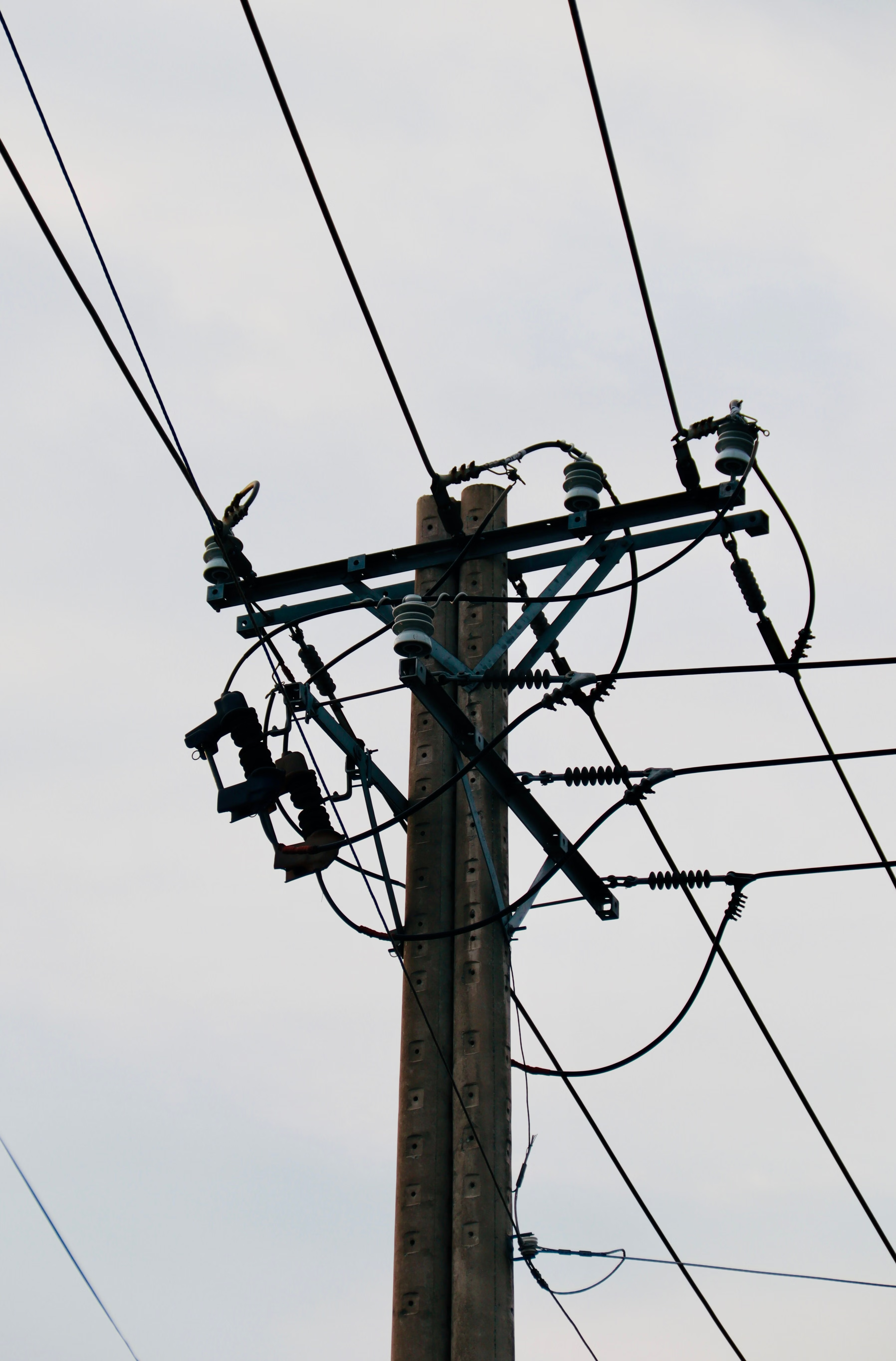
Residents lament erratic power supply in Ogun community
OPENING HOOK
Families and small business owners along Christ Avenue in Ogun State are facing severe financial losses and daily operational hurdles as chronic power failures cripple their neighborhood.
WHAT HAPPENED
Residents of the Christ Avenue Community in Ogun State have formally expressed their frustration over prolonged and unpredictable electricity outages affecting the area. The unstable power supply has brought local micro-enterprises to a standstill, forcing traders to rely heavily on costly petrol-fueled generators to preserve perishable goods and maintain basic operations. Artisans, such as welders and hair salon operators, report that their daily income has dropped significantly because they cannot run their equipment consistently.
WHO ARE THE KEY PLAYERS
Residents of Christ Avenue Community, Ogun State — Local homeowners, commercial tenants, and small-business owners bearing the direct financial and operational brunt of unstable electricity distribution.
UNDERSTANDING THE LOCATION
Ogun State is located in the South-West geopolitical zone of Nigeria, sharing an extensive border with Lagos State. Because of its proximity to the commercial capital, Ogun hosts numerous industrial layouts, satellite residential estates, and commuter towns where thousands of working-class families reside. Power supply challenges in these fast-growing corridors directly impact urban productivity and small-scale manufacturing across the region.
BACKGROUND AND CONTEXT
Power distribution across Nigeria is managed by privatized distribution companies, commonly known as DisCos, which took over operations following the unbundling of the Power Holding Company of Nigeria. Despite various government interventions, grid instability, gas supply shortages to thermal plants, and aging transmission infrastructure continue to cause frequent load shedding and total system collapses. Communities on the tail end of distribution feeders often experience the most severe rationing.
EXPLAINING IMPORTANT REFERENCES
Distribution Companies, or DisCos, are private firms licensed by the federal government to supply electricity directly to homes and businesses, meter customers, and collect bills. When generation drops at national power stations, DisCos are forced to ration electricity across different neighborhoods, leading to prolonged blackouts in various parts of the country.
IMPACT ANALYSIS
Small businesses operating along Christ Avenue face shrinking profit margins as the cost of Premium Motor Spirit, commonly known as petrol, continues to climb. Running generators for long hours increases maintenance expenses and pushes up the retail prices of local goods and services. For households, the lack of reliable power affects children studying at night and compromises home security due to unlit streets.
WHAT HAPPENS NEXT
Affected residents are calling on the local distribution company and community leaders to evaluate the current feeder lines and provide a stable load-shedding schedule. Without infrastructure upgrades or increased allocation from the national grid, local businesses risk permanent closure due to unsustainable operational overheads.
HERO PERSPECTIVE
Residents along Christ Avenue in Ogun State face mounting financial strain as unpredictable power rationing disrupts daily commercial activities. The ongoing reliance on high-cost fuel generators highlights the persistent infrastructure gaps affecting suburban neighborhoods within the South-West geopolitical zone.
CLOSING
As community associations engage local utility representatives for a lasting resolution, the plight of Christ Avenue underscores the wider challenge of achieving reliable electricity distribution for growing residential areas across Nigeria.