
HEADLINE
50 NCDMB Trainees Graduate in Crane Operations in Rivers
OPENING HOOK
Fifty young Nigerians have successfully completed an intensive technical training program in heavy machinery handling, marking a significant step toward replacing foreign expatriates with skilled local hands in the petroleum industry.
WHAT HAPPENED
Fifty participants sponsored by the Nigerian Content Development and Monitoring Board (NCDMB) have graduated in advanced crane operations in Rivers State. The graduation ceremony celebrated the culmination of months of rigorous practical and theoretical training designed to equip participants with safety and technical competencies required to operate heavy lifting equipment in complex industrial environments.
WHO ARE THE KEY PLAYERS
At the center of this initiative is the Nigerian Content Development and Monitoring Board (NCDMB), the federal agency established to oversee, drive, and coordinate local content development in the Nigerian oil and gas industry. Alongside the board are the certified training instructors and the fifty successful trainees who underwent the demanding operational drills.
UNDERSTANDING THE LOCATION
Rivers State is located in the South-South geopolitical zone of Nigeria. As the historic hub of the country's petroleum exploration and production activities, the state hosts numerous multinational oil corporations, servicing companies, and major industrial fabrication yards, making it the ideal venue for specialized technical manpower development.
BACKGROUND AND CONTEXT
Historically, specialized technical roles in Nigeria's capital-intensive oil sector—such as heavy-duty crane operation, subsea engineering, and specialized welding—were predominantly handled by foreign expatriates. To reverse this trend, the federal government enacted local content laws aimed at compelling oil companies to source labor, materials, and services locally. Training programs like this one are designed to bridge the skills gap and ensure Nigerians capture maximum economic value from the nation's natural resources.
EXPLAINING IMPORTANT REFERENCES
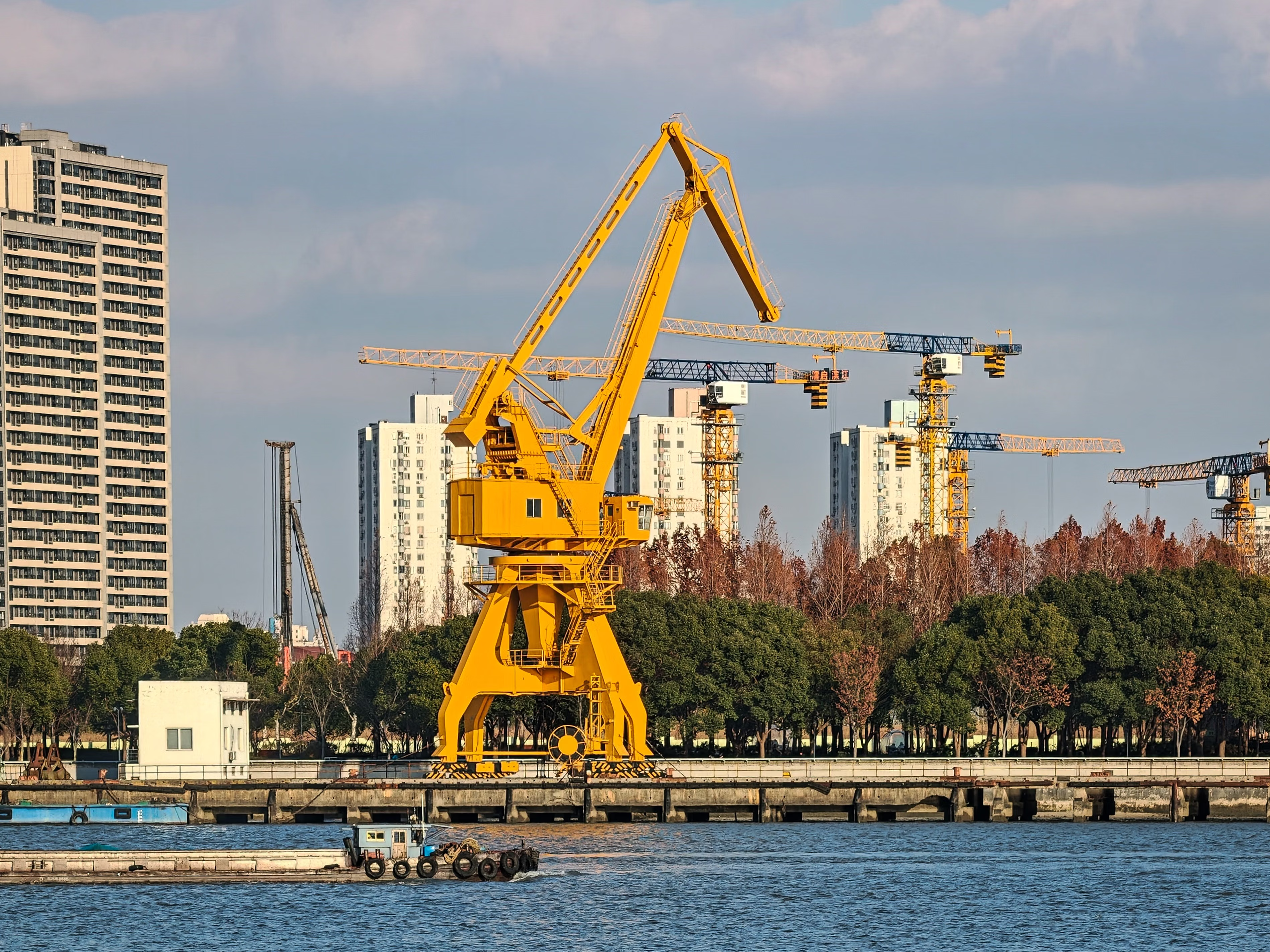
Local content development refers to the deliberate policy of growing indigenous participation, local ownership, and human capital development within domestic industries, particularly the capital-intensive petroleum sector. Crane operations involve the safe maneuvering of heavy loads using specialized machinery, a critical skill required during offshore platform installation and refinery construction where safety compliance is absolute.
IMPACT ANALYSIS
This graduation directly impacts the employment landscape by supplying the oil and gas industry with certified, home-grown professionals. For the beneficiaries, it translates to high-value job opportunities that can comfortably cover standard family expenses, including housing rent and transport costs, which have risen significantly under current economic conditions. Over time, reducing reliance on foreign experts lowers operational overheads for energy firms operating in the South-South region.
WHAT HAPPENS NEXT
Graduates are expected to be deployed into active service across various active oilfields, modular refineries, and marine logistics bases in Rivers State and neighboring coastal states. The NCDMB typically tracks the career progression of its sponsored trainees to ensure they secure formal placement within industry supply chains.
HERO PERSPECTIVE
Fifty trainees sponsored by the Nigerian Content Development and Monitoring Board completed their certification in crane operations in Rivers State. This deployment directly addresses the historical deficit of certified domestic operators mandated under the Nigerian Oil and Gas Industry Content Development Act. By institutionalizing structured technical training at the regional level, the initiative converts statutory local content policy into measurable workforce participation.
CLOSING
The successful graduation of these fifty crane operators underscores the ongoing transition toward self-reliance in Nigeria's heavy industrial sectors, proving that strategic capacity building remains vital for sustainable national economic development.