
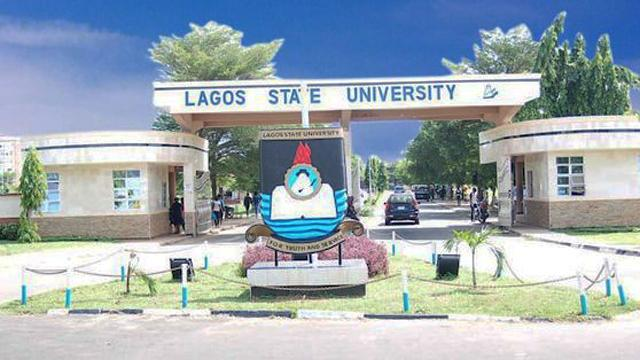
HEADLINE Academic Staff Union of Universities (ASUU) Threatens Shutdown of Lagos State-Owned Universities
OPENING HOOK The specter of industrial action once again looms over Lagos State's higher education landscape, as the Academic Staff Union of Universities (ASUU), Lagos Zone, issues a stern warning of an impending shutdown across three prominent state-owned universities. This development, rooted in allegations of the Lagos State Government's non-implementation of a crucial agreement, could plunge thousands of students and their families into uncertainty.
WHAT HAPPENED The Academic Staff Union of Universities (ASUU), Lagos Zone, has formally threatened to initiate a comprehensive shutdown of three universities owned by the Lagos State Government. The union delivered this warning during a press conference held on Thursday at the Lagos State University of Science and Technology (LASUSTECH), Ikorodu. ASUU accused the state government of neglecting the welfare of university lecturers and failing to implement the terms of the 2025 Federal Government-ASUU Agreement, despite several months of dialogue and engagement. The institutions directly affected by this potential industrial action are the Lagos State University (LASU) in Ojo, the Lagos State University of Science and Technology (LASUSTECH) in Ikorodu, and the Lagos State University of Education (LASUED) with campuses in Ijanikin and Noforija.
WHO ARE THE KEY PLAYERS **The Academic Staff Union of Universities (ASUU)** is a prominent trade union representing academic staff in Nigerian public universities. Renowned for its advocacy for improved working conditions, university autonomy, and adequate funding for higher education, ASUU has a long history of industrial actions, often engaging in strikes to press its demands. The **Lagos Zone** is one of ASUU's regional coordinating bodies, responsible for universities within its geographical jurisdiction, including those owned by the Lagos State Government.
**The Lagos State Government** is the executive body responsible for the governance and administration of Lagos State, Nigeria's most populous state and economic hub. As the proprietor of the affected universities, it holds the ultimate responsibility for their funding, policy direction, and the welfare of their employees, including academic staff. Its commitment to implementing agreements directly impacts the stability of these institutions.
**Lagos State University (LASU)**, established in 1983, is a multi-campus public university located in Ojo, Lagos. It is one of Nigeria's leading state universities, offering a wide range of undergraduate and postgraduate programs. **Lagos State University of Science and Technology (LASUSTECH)**, formerly Lagos State Polytechnic (LASPOTECH), was upgraded to a university in 2022. Located in Ikorodu, it focuses on science, technology, and vocational education. **Lagos State University of Education (LASUED)**, also upgraded from two colleges of education (Adeniran Ogunsanya College of Education and Michael Otedola College of Primary Education) in 2022, is dedicated to teacher training and educational development, with campuses in Ijanikin and Noforija. These three institutions are critical pillars of education and human capital development in Lagos State.
UNDERSTANDING THE LOCATION **Lagos State** is Nigeria's economic nerve center, a bustling megacity with a population exceeding 20 million people. Situated in the South-West geopolitical zone, it serves as a major commercial, financial, and educational hub for West Africa. The stability of its educational institutions is crucial, not just for the state's residents but also for the broader Nigerian economy and workforce development. The high cost of living and transportation in Lagos means that issues concerning lecturers' welfare, such as salaries and allowances, are particularly sensitive, as they directly impact their ability to live and work comfortably within the state. The press conference took place at **Lagos State University of Science and Technology (LASUSTECH)** in Ikorodu, a major residential and industrial town within Lagos State.
BACKGROUND AND CONTEXT The recurring disputes between ASUU and various levels of government over agreements and welfare packages have become a perennial challenge in Nigeria's public university system. Historically, ASUU's demands often revolve around improved funding for universities, better remuneration and allowances for academic staff (which sometimes includes housing, hazard, and research allowances), university autonomy, and revitalisation of infrastructure. The specific **2025 Federal Government-ASUU Agreement** mentioned by the union likely refers to a national accord, perhaps finalized or slated for implementation in the coming year, that outlines specific conditions of service, funding benchmarks, or other commitments. While such agreements are often negotiated at the national level with the Federal Government, their implementation can have implications for state-owned universities, particularly regarding harmonisation of salary structures and adherence to national standards. The present threat highlights a perceived disconnect or delay by the Lagos State Government in aligning its state universities with the provisions of this national agreement, despite what ASUU describes as extensive discussions.
EXPLAINING IMPORTANT REFERENCES **Industrial Unrest** refers to organized actions by workers, such as strikes or protests, aimed at compelling employers to meet their demands. In this context, an ASUU **shutdown** means that all academic activities, including lectures, examinations, and administrative functions directly related to teaching, would cease across the affected universities. This can lead to significant disruptions to the academic calendar, potentially delaying students' graduation.
**Press Conference** is a formal media event where an individual or group makes a public statement or announcement and often takes questions from journalists. ASUU uses this platform to publicly articulate its grievances and warnings, drawing public attention to its demands.
The **2025 Federal Government-ASUU Agreement** is the core of this dispute. While specific details of this particular agreement have not been made public, similar agreements typically cover issues such as the implementation of a new salary structure (like the Consolidated University Academic Salary Structure, CONUASS), payment of earned academic allowances, provisions for university autonomy, and funding for infrastructure development and research. For a state government to implement a 'federal' agreement often means aligning its state-owned institutions with nationally agreed-upon standards for staff welfare and university operations, which can have significant financial implications for the state's budget.
**Lecturers' Welfare** encompasses a range of issues related to the working conditions and remuneration of academic staff. This includes competitive salaries that can cope with the high cost of living in a city like Lagos (which impacts rent, transport, and market prices), appropriate allowances (e.g., hazard, sabbatical, research grants), access to professional development opportunities, and a conducive working environment. Neglecting these aspects can lead to low morale, brain drain, and a decline in the quality of education.