
HEADLINE
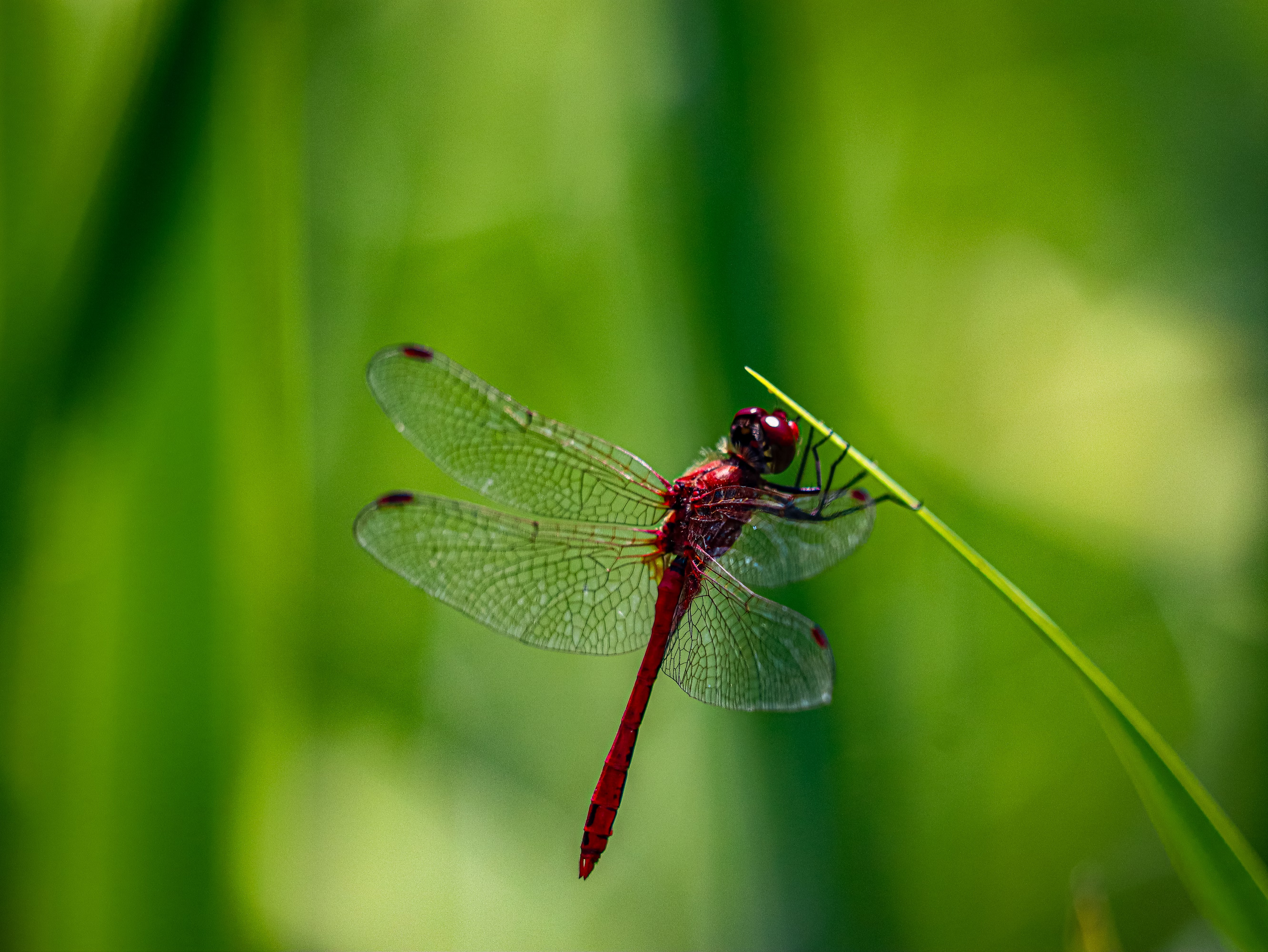
‘Fearless and quietly astonishing’: the dragonfly that migrates further than any other insect
OPENING HOOK
High above the earth, a tiny winged predator navigates across thousands of miles of open ocean, undertaking the longest migration of any insect species known to science.
WHAT HAPPENED
Recent scientific assessments highlighting top invertebrates of the year have cast a spotlight on the wandering glider dragonfly, scientifically known as Pantala flavescens. This remarkable insect is celebrated for its unmatched migratory feats, traversing vast stretches of water and continent. Descended from ancient lineages, the species operates as a single, interbreeding global population rather than fragmented regional groups.
WHO ARE THE KEY PLAYERS
Key figures not yet publicly identified — this article will be updated as names are confirmed
UNDERSTANDING THE LOCATION
The wandering glider inhabits tropical and temperate regions across the globe, frequently utilizing weather systems such as monsoons to carry it across continents and oceans, including major trans-oceanic crossings between India and Africa.
BACKGROUND AND CONTEXT
Dragonflies belong to the order Odonata, whose ancestry stretches back roughly 300 million years to prehistoric griffin flies. Over hundreds of millions of years, their basic physiological design has remained remarkably stable because it is exceptionally effective for aerial hunting and long-distance flight.
EXPLAINING IMPORTANT REFERENCES
Odonates are an order of carnivorous insects comprising dragonflies and damselflies. The wandering glider specifically relies on seasonal wind patterns and rainfall to trigger its breeding cycles in temporary freshwater pools found across different continents.
IMPACT ANALYSIS
Understanding the global connectivity of insect populations helps entomologists track biodiversity health and ecosystem resilience. Because wandering gliders act as efficient predators of mosquitoes and other small pests, their widespread movements play a vital role in natural pest control across multiple agricultural and urban zones.
WHAT HAPPENS NEXT
Researchers continue to study genetic markers across international populations to confirm the exact intercontinental pathways and generational relay flights undertaken by these insects.
HERO PERSPECTIVE
Pantala flavescens belongs to the order Odonata, which diverged from ancestral winged insects roughly 300 million years ago. Tracking the trans-oceanic flights of this specific insect requires international ecological monitoring across the Indian Ocean and African migration corridors.
CLOSING
As research into invertebrate migration expands, the wandering glider remains a premier example of evolutionary resilience and global ecological interconnectedness.