
HEADLINE
Governor Fintiri Calls for Responsible, Peace-Oriented Journalism in Adamawa
OPENING HOOK
In a nation as diverse and dynamic as Nigeria, the role of the media transcends mere information dissemination; it is a critical pillar for fostering unity, understanding, and progress. Against this backdrop, a significant call has emerged from Adamawa State, urging media practitioners to embrace a journalism that actively builds peace and promotes responsible information management.
WHAT HAPPENED
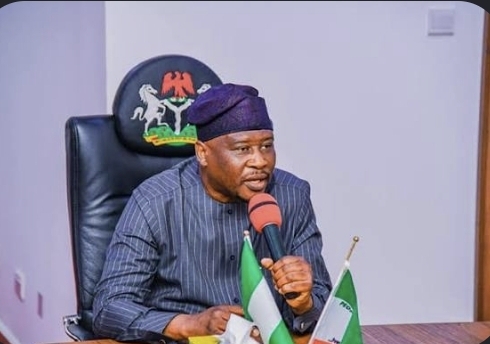
Adamawa State Governor, Ahmadu Umaru Fintiri, recently implored journalists and information officers to adopt responsible information management practices and peace-oriented journalism. This call, aimed at promoting social cohesion and sustainable development, was made during a one-day media workshop on responsible information management held at the Livak Signature Hotel in Yola. The Governor, represented by the Commissioner for Information and Strategy, Leader Leneke, underscored the strategic position media practitioners hold in society and the imperative to uphold professionalism in their information dissemination efforts.
WHO ARE THE KEY PLAYERS
**Ahmadu Umaru Fintiri** is the incumbent Governor of Adamawa State. As the chief executive of the state, his pronouncements carry significant weight, guiding policy and public discourse within his jurisdiction. His administration is tasked with governance, security, and development initiatives for the people of Adamawa.
**Leader Leneke** serves as the Commissioner for Information and Strategy in Adamawa State. In this capacity, he acts as the primary spokesperson for the state government and is responsible for managing public information, communication strategies, and fostering a positive relationship between the government and the media. His representation of the Governor at the workshop highlights the importance the state government places on media conduct.
**Journalists and Information Officers** are the primary audience for this call. This group includes reporters, editors, broadcasters, online content creators, and public relations professionals who gather, process, and disseminate news and information to the public. Their actions directly influence public perception, inter-communal relations, and the overall social fabric.
UNDERSTANDING THE LOCATION
**Adamawa State** is one of the thirty-six states of Nigeria, located in the North-East geopolitical zone of the country. Its capital is Yola. The state shares borders with Borno, Gombe, and Taraba states, and internationally with Cameroon. Adamawa is known for its diverse ethnic groups and cultures, as well as its rich agricultural landscape. Historically, like much of the North-East, Adamawa has faced security challenges, including the lingering effects of insurgency and communal clashes, making peacebuilding and conflict mitigation efforts, including through media, particularly crucial. **Yola**, as the state capital, serves as the administrative and economic hub of Adamawa, hosting key government institutions, businesses, and a vibrant media presence. The **Livak Signature Hotel** is a hospitality establishment in Yola, serving as a common venue for workshops and events.
BACKGROUND AND CONTEXT
The Nigerian media landscape has a long history, playing a pivotal role in the nation's independence struggle and democratic consolidation. However, in recent years, especially with the proliferation of social media and the rapid spread of information, the challenge of misinformation and disinformation has grown significantly. This is particularly critical in regions like Adamawa, where sensitive issues such as ethnic relations, resource allocation, and security concerns can be easily exacerbated by irresponsible reporting. The call for peace-oriented journalism is not new in Nigeria; it echoes sentiments often expressed by stakeholders who recognize the media's power to either inflame tensions or foster understanding. Previous administrations and civil society organizations have also advocated for media ethics and responsibility, especially in times of elections or communal unrest.
EXPLAINING IMPORTANT REFERENCES
**Responsible Information Management** refers to the ethical and professional handling of news and data. For journalists, this means verifying facts rigorously, attributing sources correctly, avoiding sensationalism, and considering the potential impact of their reports on individuals and society. It's about ensuring accuracy and fairness, much like a market trader ensuring fair prices and quality goods for customers.
**Peace-Oriented Journalism** is an approach to reporting that focuses on the root causes of conflict, highlights efforts towards peace, gives voice to all sides, and avoids language that might escalate tensions. Instead of merely reporting violence, it seeks to understand and explain the dynamics, humanize those involved, and explore potential solutions, contributing to social cohesion rather than division.
**Social Cohesion** describes the degree to which people in a society feel a sense of belonging, trust, and willingness to participate in collective action. In a multi-ethnic, multi-religious society like Nigeria, it is vital for stability, preventing conflicts, and allowing communities to live and work together harmoniously, much like different family members cooperating to build a compound.
**Sustainable Development** refers to development that meets the needs of the present without compromising the ability of future generations to meet their own needs. It encompasses economic growth, social equity, and environmental protection. Responsible reporting contributes by informing the public about development issues, holding leaders accountable, and promoting inclusive dialogue necessary for long-term progress.
IMPACT ANALYSIS
Governor Fintiri's appeal carries significant weight, particularly for a state like Adamawa, which has experienced its share of societal friction. If embraced, responsible and peace-oriented reporting could lead to a more informed citizenry, reduced inter-communal tensions, and stronger social bonds. This approach can help counter the spread of 'fake news' and inflammatory content, which often fuels distrust and conflict. For journalists, it means a renewed commitment to ethical practice, potentially enhancing their credibility and the public's trust in media institutions. However, the implementation faces challenges, including pressures from political actors, economic constraints on media houses, and the safety risks journalists sometimes face while reporting sensitive issues. There's also the delicate balance between freedom of expression and the imperative of responsibility, which requires careful navigation by all parties.
WHAT HAPPENS NEXT
The call from Governor Fintiri sets a clear expectation for media practitioners in Adamawa State. Moving forward, it is anticipated that media organizations and regulatory bodies will reinforce training and ethical guidelines for their members. There may be increased collaboration between the state government, media houses, and civil society organizations to conduct more workshops and dialogues on responsible reporting. The effectiveness of this call will largely depend on the willingness of individual journalists to internalize these principles and the support they receive from their employers and the wider community. It also places a responsibility on the government to create an enabling environment where journalists can report freely and responsibly without fear of intimidation or censorship.
HERO PERSPECTIVE
Leverage On Heroes Media stands firmly on the principle that the media is not just a mirror reflecting society, but a powerful tool for shaping it. Governor Fintiri's call for responsible and peace-oriented journalism resonates deeply with our editorial ethos. We believe that in a nation striving for unity and progress, the media has a heroic duty to prioritize truth, foster dialogue, and actively contribute to social cohesion and sustainable development. This is not merely an appeal for good practice, but a fundamental requirement for building a stronger, more resilient Nigeria.
CLOSING
As Adamawa State, and indeed Nigeria, navigates its path towards greater stability and prosperity, the role of the media remains indispensable. The Governor's message serves as a timely reminder that the power of the pen and microphone comes with immense responsibility, urging all in the media profession to be champions of peace and truth.