
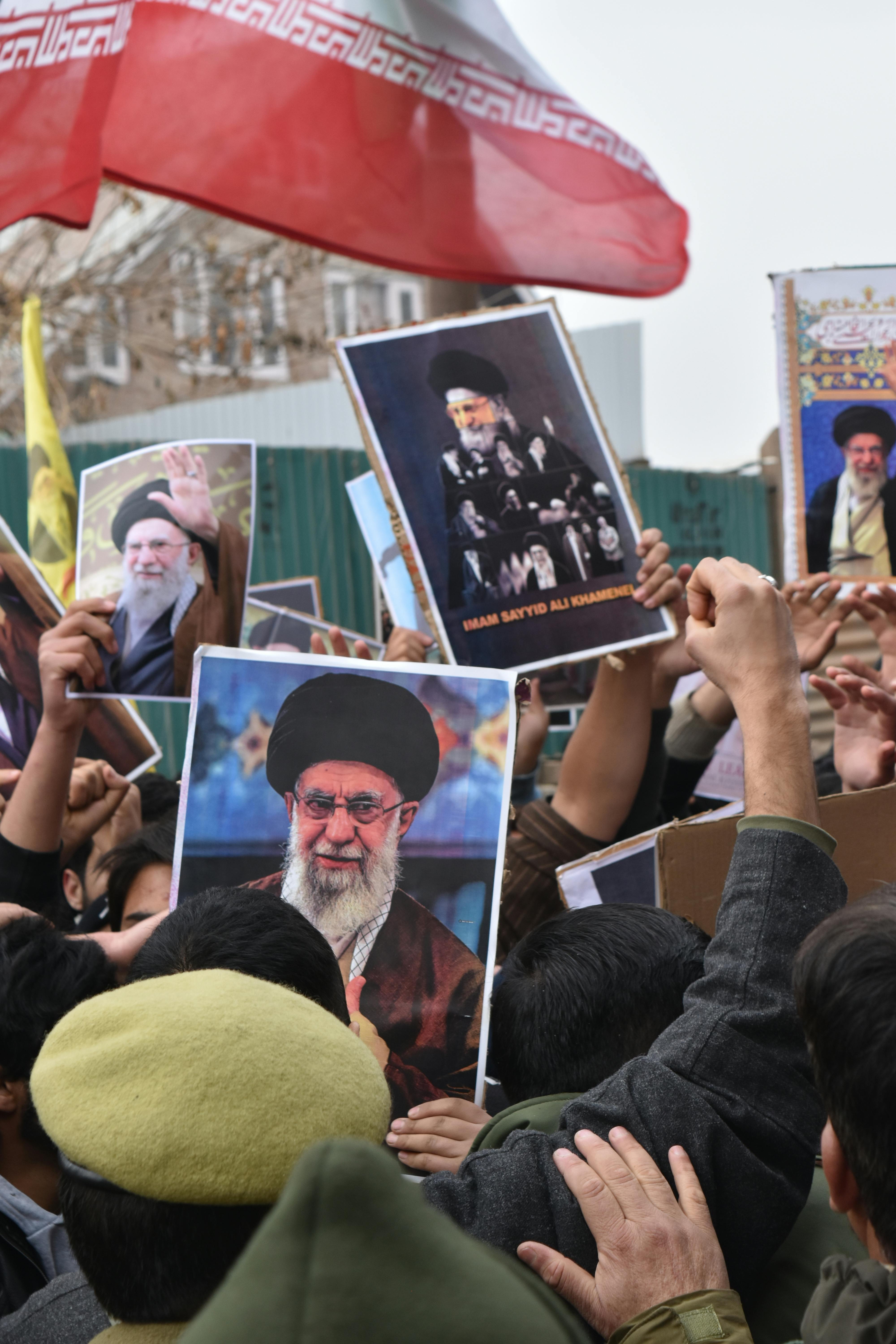
HEADLINE
Iran at a Crossroads: Navigating the Post-Supreme Leader Era and Future Challenges
OPENING HOOK
The Islamic Republic of Iran stands at a significant juncture, navigating the immediate aftermath of the funeral of its late Supreme Leader. This period of transition raises profound questions about the nation's future trajectory, both internally and on the global stage.
WHAT HAPPENED
Following the recent funeral rites for its late Supreme Leader, Iran is now firmly in a period of leadership transition. This pivotal moment necessitates that the new leadership address a complex array of long-standing domestic issues and intricate foreign policy dilemmas. The focus now shifts to how these new helmsmen will steer the nation through economic pressures, social expectations, and regional geopolitical tensions.
WHO ARE THE KEY PLAYERS
At the heart of Iran's governance is the **Supreme Leader**, the highest spiritual and political authority, whose passing triggers this current transition. The **Assembly of Experts** is a key body of 88 clerics responsible for electing and supervising the Supreme Leader. The **Guardian Council**, comprising 12 jurists, vets all legislation and electoral candidates, ensuring adherence to Islamic law. The **President of Iran** serves as the head of government, while the **Islamic Revolutionary Guard Corps (IRGC)** is a powerful military force with significant economic and political influence, distinct from the regular armed forces.
UNDERSTANDING THE LOCATION
Iran, officially the Islamic Republic of Iran, is a large country in Western Asia, bordered by Iraq, Turkey, Armenia, Azerbaijan, Turkmenistan, Afghanistan, and Pakistan, with coastlines on the Caspian Sea and the Persian Gulf. Its strategic location makes it a critical player in Middle Eastern geopolitics. The nation is rich in oil and natural gas, resources central to its economy and its complex relationship with global powers. Its capital city is Tehran.
BACKGROUND AND CONTEXT
Since the 1979 Islamic Revolution, Iran has been governed by a unique system where ultimate authority rests with the Supreme Leader, who is often described as the 'spiritual father' of the nation, guiding both religious and state affairs. This system, established by Ayatollah Ruhollah Khomeini, has seen only two Supreme Leaders. The transition period following the passing of such a figure is constitutionally defined, involving the Assembly of Experts, but the chosen successor's approach will inevitably shape Iran's direction for decades to come, impacting everything from the economy to its nuclear program.
EXPLAINING IMPORTANT REFERENCES
The **Supreme Leader** holds comprehensive power, including control over the military, judiciary, and state media, and sets the overall policy direction. The **Assembly of Experts** is a council of senior clerics, elected by popular vote, tasked with choosing the Supreme Leader and, theoretically, monitoring his performance. The **Guardian Council** ensures that all laws passed by the Majlis (parliament) are compatible with Islamic principles and the constitution, and also screens candidates for elections. The **Islamic Revolutionary Guard Corps (IRGC)** is an elite military force established after the 1979 revolution to protect the Islamic system and has expanded its influence across various sectors.
IMPACT ANALYSIS
The transition in Iran's supreme leadership is expected to have far-reaching implications. Domestically, it could influence social freedoms, economic policies aimed at tackling inflation and unemployment, and the ongoing struggle against corruption. For the average Nigerian, understanding Iran's stability is crucial, as global oil markets, which directly affect petrol prices and government revenues here, are often sensitive to Middle Eastern developments. Internationally, the new leadership's stance on its nuclear program, its relationship with regional rivals like Saudi Arabia, and its interactions with global powers, particularly the United States and European nations, will be closely watched. Any shift could ripple through the global economy and security landscape.
WHAT HAPPENS NEXT
The immediate focus will be on the selection process for the new Supreme Leader by the Assembly of Experts. Once chosen, the new leadership will face the daunting task of consolidating power and articulating a clear vision for the nation. Key areas demanding attention include navigating international sanctions that have crippled the economy, managing domestic dissent, and recalibrating foreign policy in a volatile region. Observers will be keen to see if the new leadership maintains the previous hardline stance or signals a more pragmatic approach to engagement with the West and regional neighbours.
HERO PERSPECTIVE
Leverage On Heroes Media views Iran's leadership transition as a critical juncture for regional and global stability. Our editorial angle emphasizes the necessity for transparent governance, economic reforms that benefit the common Iranian, and a foreign policy that prioritizes de-escalation and peaceful dialogue. We believe that a stable and prosperous Iran, engaged constructively with the international community, is vital for the broader peace and economic well-being of the Middle East and beyond, impacting global energy security and trade.
CLOSING
As Iran embarks on this new chapter, the world watches with keen interest, understanding that the choices made by its new leadership will profoundly shape not only the future of the nation but also the intricate dynamics of international relations.