
HEADLINE
Iran Denies Peace Talks After the United States Cancels Military Strikes
OPENING HOOK
Global markets brace for further uncertainty as Tehran firmly rejects claims of ongoing diplomatic negotiations, even after Washington abruptly halts planned military operations.
WHAT HAPPENED
Iranian authorities have officially denied that any peace talks are taking place with the United States. This diplomatic friction follows a decision by President Donald J. Trump to cancel imminent military strikes against Iranian targets. While the suspension of potential armed conflict offered a brief sigh of relief to international financial markets, the denial of backchannel negotiations leaves foreign exchange and energy commodities exposed to sudden price swings.
WHO ARE THE KEY PLAYERS
Donald J. Trump serves as the President of the United States, guiding American and overseeing military postures in the Middle East. Iranian state officials represent the Tehran administration, managing official communications and foreign relations in response to US policy shifts.
UNDERSTANDING THE LOCATION
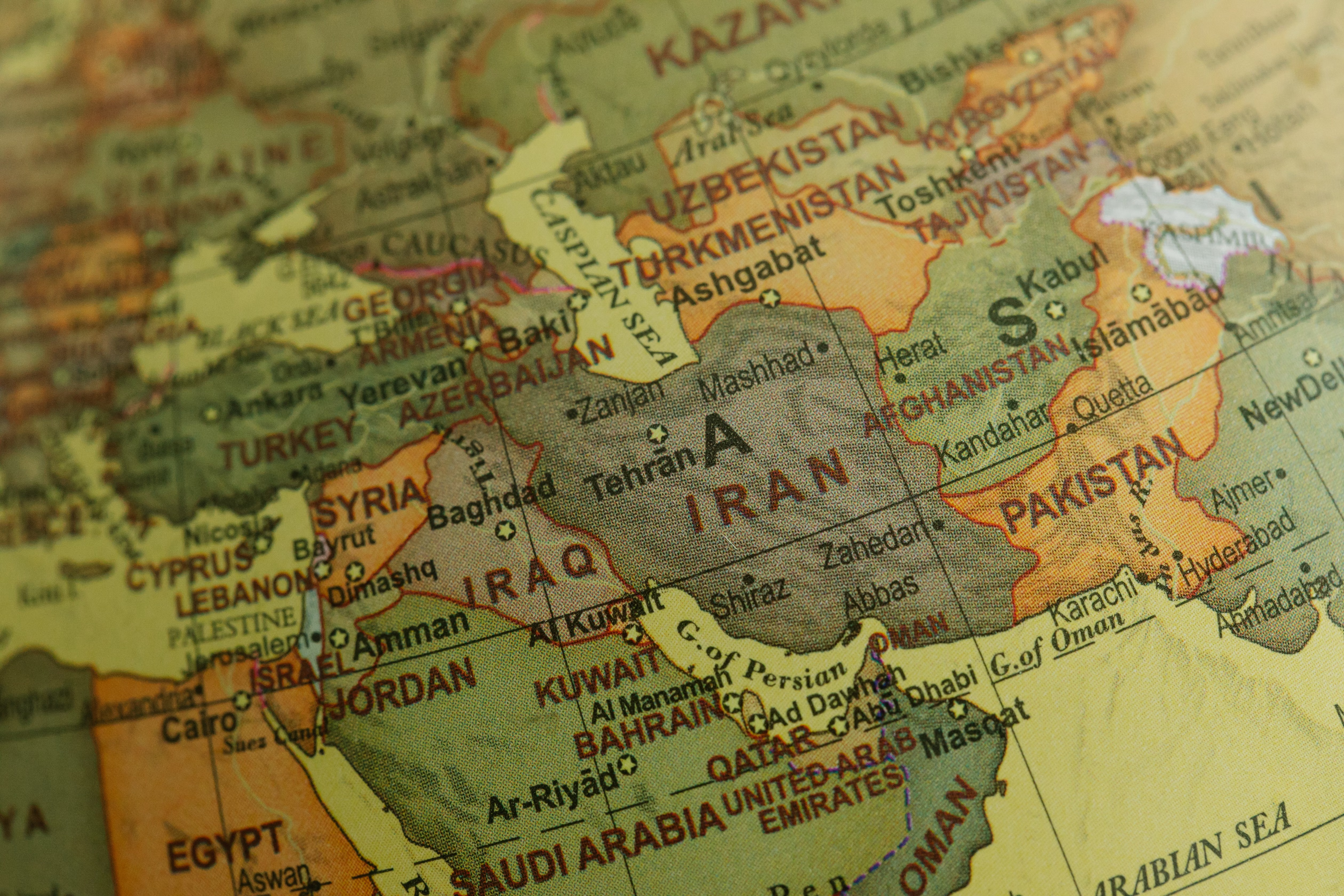
Tehran is the capital city of Iran, serving as the political and economic heartbeat of the Islamic Republic. Decisions made within its government offices directly influence the geopolitical stability of the Middle East and the global supply of crude oil.
BACKGROUND AND CONTEXT
Tensions between Washington and Tehran have remained high for decades, rooted in nuclear policy disputes, regional proxy conflicts, and harsh economic sanctions. Financial markets closely watch these diplomatic standoffs, as any escalation in the region instantly drives up the cost of oil and ripples through global shipping and investment costs.
EXPLAINING IMPORTANT REFERENCES
Military strikes refer to targeted armed attacks by military forces against strategic assets. In this context, the cancellation of such operations temporarily averts physical conflict but leaves underlying political disputes unresolved.
IMPACT ANALYSIS
For ordinary citizens and investors, ongoing geopolitical friction translates into market volatility. When tensions rise between major powers, the cost of imported goods, fuel, and foreign exchange often becomes unpredictable, tightening budgets for businesses and households alike.
WHAT HAPPENS NEXT
Analysts expect market watchers and diplomats to monitor the region closely for any shift in rhetoric from either Washington or Tehran. Further developments will likely dictate whether diplomatic channels can eventually open or if tensions will escalate further.
HERO PERSPECTIVE
President Donald J. Trump ordered the cancellation of military strikes, yet Iranian officials firmly rejected any ongoing peace talks regarding an imminent deal. This diplomatic impasse leaves international energy markets vulnerable to sudden policy shifts from Washington and Tehran.
CLOSING
The fragile standoff between the United States and Iran underscores the delicate balance of global economic stability as markets await clearer diplomatic signals.