
HEADLINE
Michigan Military Exercise Preparing Thousands of Troops for Changing Battlefield
OPENING HOOK
Heavy artillery fire echoed across northern Michigan training grounds as more than 9,000 service members converged to test combat readiness for an evolving global conflict landscape.
WHAT HAPPENED
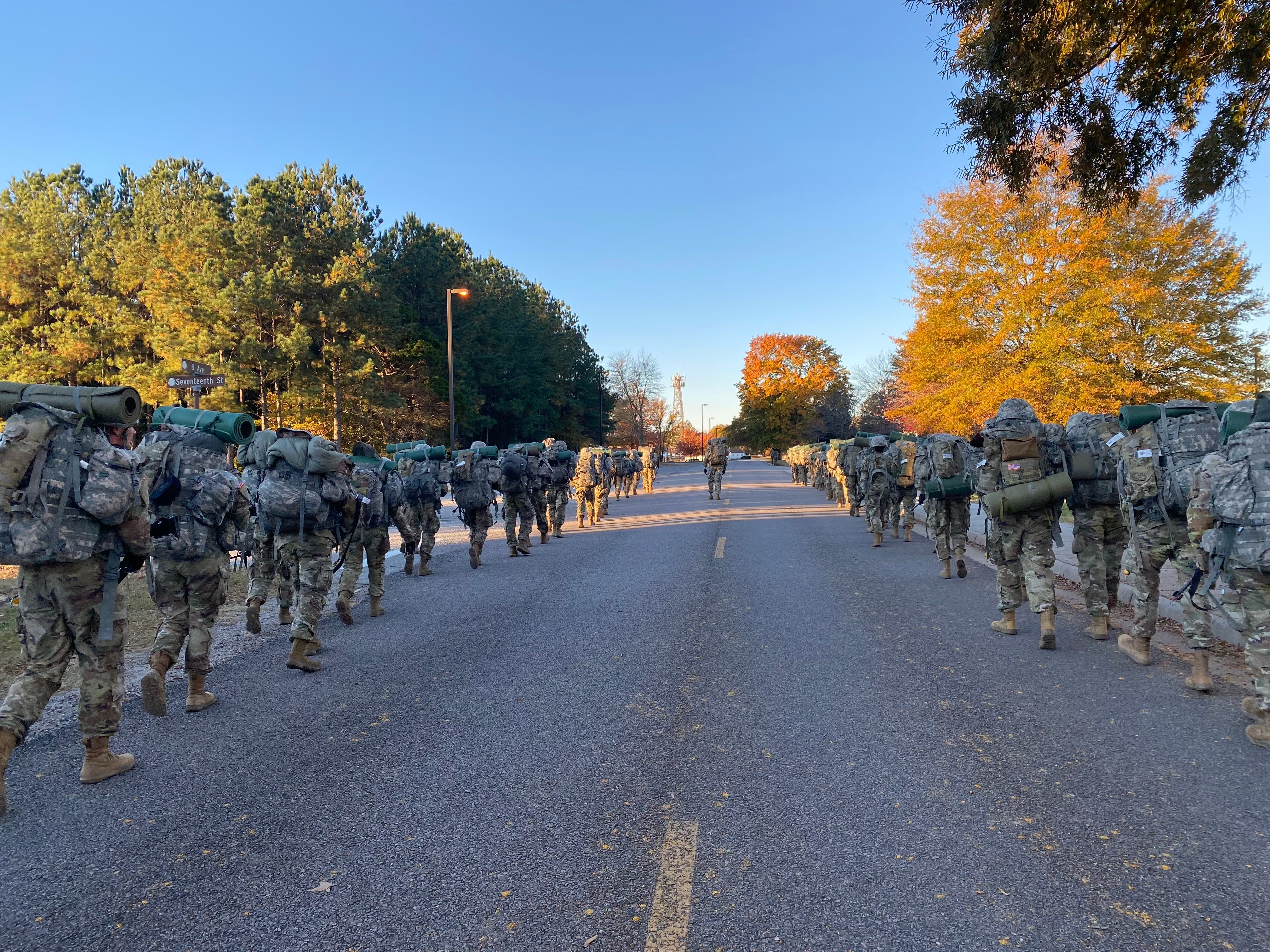
More than 9,000 participants drawn from 36 U.S. states and territories alongside five international allied nations have mobilized for Northern Strike 26-2. This exercise ranks as one of the largest reserve-component military readiness drills conducted in the United States. Troops are engaging in live-fire maneuvers, joint tactical drills, and integrated command operations designed to mirror contemporary combat challenges.
WHO ARE THE KEY PLAYERS
David Kennedy, a public affairs officer with the Michigan National Guard, coordinates information regarding the scale and objectives of the deployment. Brigadier General Ravindra Wagh of the Michigan National Guard provides military leadership and operational oversight for the training operations.
UNDERSTANDING THE LOCATION
The exercises take place across expansive training grounds in northern Michigan, utilizing specialized ranges capable of supporting heavy armor, artillery, and combined air-ground maneuvers. Michigan's diverse terrain offers strategic simulation environments for multi-domain warfare exercises.
BACKGROUND AND CONTEXT
Northern Strike originated in 2012 and has since expanded into a biannual fixture for military training. According to organizers, this summer iteration stands as the largest since the program's inception, reflecting an urgent push by defense planners to modernize reserve forces in response to geopolitical shifts.
EXPLAINING IMPORTANT REFERENCES
Reserve-component forces refer to military personnel who serve on a part-time basis, such as the National Guard and federal reserves, balancing civilian occupations with military obligations. Multi-domain warfare is a military doctrine that coordinates operations across land, air, sea, space, and cyberspace simultaneously.
IMPACT ANALYSIS
Large-scale readiness exercises validate the operational competence of reserve units, ensuring seamless integration with active-duty forces and international allies. For local economies near the training grounds, the influx of thousands of personnel generates temporary economic activity through lodging, logistics, and supply contracts.
WHAT HAPPENS NEXT
As Northern Strike 26-2 concludes its current deployment phase, participating units will conduct after-action reviews to integrate lessons learned into their home-station training programs. Defense planners will use the performance data to shape future iterations of the Northern Strike series.
HERO PERSPECTIVE
Brigadier General Ravindra Wagh and public affairs officer David Kennedy oversee operations involving over 9,000 participants from 36 states and territories during Northern Strike 26-2. This exercise, running twice a year since its 2012 inception, represents the largest summer mobilization in its history as reserve components adapt to rapid tactical shifts.
CLOSING
The expansion of joint exercises highlights the ongoing adaptation of military forces to meet modern security demands through rigorous allied cooperation.