
HEADLINE
President Tinubu Elevates Nasarawa Polytechnic to University Status, Targets Solid Minerals Sector Growth
OPENING HOOK
In a significant policy decision poised to reshape higher education and economic diversification, President Bola Ahmed Tinubu has given his assent to the upgrade of the Nasarawa State Polytechnic to a university. This move underscores the administration's commitment to equipping young Nigerians with practical skills essential for national development, particularly within the burgeoning solid minerals sector.
WHAT HAPPENED
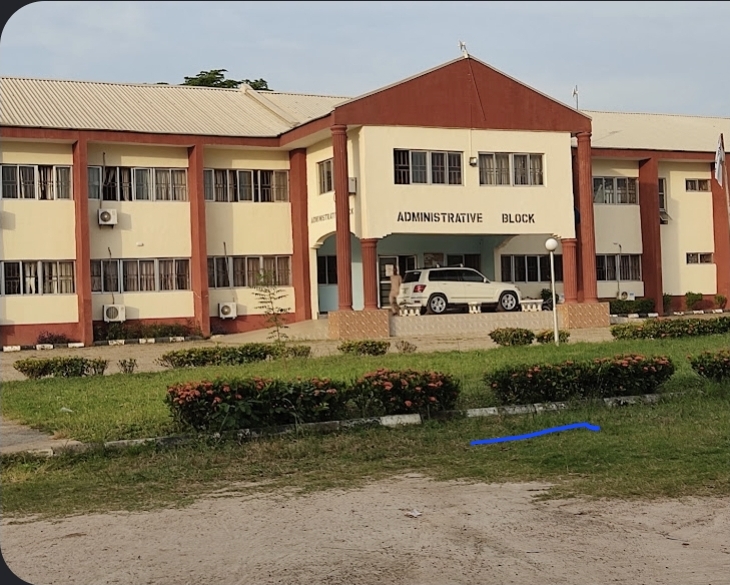
President Bola Ahmed Tinubu recently approved the upgrade of the Nasarawa State Polytechnic, located in Keffi, to a university. This directive is part of a broader federal government strategy aimed at strengthening technical education across the country, fostering human capital development, and strategically leveraging Nigeria's extensive, yet largely untapped, solid minerals potential.
WHO ARE THE KEY PLAYERS
The primary actor in this development is **President Bola Ahmed Tinubu**, the incumbent President of Nigeria since May 29, 2023, whose administration initiated and approved this policy. The **Nasarawa State Government** is also a key player, as the institution falls within its jurisdiction and will directly benefit from and be involved in the implementation of the upgrade. Lastly, the **Nasarawa State Polytechnic**, now set to become a university, is the central institution affected by this transformation, with its management, staff, and students being direct stakeholders.
UNDERSTANDING THE LOCATION
**Nasarawa State** is situated in the North-Central geopolitical zone of Nigeria, often referred to as the Middle Belt. Created in 1996 from parts of Plateau State, its capital is Lafia. The state is strategically located, bordering the Federal Capital Territory (Abuja) to the west, making it a crucial gateway. Nasarawa is renowned for its rich agricultural landscape, producing food crops like yam, cassava, and maize. More significantly, it is a hub for various solid minerals, including barite, salt, limestone, and tantalite, which aligns directly with the federal government's stated objectives for the institution's upgrade. The specific polytechnic is located in Keffi, a prominent town in Nasarawa State known for its historical significance and growing educational institutions.
BACKGROUND AND CONTEXT
The push to transform polytechnics into universities is not new in Nigeria. Historically, polytechnics were established to provide technical and vocational education, awarding National Diploma (ND) and Higher National Diploma (HND) certificates, focusing on practical skills for direct industry application. Universities, on the other hand, traditionally offered more theoretical, research-oriented degrees. However, a long-standing disparity in perception and career progression has often seen university degrees favored over HNDs. President Tinubu's administration has consistently articulated a vision for economic diversification away from over-reliance on oil, emphasizing the development of sectors like agriculture, manufacturing, and solid minerals. This upgrade aligns with that vision, aiming to create a workforce that is not just academically sound but also practically equipped to drive these key sectors.
EXPLAINING IMPORTANT REFERENCES
**Technical education** in Nigeria refers to a system of education focused on practical skills, vocational training, and applied sciences, designed to produce technicians, technologists, and skilled artisans. This contrasts with traditional university education, which tends to be more theoretical. The goal is to bridge the skills gap in industries. **Human capital development** is the process of improving the skills, knowledge, and abilities of a nation's workforce through education, training, and healthcare. It's about investing in people so they can contribute more effectively to the economy. Nigeria's **solid minerals potential** refers to the country's vast untapped reserves of non-oil mineral resources, such as gold, iron ore, lead, zinc, limestone, barite, and coal. Developing this sector is crucial for economic diversification and job creation, moving Nigeria beyond its reliance on crude oil. The upgrade of a **polytechnic to a university** signifies a change in its mandate, allowing it to award bachelor's, master's, and doctoral degrees, typically broadening its scope to include more research, theoretical studies, and a wider range of academic disciplines, while ideally retaining its practical roots.
IMPACT ANALYSIS
This upgrade carries significant implications. Positively, it could lead to an enhanced quality of education, attracting more students and highly qualified faculty members, thereby producing a more skilled workforce. For Nasarawa State, it promises increased economic activity, job creation, and improved infrastructure. Crucially, by focusing on solid minerals, the new university could become a specialized hub for research and development in mining, geology, and related fields, directly feeding into the national diversification agenda. This could help formalize and optimize the solid minerals sector, which has often been dominated by informal operations. However, challenges remain, including ensuring adequate funding for infrastructure, laboratories, and modern equipment, as well as maintaining academic standards that justify the university status. There's also the risk that the institution might lose its core technical and practical focus in the quest for traditional university accreditation, potentially defeating the original purpose of strengthening technical education.
WHAT HAPPENS NEXT
Following President Tinubu's approval, the next steps will involve legislative processes to formally establish the new university, likely through an Act of the National Assembly. This will be followed by accreditation processes by the National Universities Commission (NUC) to ensure the institution meets the required standards for university operations. The Nasarawa State Government and the institution's management will need to develop a comprehensive roadmap for curriculum development, faculty recruitment, infrastructure expansion, and securing sustainable funding. This development could also spark similar requests from other states and polytechnics across Nigeria, eager to benefit from upgraded status and federal attention to their local economies and educational institutions. The success of this initiative will be closely watched as a benchmark for future educational reforms.
HERO PERSPECTIVE
Leverage On Heroes Media views President Tinubu's approval for the upgrade of Nasarawa State Polytechnic as a commendable step towards strategically leveraging education for national development. Our editorial angle emphasizes the critical importance of aligning academic institutions with Nigeria's economic diversification goals. By focusing on the solid minerals sector, this initiative has the potential to transform an underdeveloped resource into a powerhouse of sustainable growth and youth employment. We believe that true heroism in governance lies in foresight and investment in human capital, ensuring that our educational institutions produce graduates who are not just degree holders but problem-solvers and wealth creators, particularly in vital sectors like solid minerals. We call for meticulous implementation to ensure the new university maintains a strong practical and technical focus, truly serving as a catalyst for local and national prosperity.
CLOSING
The transformation of Nasarawa State Polytechnic into a university represents more than just a name change; it's a strategic investment in Nigeria's future. With careful planning and execution, this institution could become a beacon for technical excellence and a critical engine for unlocking the country's vast solid minerals wealth, driving sustainable development and empowering a new generation of skilled professionals.