
HEADLINE
Samba Queens and Sound Systems: Fifteen Years of the Notting Hill Carnival Through the Lens
OPENING HOOK
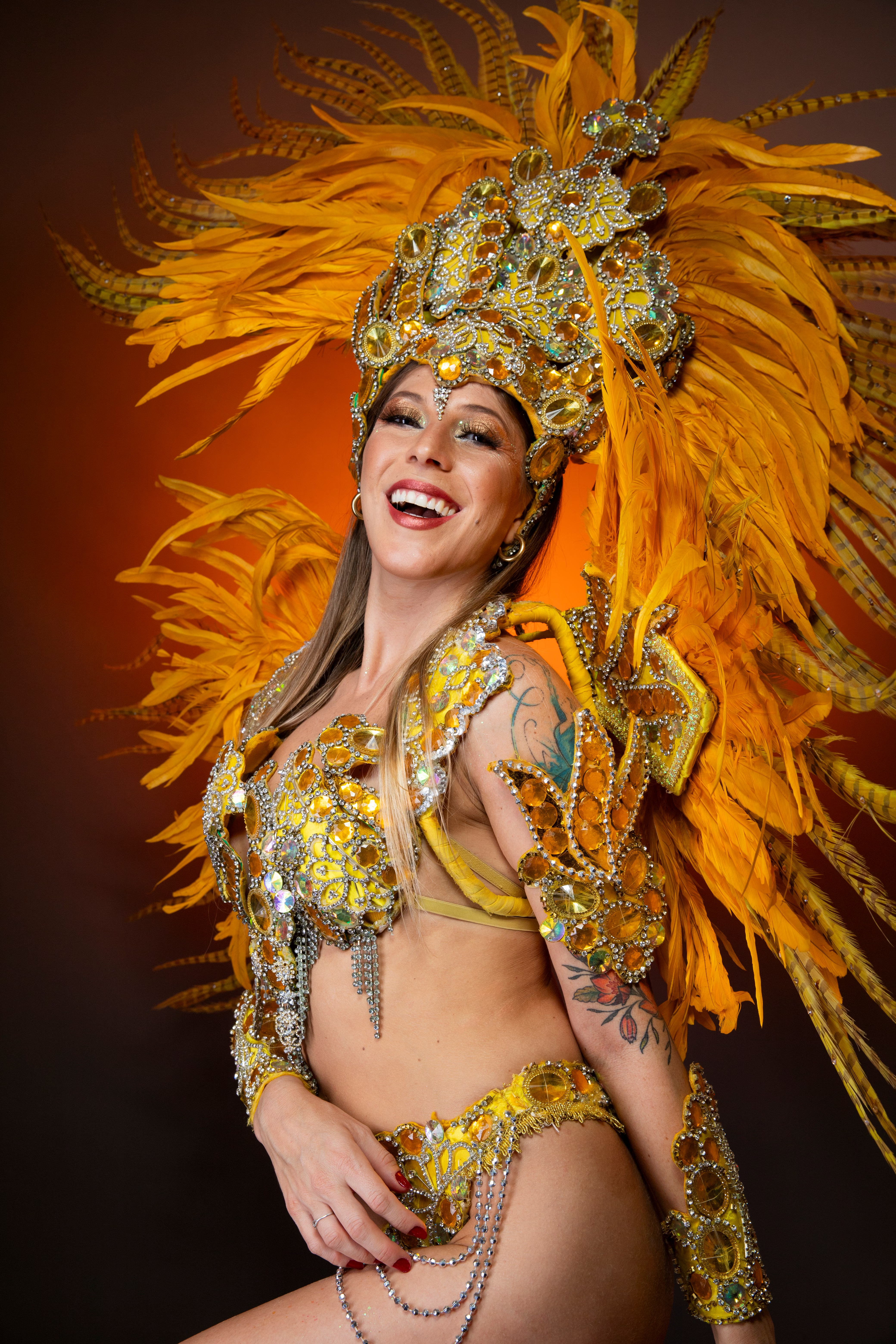
For a decade and a half, the pulsing rhythm of steel pans and the kaleidoscope of feathered costumes have been meticulously preserved through the lenses of two dedicated chroniclers.
WHAT HAPPENED
Photographers Wayne Campbell and Wayne Crichlow have marked 15 years of capturing the annual Notting Hill Carnival in London, documenting everything from energetic dance troupes to the quiet exhaustion of commuters on the tube ride home. Their visual archive traces the vibrant street culture, fashion statements, and communal celebrations that define Europe's largest street festival.
WHO ARE THE KEY PLAYERS
Wayne Campbell and Wayne Crichlow are professional documentary photographers who have dedicated fifteen consecutive years to capturing the cultural essence of the Notting Hill Carnival. Their work focuses on everyday masqueraders, sound system operators, and festival-goers rather than just the main stages.
UNDERSTANDING THE LOCATION
Notting Hill is an affluent district in West London, England, globally renowned for its Victorian townhouses and multi-ethnic community. Every August, the neighbourhood transforms into a massive open-air festival route, drawing millions of visitors from across the United Kingdom and beyond to celebrate Caribbean culture.
BACKGROUND AND CONTEXT
Originating in 1966, the Notting Hill Carnival was established by the Afro-Caribbean community—specifically led by activists like Claudia Jones—as a response to racial tensions and riots in the late 1950s. Over the decades, it has evolved into a massive celebration of Caribbean heritage, featuring calypso music, reggae sound systems, and elaborate masquerade costumes.
EXPLAINING IMPORTANT REFERENCES
The 'tube' refers to the London Underground, the rapid transit system serving Greater London and parts of Buckinghamshire, Essex, and Hertfordshire. Sound systems are massive, custom-built mobile audio setups playing reggae, dancehall, and dub, which serve as foundational pillars of Caribbean street culture.
IMPACT ANALYSIS
Long-term photographic projects like those by Campbell and Crichlow serve as vital historical archives, safeguarding immigrant history and cultural resilience against gentrification. They validate the lived experiences of diasporic communities, ensuring that grassroots celebrations are recorded with authenticity rather than purely through commercial media lenses.
WHAT HAPPENS NEXT
As the Notting Hill Carnival continues to grow year after year, archivists and cultural institutions are increasingly looking to preserve these independent photographic collections. Future exhibitions and digital retrospectives are anticipated to bring these 15-year collections to wider international audiences.
HERO PERSPECTIVE
Wayne Campbell and Wayne Crichlow have dedicated precisely fifteen years to photographing the Notting Hill Carnival, preserving the intricate details of samba dancers, fashion icons, and weary commuters on the London tube. Their sustained visual documentation transforms ephemeral street celebrations into a permanent historical archive of West London's Caribbean heritage.
CLOSING
The enduring imagery captured by Campbell and Crichlow underscores the cultural weight of the Notting Hill Carnival, proving that street festivals are living museums of identity, resistance, and community joy.