
HEADLINE Tinubu Administration Pledges End to Abandoned Projects, Orders New Road Expansions in Abuja
OPENING HOOK Nigeria's capital, Abuja, a city often lauded for its master plan but frequently criticized for uneven development and a history of abandoned projects, is once again at the forefront of national infrastructure discourse. President Bola Tinubu's recent directives and commissioning of a key road project signal a renewed focus on ensuring that the city's growth benefits all its residents, especially those in previously neglected areas.
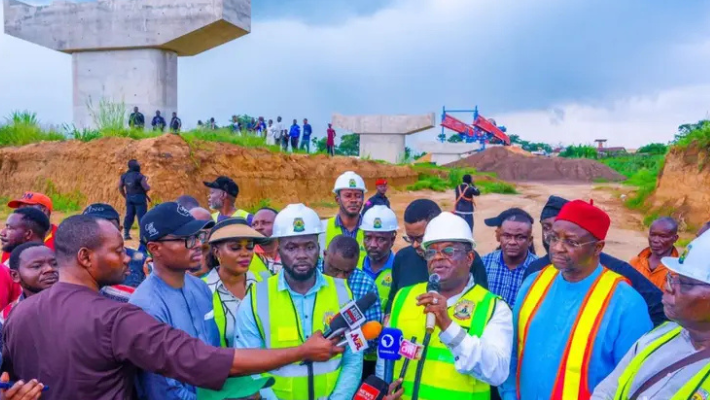
WHAT HAPPENED President Bola Tinubu recently issued a directive for the immediate expansion of road infrastructure to more communities within the Federal Capital Territory (FCT). This significant announcement came as the President, represented by Senate President Godswill Akpabio, formally commissioned the rehabilitated 16-kilometre Old Keffi Road. This vital artery connects the Kado Fish Market to Dei-Dei Junction, passing through Life Camp, and is expected to significantly ease traffic and enhance connectivity in the area. The President emphasized his administration's commitment to extending development to previously underserved areas and putting a definitive end to the era of abandoned projects in Abuja.
WHO ARE THE KEY PLAYERS **President Bola Ahmed Tinubu:** The current President of the Federal Republic of Nigeria and Commander-in-Chief of the Armed Forces. As the leader of the executive arm of government, his directives guide national policy and resource allocation, including major infrastructure projects in the FCT. His administration operates under the 'Renewed Hope' agenda, which prioritizes economic reforms and infrastructure development.
**Senate President Godswill Akpabio:** The head of the Nigerian Senate, representing the legislative arm of government. In this instance, he represented President Tinubu at the commissioning ceremony, underscoring the importance of inter-arm collaboration on national projects.
**Federal Capital Territory (FCT) Administration:** This is the body responsible for the day-to-day governance and development of Abuja. Overseen by a minister appointed by the President, the FCT Administration manages urban planning, infrastructure, and services for the capital city.
UNDERSTANDING THE LOCATION **Abuja:** The capital city of Nigeria, strategically located in the North-Central geopolitical zone. It was purpose-built in the 1980s to replace Lagos as the federal capital, designed for its central location and ease of access for all Nigerians. Abuja is known for its modern architecture and extensive green spaces, but its rapid expansion has led to challenges in infrastructure development, particularly in peri-urban areas.
**Old Keffi Road:** This particular road stretches for 16 kilometres within Abuja, linking key commercial and residential hubs. Its rehabilitation is crucial for improving traffic flow and connectivity between areas like **Kado Fish Market** (a bustling commercial hub), **Dei-Dei Junction** (a major intersection and gateway to several communities), and **Life Camp** (a significant residential area).
BACKGROUND AND CONTEXT Abuja's development has historically been a mixed bag, with grand designs often clashing with implementation challenges. The concept of a purpose-built capital was envisioned to foster national unity and provide a neutral administrative centre. However, the rapid population growth, often driven by rural-urban migration and the relocation of government agencies, has strained existing infrastructure. The issue of 'abandoned projects' — government initiatives started but left incomplete due to changes in administration, funding issues, or mismanagement — has been a persistent blight across Nigeria, with the FCT being no exception. President Tinubu's pledge to end this trend signifies a potential shift towards greater project continuity and accountability, which aligns with his administration's broader economic revitalization efforts.
EXPLAINING IMPORTANT REFERENCES **Commissioning:** In simple Nigerian English, this refers to the formal opening or dedication of a completed project, marking its official readiness for public use. It's often a ceremonial event where government officials inspect and declare a project operational.
**Underserved areas:** These are communities or neighbourhoods that lack adequate access to basic amenities and infrastructure, such as good roads, potable water, reliable electricity, and proper sanitation. In Abuja, these often include satellite towns and rapidly expanding settlements on the city's fringes, where development has not kept pace with population growth.
**Abandoned projects:** These are public works or infrastructure initiatives that were commenced by a government or agency but were left unfinished before completion. This often results in significant financial losses, wasted resources, and a failure to deliver intended benefits to the populace.