
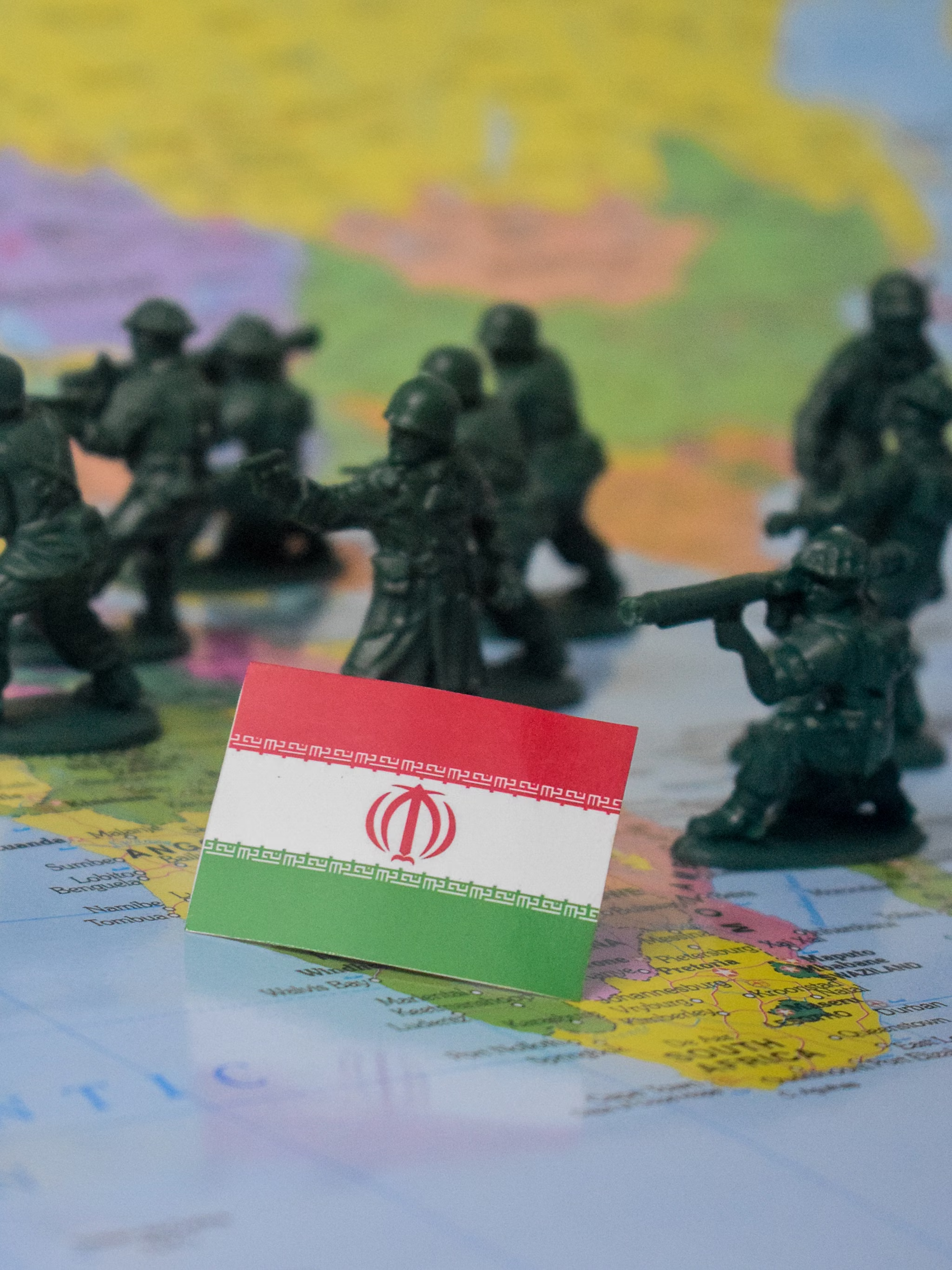
HEADLINE
US and Israel to Pause Strikes on Iran If Rapid Peace Deal is Reached, Announces Donald Trump
OPENING HOOK
Global diplomacy faces a crucial test as Washington and Jerusalem weigh a potential suspension of military hostilities against Tehran, contingent on swift diplomatic concessions.
WHAT HAPPENED
United States President Donald Trump announced that the US and Israel are prepared to pause their military strikes against Iran, provided that a comprehensive agreement is rapidly reached to end the ongoing conflict. A central component of this proposed diplomatic arrangement involves guaranteeing the unhindered opening and safe navigation of the Strait of Hormuz, a critical global shipping lane for petroleum and international trade.
WHO ARE THE KEY PLAYERS
Donald Trump serves as the President of the United States, guiding American foreign and military policy in the Middle East. The state of Israel acts as a primary regional ally coordinating military strategies alongside Washington. Iran remains the central nation targeted by these ongoing strategic strikes and economic pressures, holding immense leverage through its geographical position along crucial maritime passages.
UNDERSTANDING THE LOCATION
The events center on diplomatic negotiations affecting the Middle East, specifically concerning Iranian territory and the Strait of Hormuz. The Strait of Hormuz is a narrow, strategically vital waterway connecting the Persian Gulf to the Gulf of Oman, through which a significant portion of the world's petroleum supply flows daily.
BACKGROUND AND CONTEXT
Tensions between Iran, Israel, and Western powers have spanned decades, rooted in geopolitical rivalries, nuclear program disputes, and proxy conflicts across the Middle East. Military engagements have historically spiked volatility in global energy markets, directly influencing fuel prices and transport costs worldwide, including local economic pressures in developing nations.
EXPLAINING IMPORTANT REFERENCES
The Strait of Hormuz is a vital international chokepoint. In simple economic terms, if this narrow maritime corridor is closed or disrupted due to conflict, the cost of moving crude oil skyrockets globally, driving up transportation, manufacturing, and consumer goods prices everywhere.
IMPACT ANALYSIS
A successful diplomatic resolution pausing strikes and securing maritime trade routes would immediately stabilize international energy markets and reduce the immediate risk of a wider regional war. Conversely, failure to secure a rapid deal could entrench military operations, leading to prolonged economic hardship and heightened security alerts across global transport networks.
WHAT HAPPENS NEXT
Diplomatic channels are expected to test the viability of these proposed terms through backchannel negotiations and international intermediaries. Observers will closely monitor whether Iranian leadership responds to the conditions surrounding the Strait of Hormuz and regional stability.
HERO PERSPECTIVE
President Donald Trump announced the potential pause in military strikes conditional upon a rapid agreement involving the Strait of Hormuz. This critical juncture highlights how international maritime security directly dictates the pace of modern geopolitical conflict resolution.
CLOSING
The unfolding diplomatic maneuvers underscore the delicate balance between military deterrence and negotiated peace in the Middle East, with global markets watching closely for the next official development.