
HEADLINE
US Embassies Urge American Citizens to Consider Leaving the Middle East Amid Escalating Conflict
OPENING HOOK
As geopolitical tensions boil over into active military exchanges, diplomatic missions in volatile zones are sounding the alarm for their expatriate communities to pack up and leave before commercial transit options collapse completely.
WHAT HAPPENED
United States (US) embassies situated across various nations in the Middle East have issued formal security alerts strongly urging American citizens to evaluate commercial travel availability and depart the region immediately. This urgent directive follows an unforeseen and sharp escalation in ongoing armed conflicts involving regional actors, raising grave concerns over the safety and security of foreign nationals living, working, or traveling through the affected territories. Diplomatic outposts have warned that consular assistance may become severely restricted or entirely unavailable should the security situation deteriorate further.
WHO ARE THE KEY PLAYERS
The primary actors involved in issuing these directives are the various US diplomatic missions, operating under the broader foreign policy framework of the US Department of State. Donald J. Trump serves as President of the United States, heading the executive branch that oversees these diplomatic responses, while Marco Rubio directs foreign diplomatic execution as the US Secretary of State. On the ground, regional governments, local security forces, and various armed factions are driving the volatile conditions that necessitated these emergency travel warnings.
UNDERSTANDING THE LOCATION
The Middle East is a transcontinental region bridging Africa, Asia, and Europe, renowned for its strategic geopolitical importance and vast petroleum reserves. Historically and currently, it remains one of the world's most volatile flashpoints, marked by complex religious, territorial, and political conflicts. For expatriates living in major commercial hubs and capital cities across the region, sudden escalations pose immediate threats to infrastructure, aviation routes, and daily civilian safety.
BACKGROUND AND CONTEXT
Regional conflicts in the Middle East have simmered for decades, drawing in numerous local and international powers through shifting alliances and proxy engagements. The latest escalation represents a dangerous intensification of hostilities that threatens to widen into a broader regional war. Historically, when such tipping points are reached, foreign governments routinely issue 'ordered' or 'authorized' departures to safeguard their citizens from getting caught in crossfire or facing sudden airspace closures.
EXPLAINING IMPORTANT REFERENCES
In diplomatic terminology, a 'security advisory' or 'travel warning' is a formal notification issued by a government to inform its citizens about safety conditions abroad. When missions urge nationals to 'consider leaving using commercial means,' it means individuals are advised to book regular commercial flights or ferries while they are still operating, as military evacuations are exceptionally rare, costly, and reserved for absolute worst-case scenarios where all civilian airports are shut down.
IMPACT ANALYSIS
These emergency advisories carry heavy psychological and economic weight, often triggering panic buying, sudden spikes in flight ticket prices, and the suspension of non-essential foreign business investments in the region. For local economies heavily reliant on expatriate labor and tourism, mass departures can severely disrupt daily commerce. Globally, fears of widening conflict routinely send shockwaves through international crude oil markets, driving up pump prices that eventually affect consumers worldwide, including ordinary households in Nigeria who feel the pinch through imported goods and fuel logistics.
WHAT HAPPENS NEXT
In the coming days, international monitors will be watching closely to see if other Western nations follow suit by issuing similar evacuation warnings for their own citizens. Much depends on whether regional belligerents choose to de-escalate or expand their military operations. Travelers and expatriates remaining in the region face dwindling options as airlines begin canceling scheduled flights into high-risk airspace.
HERO PERSPECTIVE
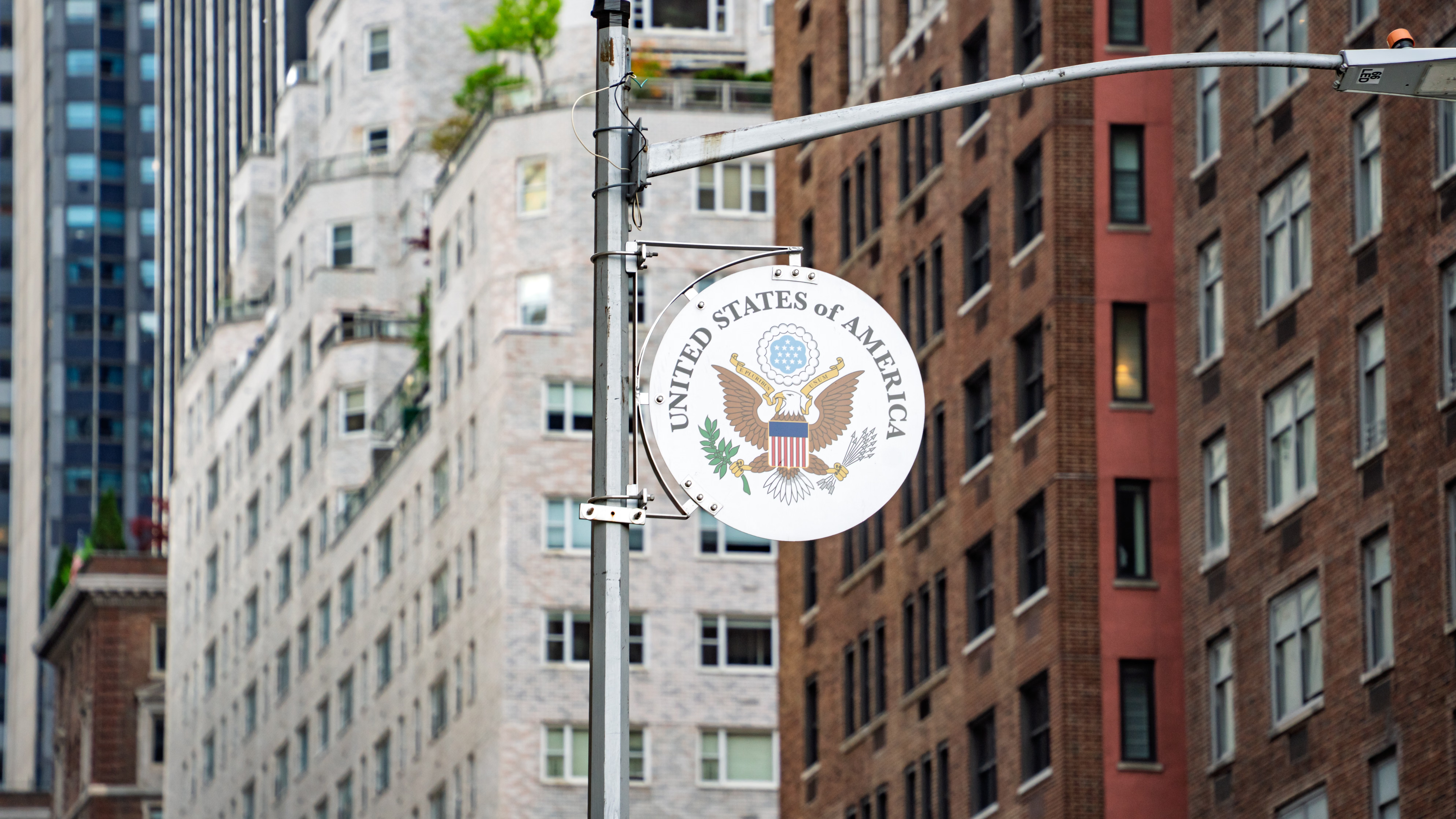
Official security directives issued by United States embassies across the Middle East highlight the immediate dangers faced by foreign nationals amid a sharp escalation in regional hostilities. These urgent travel warnings compel expatriates to weigh the availability of commercial transit before airspace closures trap civilians in active conflict zones. The unfolding crisis underscores how rapidly diplomatic posture shifts when local security guarantees disintegrate.
CLOSING
As diplomatic channels work frantically to manage the crisis, the primary burden rests on individual travelers and resident expatriates to heed official warnings promptly. Securing safe passage out of a volatile region before commercial routes collapse remains the single most effective precaution against the unpredictable hazards of modern warfare.