HEADLINE
Venezuelan Earthquake Death Toll Surpasses 4,300 Amidst Devastation
OPENING HOOK
The profound tragedy unfolding in Venezuela has deepened significantly, as authorities confirm that the death toll from last month's devastating twin earthquakes has now tragically climbed beyond 4,300, casting a long shadow over the nation and intensifying calls for urgent humanitarian response.
WHAT HAPPENED
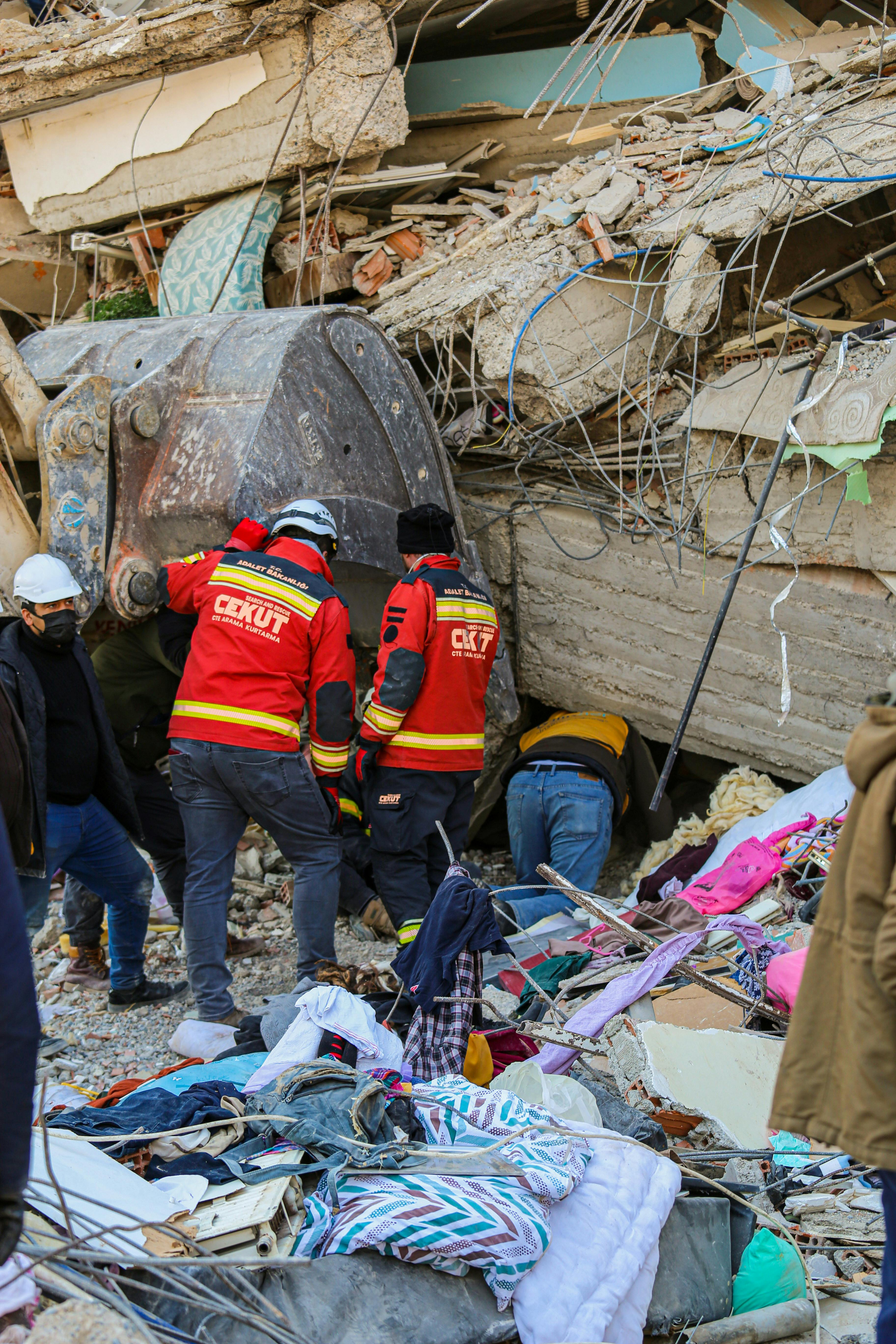
Venezuela's National Assembly President, Jorge Rodriguez, announced on Saturday that the number of fatalities from the powerful earthquakes that rocked the country last month has exceeded 4,300. Specifically, the toll stood at 4,333, a grim increase from the 4,118 reported just the previous day. These catastrophic events occurred on June 24, when a magnitude 7.2 and a subsequent 7.5 earthquake struck, primarily impacting the capital city of Caracas and the coastal state of La Guaira. The tremors were so severe that entire high-rise apartment blocks were reduced to rubble, and thousands of families have been left without homes, now residing in makeshift camps.
WHO ARE THE KEY PLAYERS
**Jorge Rodriguez**: He is the current President of Venezuela's National Assembly, the country's legislative body. His role places him in a position to relay official information regarding national crises, such as the earthquake's impact. He is also the brother of **Delcy Rodriguez**, who serves as an interim leader in the Venezuelan government, often referred to as Vice President, playing a significant role in the executive branch. The **Venezuelan Government**, led by President Nicolás Maduro, is the primary entity responsible for coordinating disaster response, relief efforts, and managing the long-term recovery following such a widespread catastrophe.
UNDERSTANDING THE LOCATION
The twin earthquakes primarily hit **Caracas** and the coastal state of **La Guaira**. Caracas, the capital and largest city of Venezuela, is a densely populated urban centre nestled in a valley of the Venezuelan Andes. Its high-rise buildings and infrastructure make it particularly vulnerable to seismic activity. La Guaira, a state located on the central coast of Venezuela, serves as a crucial port city and is also home to significant residential areas. Its proximity to the Caribbean Sea and mountainous terrain adds complexity to disaster management, as landslides can accompany earthquakes, and coastal areas are susceptible to tsunamis, though none were reported in this instance. Both regions are vital economic and demographic hubs for the nation.
BACKGROUND AND CONTEXT
Venezuela is situated in a seismically active zone, lying close to the Caribbean Plate and the South American Plate boundaries. This geological setting makes the country prone to earthquakes, with historical records detailing numerous significant tremors over centuries. For instance, the 1812 Caracas earthquake caused widespread destruction and thousands of deaths. Beyond its seismic vulnerability, Venezuela has faced significant economic and political challenges in recent years, including hyperinflation, sanctions, and social unrest. These pre-existing conditions can severely complicate disaster response, humanitarian aid distribution, and long-term reconstruction efforts, potentially exacerbating the suffering of affected populations. The nation's infrastructure, already strained, is now under immense pressure from the quake's devastation.
EXPLAINING IMPORTANT REFERENCES
The mention of **magnitude 7.2 and 7.5 earthquakes** refers to the Richter scale, a measure of the energy released by an earthquake. To put this in perspective for a Nigerian audience, imagine the ground shaking with the force of a massive, uncontrollable explosion. A magnitude 7 earthquake is considered a 'major' earthquake, capable of causing widespread, severe damage over a large area, similar to how a very powerful vibration from a heavy construction machine can shake buildings far away. For context, a magnitude 6 earthquake can already cause significant destruction, so a 7.2 or 7.5 is exponentially more powerful, capable of flattening well-built structures and causing extensive ground deformation, like when a powerful tremor makes a whole market stall collapse instantly.
IMPACT ANALYSIS
The immediate impact of these earthquakes is catastrophic, primarily measured by the escalating death toll and the massive displacement of people. Over 4,300 lives lost is a profound blow to families and communities. The flattening of high-rise apartment blocks indicates extensive structural damage, which will require monumental reconstruction efforts, potentially costing billions of bolívares – money that could otherwise be used for other developmental projects, or similar to how a massive business loan would be needed to rebuild a collapsed factory. The creation of camps for the newly homeless signals a burgeoning humanitarian crisis, demanding immediate provisions of shelter, food, water, and medical care. Beyond the immediate human toll, the destruction of infrastructure, including roads and utilities, will disrupt economic activity, impede supply chains, and likely have long-term psychological effects on survivors, many of whom have lost everything. The challenge of rebuilding extends beyond physical structures to the very fabric of society.
WHAT HAPPENS NEXT
In the immediate future, the focus will remain on search and rescue operations, though with the rising death toll, this is increasingly becoming a recovery effort. Humanitarian aid, both domestic and international, will be crucial to support the thousands of displaced individuals. The Venezuelan government, likely with assistance from international bodies and friendly nations, will need to coordinate the provision of temporary housing, food, and medical supplies. Looking ahead, the monumental task of reconstruction will begin, requiring significant financial investment and technical expertise. This will involve clearing rubble, assessing structural integrity of damaged buildings, and planning for resilient rebuilding. The long-term implications will include addressing the mental health needs of survivors and implementing improved seismic building codes to mitigate future risks. International cooperation and solidarity will be vital in helping Venezuela navigate this challenging period.
HERO PERSPECTIVE
Leverage On Heroes Media believes that in the face of such overwhelming natural disaster, the true measure of humanity lies in our collective capacity for empathy, resilience, and actionable support. The tragedy in Venezuela serves as a stark reminder of our planet's unpredictable forces and the urgent need for robust disaster preparedness, transparent governmental response, and unwavering international solidarity. We advocate for immediate, unhindered humanitarian access and a sustained global effort to aid the Venezuelan people in their journey towards recovery and rebuilding.
CLOSING
The rising death toll in Venezuela is a stark and painful reminder of the fragility of life and the devastating power of nature. As the nation grapples with this immense loss and widespread destruction, the global community watches, hoping for swift and effective relief and a path to recovery for all those affected.