
HEADLINE
FIFA Probes Argentina Over Falklands Banner After World Cup Semi-Final Victory Against England
OPENING HOOK
The electric atmosphere of a FIFA World Cup semi-final, typically reserved for celebrating sporting prowess, has been overshadowed by a significant geopolitical statement. Argentina's dramatic victory over England has ignited a new controversy, drawing the attention of global football authorities and raising questions about the intersection of sport and politics.
WHAT HAPPENED
Football's global governing body, FIFA, is currently scrutinising match reports to determine whether to sanction Argentina's national team. The investigation stems from an incident where several Argentine players displayed a banner supporting their country's claim to the Falkland Islands, known in Argentina as "Las Malvinas," immediately after their 2-1 semi-final triumph against England in Atlanta. The reigning world champions secured their spot in Sunday's World Cup final against Spain with late goals from Enzo Fernández and Lautaro Martínez, but their post-match celebrations have now opened the door to potential disciplinary action.
WHO ARE THE KEY PLAYERS
**FIFA (Fédération Internationale de Football Association)**: The international governing body of association football, beach soccer, and futsal. Based in Zürich, Switzerland, FIFA is responsible for organizing major international tournaments, most notably the World Cup. It sets rules regarding conduct, including prohibitions on political statements during matches.
**Argentina National Football Team**: The reigning FIFA World Cup champions, a highly successful and globally recognised team with a passionate fan base. Their players, including goal scorers **Enzo Fernández** and **Lautaro Martínez**, are central figures in this incident.
**England National Football Team**: Argentina's opponents in the semi-final, managed by **Thomas Tuchel**. Their defeat, coupled with the controversial banner display, adds a layer of tension to the long-standing rivalry between the two nations.
UNDERSTANDING THE LOCATION
**Atlanta**: A major city in the United States, serving as one of the host cities for the 2026 FIFA World Cup matches, including this high-stakes semi-final.
**Falkland Islands (Las Malvinas)**: An archipelago in the South Atlantic Ocean, located off the coast of mainland South America. These islands are a self-governing British Overseas Territory, but Argentina maintains a historical claim to them, referring to them as "Las Malvinas." This territorial dispute has been a point of contention between the United Kingdom and Argentina for centuries.
BACKGROUND AND CONTEXT
The core of this controversy lies in the long-running dispute over the sovereignty of the Falkland Islands. This claim culminated in the **Falklands War (Guerra de las Malvinas)** in 1982, a brief but intense conflict between Argentina and the United Kingdom. Argentina invaded the islands, prompting a military response from the UK, which ultimately regained control. The war remains a deeply emotional and sensitive subject in Argentina, where the islands are often seen as an integral part of national territory. FIFA regulations strictly prohibit political statements, symbols, or messages by players, officials, or fans during matches, aiming to maintain football's neutrality and focus on sport.
EXPLAINING IMPORTANT REFERENCES
**FIFA World Cup semi-final**: This is the penultimate stage of the FIFA World Cup tournament, where the four remaining teams compete for a place in the final match. Winning a semi-final guarantees a spot in the final, while losing means playing for third place.
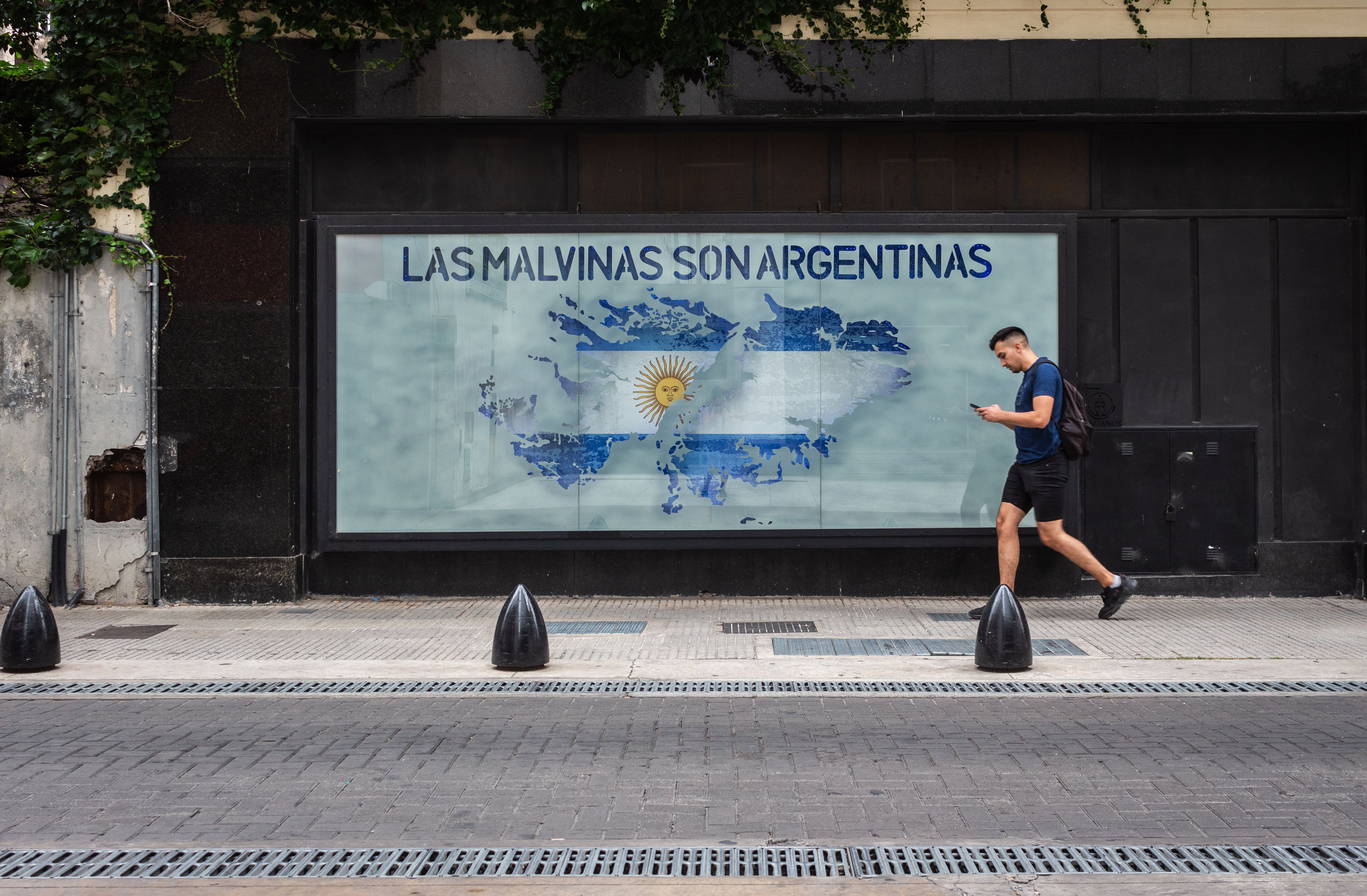
**"Las Malvinas son Argentinas"**: This Spanish phrase translates to "The Malvinas are Argentinian" and is a deeply ingrained slogan reflecting Argentina's sovereign claim over the Falkland Islands. Its display by the players is a clear political statement.
**Match reports**: These are official documents submitted by match officials (referees, assistant referees, match commissioners) detailing all events, incidents, and player conduct during a football match. FIFA's Disciplinary Committee relies on these reports to initiate investigations and make decisions on potential sanctions.
IMPACT ANALYSIS
The display of the Falklands banner carries significant implications. For Argentina, it resonates deeply with national sentiment but risks severe penalties from FIFA, potentially ranging from hefty fines to points deductions in future qualifiers, or even stadium bans. Such sanctions could tarnish their reputation as world champions and disrupt their preparations for the upcoming final. For England and the United Kingdom, the incident reopens old wounds and could strain diplomatic relations, even if unofficially. FIFA, on its part, faces the challenge of upholding its neutrality policy while navigating a sensitive geopolitical issue, potentially setting a precedent for similar incidents in the future. The incident also sparks global debate on freedom of expression versus sporting regulations.
WHAT HAPPENS NEXT
FIFA's Disciplinary Committee will meticulously review the submitted match reports and any additional evidence, such as video footage and witness statements. A decision on potential sanctions is expected before the World Cup final, or shortly thereafter. Argentina will likely be given an opportunity to present its defence. Whatever the outcome, the incident will undoubtedly remain a talking point, shaping discussions around sportsmanship, national identity, and the boundaries of political expression in global sporting events.
HERO PERSPECTIVE
Leverage On Heroes Media views this incident as a critical examination of the delicate balance between national pride and international sporting regulations. While the passion of players representing their nation is undeniable, global bodies like FIFA have a responsibility to ensure a level playing field, free from political grandstanding. This situation underscores the need for clear guidelines and consistent enforcement to prevent sports arenas from becoming battlegrounds for geopolitical disputes, thereby preserving the spirit of fair play and unity that football is meant to embody. We believe that while national sentiment is valid, it must be expressed through appropriate channels, without compromising the integrity of international competitions.
CLOSING
As the football world anticipates the FIFA World Cup final, all eyes will also be on FIFA's decision regarding Argentina's controversial banner. This incident serves as a stark reminder that even on the biggest sporting stages, historical grievances and political claims can powerfully intersect with the beautiful game, challenging authorities to maintain order and focus on the sport itself.