HEADLINE
Real Madrid Applauds UEFA, Critiques FIFA Over Commercial Rights
OPENING HOOK
In a sharp institutional pivot, Spanish football powerhouse Real Madrid has publicly commended European football governing bodies while simultaneously taking a swipe at global football administration over the handling of tournament commercial rights.
WHAT HAPPENED
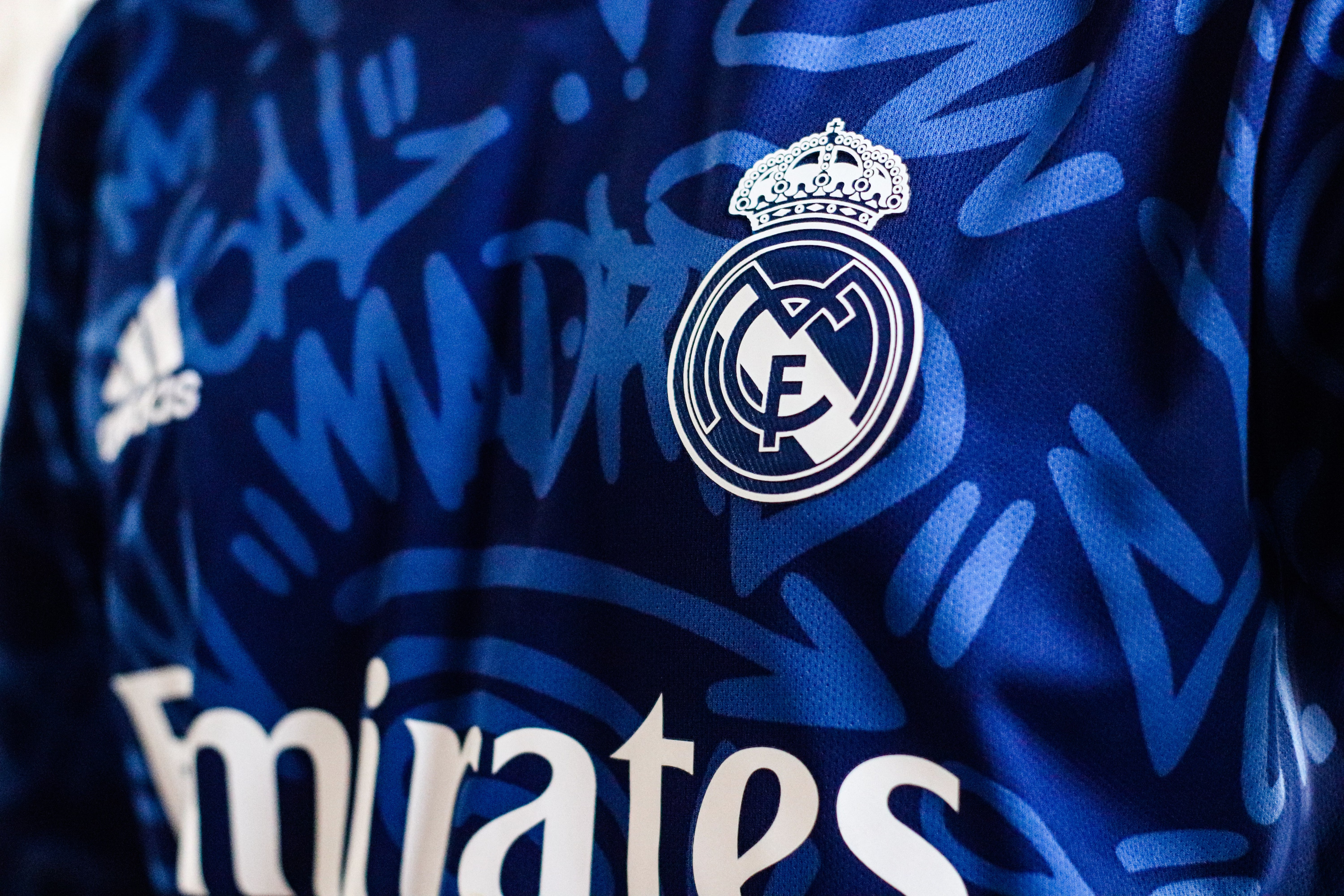
Real Madrid Club de Fútbol formally welcomed the decision by the Fédération Internationale de Football Association (FIFA) to scrap a controversial proposal to sell a percentage of its tournament commercial rights to private equity investors. The club issued a statement calling the U-turn excellent news for football institutions and everyday fans alike. At the same time, the club expressed profound gratitude to the Union of European Football Associations (UEFA) and various international football confederations for standing united against the commercialization project. Real Madrid argued strongly that national team tournaments represent a vital public asset rather than mere financial commodities meant for private equity exploitation.
WHO ARE THE KEY PLAYERS
Real Madrid C. F. is one of the most successful and financially valuable football clubs in the world, based in Spain and boasting a history of challenging major sports governance structures. FIFA is the global governing body of association football, responsible for organizing major international spectacles like the World Cup. UEFA is the administrative body for association football in Europe, overseeing continental competitions such as the UEFA Champions League and the European Championship.
UNDERSTANDING THE LOCATION
Madrid, the capital city of Spain, serves as the home base for Real Madrid. Spain is a major epicenter of European football culture, where club decisions and governance debates resonate deeply across domestic leagues, fan bases, and financial markets throughout the continent.
BACKGROUND AND CONTEXT
Over the past decade, football administration has faced intense financial pressure to maximize revenues, leading to various proposals involving private investment funds buying stakes in tournament media and marketing rights. Real Madrid has consistently maintained a hardline stance against outside financial intrusion into traditional football structures. The club notably drew parallels between this dropped FIFA initiative and its own ongoing domestic opposition to the La Liga CVC capital investment fund deal, which the club argued compromised long-term television and commercial revenues for short-term cash injections.
EXPLAINING IMPORTANT REFERENCES
Commercial rights refer to the financial streams generated by broadcasting matches, selling sponsorships, and licensing merchandise. Private equity investors are investment groups that pool money to buy stakes in private companies or commercial assets, often looking for high short-term returns. Treating tournaments as a public asset means viewing the competitions as cultural heritages belonging to the fans and the public domain, rather than private corporate properties.
IMPACT ANALYSIS
This development halts a major trend toward the privatization of football governance assets. For global football fans, it preserves the traditional structure of international tournaments without heavy corporate shareholder interference. For football administrators, it signals that major clubs are watching closely and are willing to use public relations and legal pressure to block perceived overreach.
WHAT HAPPENS NEXT
Following this retreat by FIFA, sports analysts expect global sports federations to tread carefully when seeking alternative funding models. Real Madrid will likely continue its legal and diplomatic campaigns against similar financial structures, maintaining pressure on both domestic leagues and international governing bodies regarding revenue distribution.
HERO PERSPECTIVE
Real Madrid C. F.'s explicit opposition to private equity involvement in FIFA tournaments mirrors its ongoing legal battles regarding domestic television revenue distributions in Spain. By explicitly labeling national team competitions as public assets that must remain shielded from speculative capital, the club sets a definitive institutional boundary for modern sports governance. This posture ensures that future broadcasting and commercial proposals will face rigorous scrutiny from Europe's elite clubs before implementation.
CLOSING
The tension between lucrative commercial expansion and traditional football heritage remains a defining battleground for modern sports. As clubs and governing bodies navigate these financial waters, the insistence on treating football as a public good will continue to shape the future of the global game.