
HEADLINE
Beyond 'AI-Resilient': Nigerian Workers Embrace AI as a Complement, Not a Replacement
OPENING HOOK
The rapid evolution of Artificial Intelligence (AI) has sparked global conversations about the future of work. While many have focused on jobs vulnerable to automation, a new reality is emerging: even in sectors traditionally considered 'AI-resilient,' workers across Nigeria are actively engaging with AI tools, transforming their roles and underscoring a vital need for continuous adaptation and skill development.
WHAT HAPPENED
Workers in professions widely believed to be naturally resistant to full automation are increasingly finding themselves interacting with and leveraging Artificial Intelligence technologies. This trend suggests that instead of outright replacement, AI is serving as a powerful complementary tool, enhancing human capabilities and efficiency in tasks that demand physical presence, complex social interaction, or intricate problem-solving.
WHO ARE THE KEY PLAYERS
The primary 'key players' in this evolving narrative are the **Nigerian workers** themselves, spanning various industries from healthcare and skilled trades to education and creative arts. These individuals, from Lagos artisans to Abuja civil servants and Enugu educators, are at the forefront of integrating new technologies into their routines. **Artificial Intelligence** (AI) stands as the transformative technology, encompassing algorithms and systems designed to simulate human intelligence. **Employers and industry leaders** also play a crucial role, determining the pace of AI adoption and the availability of training. Lastly, **government bodies and educational institutions** are vital in shaping policies and curricula to prepare the workforce for this technological shift.
UNDERSTANDING THE LOCATION
While the phenomenon of AI integration is global, its impact in Nigeria is particularly significant. Nigeria, with its large, youthful, and increasingly digitally-savvy population, represents a dynamic environment for technological adoption. The nation's diverse economic landscape, from burgeoning tech hubs in the South-West to agricultural centers in the North and resource-rich regions in the South-South, means AI's influence will land differently across its six geopolitical zones. Understanding this context helps us appreciate the unique challenges and opportunities for Nigerian workers navigating this technological shift.
BACKGROUND AND CONTEXT
The conversation around AI and employment began decades ago, but recent advancements in machine learning and data processing have brought it to the forefront. Initially, fears of mass job displacement dominated the discourse, leading to the classification of 'AI-resilient' jobs – roles thought to be immune due to their reliance on uniquely human attributes like creativity, critical thinking, emotional intelligence, or physical dexterity. However, the current trend indicates a more nuanced reality: AI is not merely replacing jobs but augmenting human potential. Historically, technological revolutions, from the industrial age to the digital era, have consistently reshaped labor markets, often creating new categories of work while transforming existing ones. This current wave is no different, demanding a proactive approach to skill acquisition.
EXPLAINING IMPORTANT REFERENCES
**Artificial Intelligence (AI)** refers to computer systems designed to perform tasks that typically require human intelligence. This includes learning from data, recognizing patterns, understanding language, solving problems, and making decisions. Think of it like a very smart computer program that can do things like help doctors diagnose illnesses, assist engineers in designing structures, or even generate creative content.
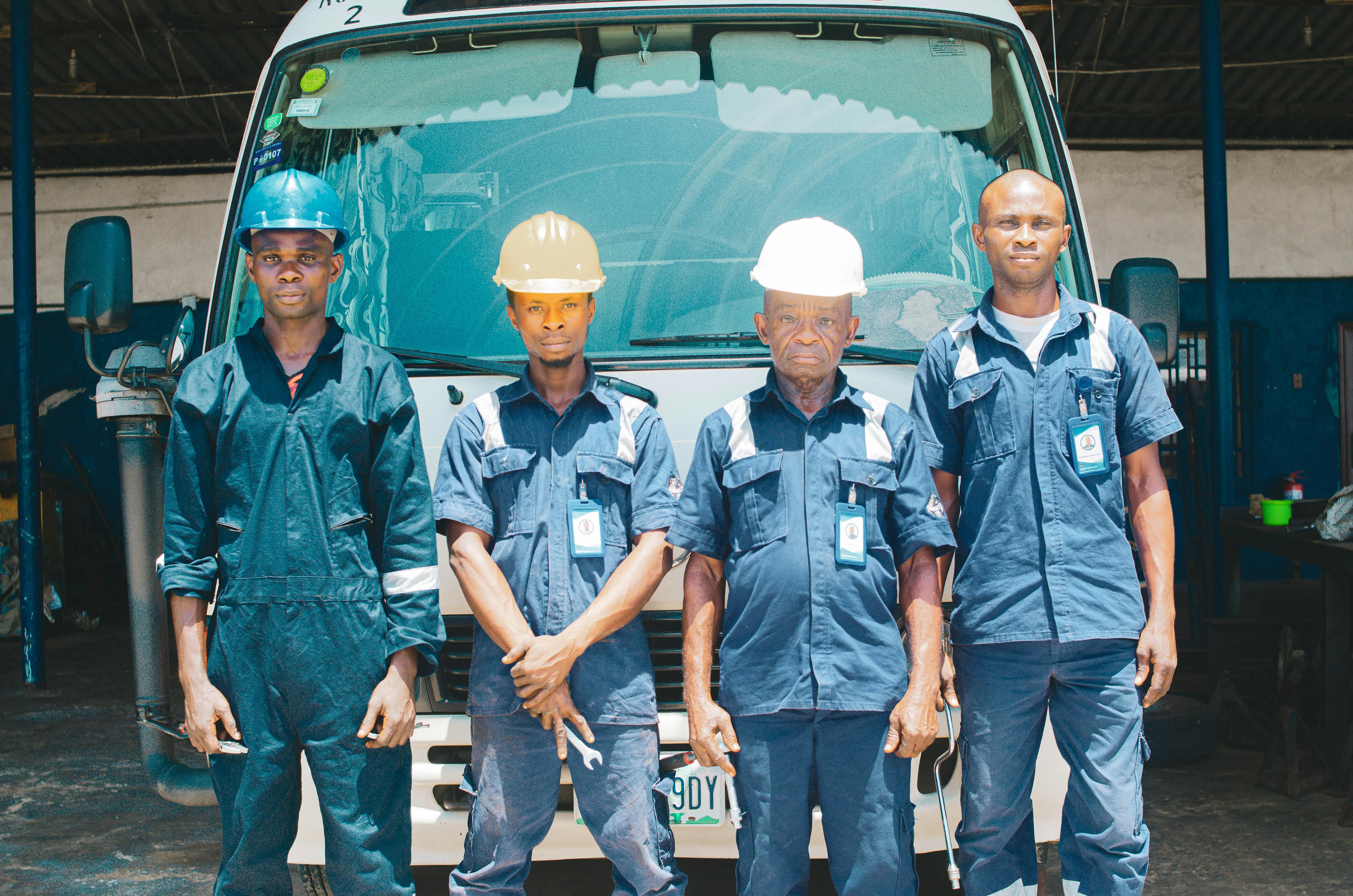
An **'AI-resilient' job** is a profession that has traditionally been considered safe from complete automation by AI. These jobs often require a high degree of human interaction, creativity, manual dexterity, ethical judgment, or on-the-spot problem-solving in unpredictable environments. Examples in Nigeria might include a skilled mechanic diagnosing a complex engine problem, a nurse providing empathetic patient care, a teacher engaging students in a classroom, or an artisan creating intricate crafts. While AI can assist in these roles, the core human element was believed to be irreplaceable.
IMPACT ANALYSIS
The growing integration of AI, even in 'AI-resilient' sectors, carries significant implications. For workers, it means a continuous need for upskilling and reskilling, as the definition of job security shifts from being 'AI-proof' to being 'AI-proficient.' This can create pressure, especially for those in regions with limited access to digital literacy training or stable internet. For employers, it presents opportunities for increased efficiency and innovation but also demands investment in employee training and ethical AI deployment. Across Nigeria, this trend could exacerbate the digital divide if access to technology and training is not equitable, potentially leaving some geopolitical zones at a disadvantage. Conversely, it could spur economic growth by boosting productivity and creating entirely new job categories, fostering a more competitive and technologically advanced workforce.
WHAT HAPPENS NEXT
Looking ahead, the synergy between human workers and AI is expected to deepen. We will likely see increased development of AI tools specifically designed to augment human capabilities in highly skilled and interactive professions. Policy-wise, there will be a growing imperative for the Nigerian government, under President Bola Ahmed Tinubu's administration, to invest heavily in digital education and vocational training programs that incorporate AI literacy. This means ensuring that institutions, from primary schools to universities and technical colleges, are equipped to teach these new skills. Private sector collaboration will be crucial to ensure training aligns with industry needs. Furthermore, discussions around ethical AI use, data privacy, and the regulatory framework for AI in the workplace will gain prominence to protect workers and ensure responsible technological advancement. The Nigeria Labour Congress (NLC) will likely play a role in advocating for fair labor practices in an AI-augmented economy.
HERO PERSPECTIVE
Leverage On Heroes Media believes that the future of work in Nigeria is not about humans versus machines, but rather humans *with* machines. Our editorial angle emphasizes the critical need for proactive investment in human capital through robust education, continuous skill development, and forward-thinking policy. We advocate for a national strategy that empowers Nigerian workers to not just cope with AI, but to master it, transforming our nation into a hub of innovation and productivity where technology serves humanity's progress.
CLOSING
The journey into an AI-augmented future is well underway. For Nigerian workers, the path forward involves embracing lifelong learning, understanding AI as a tool for empowerment, and demanding supportive policies that ensure an inclusive and prosperous digital economy for all.