
HEADLINE
Fitbit Data Now Connects Directly to Apple Health Following Google Update
OPENING HOOK
For years, fitness enthusiasts carrying Google-owned wrist trackers while pocketing iPhones faced a frustrating digital wall, but a newly released application update is finally bridging that gap.
WHAT HAPPENED
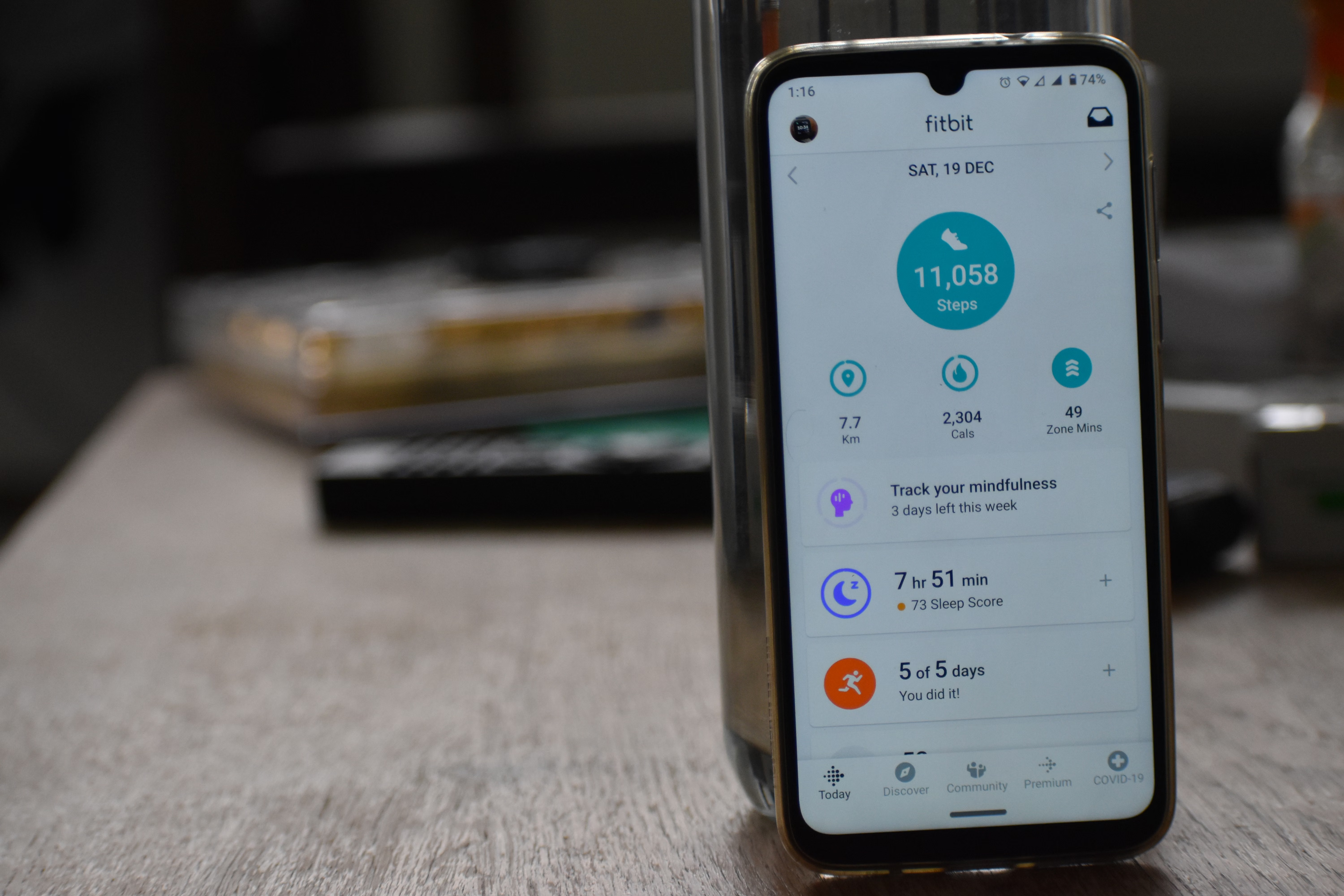
Google is rolling out version 5.05 of its health application, introducing a direct integration feature that allows users to pipe their Fitbit workouts, daily step counts, and core vital signs straight into Apple Health. Previously, bridging this data gap required clunky, third-party bridge software that often demanded paid subscriptions or frequently dropped synchronization. With the fresh update, users simply tap their profile icon inside the application, navigate to a designated partner connections menu, and authorize the direct link to Apple's native health database. This technical shift marks a major departure from past ecosystem locking strategies, offering consumers smoother daily tracking without forcing them to abandon one brand for another.
WHO ARE THE KEY PLAYERS
Google is the multinational technology giant headquartered in Mountain View, California, that currently owns and operates the Fitbit brand following a multi-billion-dollar acquisition. Apple is the consumer electronics behemoth based in Cupertino, California, that designs the iPhone and manages the proprietary Apple Health data ecosystem. Fitbit is the wearable technology pioneer known for manufacturing fitness bands and smartwatches.
UNDERSTANDING THE LOCATION
Silicon Valley, located in the San Francisco Bay Area of Northern California, serves as the global heartbeat for both Google and Apple. This high-tech corridor is where major software updates and proprietary operating system architectures are engineered, tested, and deployed to billions of devices worldwide.
BACKGROUND AND CONTEXT
Historically, major technology companies built walled gardens to keep consumer data within their respective hardware ecosystems. When Google finalized its acquisition of Fitbit, regulatory watchdogs closely monitored whether the tech giant would restrict hardware compatibility. For years, syncing Fitbit records to Apple's health hub meant relying on developer workarounds or auxiliary bridging tools, which annoyed consumers who preferred Android trackers paired with iPhones.
EXPLAINING IMPORTANT REFERENCES
Apple Health is a centralized digital repository built into Apple mobile devices that aggregates wellness records from various physical sensors, medical charts, and third-party apps. A partner application permission menu is a security authorization screen that lets users grant explicit consent for one software program to read or write data inside another program's secure database.
IMPACT ANALYSIS
This update removes a persistent friction point for consumers who mix and match smartphone and wearable brands. Health-conscious individuals can now maintain a unified log of their daily physical activity without losing historical metrics when switching hardware. For the broader consumer technology market, this move signals a growing acknowledgment that forced ecosystem lock-in can alienate users in competitive segments.
WHAT HAPPENS NEXT
As the version 5.05 update propagates globally across app distribution platforms, adoption rates will likely climb as users discover the streamlined setup process. Industry analysts will watch to see if Google extends similar native integrations to other competing health platforms or introduces deeper two-way synchronization features in future firmware cycles.
HERO PERSPECTIVE
Google's rollout of version 5.05 directly resolves a long-standing interoperability barrier by introducing a native partner-app link inside the mobile interface. By tapping the profile icon and selecting Apple Health, users bypass the third-party middleware that previously complicated multi-device fitness tracking. This architectural shift provides a practical blueprint for cross-platform data sharing without compromising user permission controls.
CLOSING
The arrival of native cross-platform synchronization demonstrates that consumer demand for open data sharing can successfully reshape software development strategies among major technology firms.