
HEADLINE
Kazakhstan releases first tiger into the wild in 70 years
OPENING HOOK
After more than seventy years of complete absence from Central Asian ecosystems, a top apex predator has stepped back onto the landscape in a landmark conservation milestone.
WHAT HAPPENED
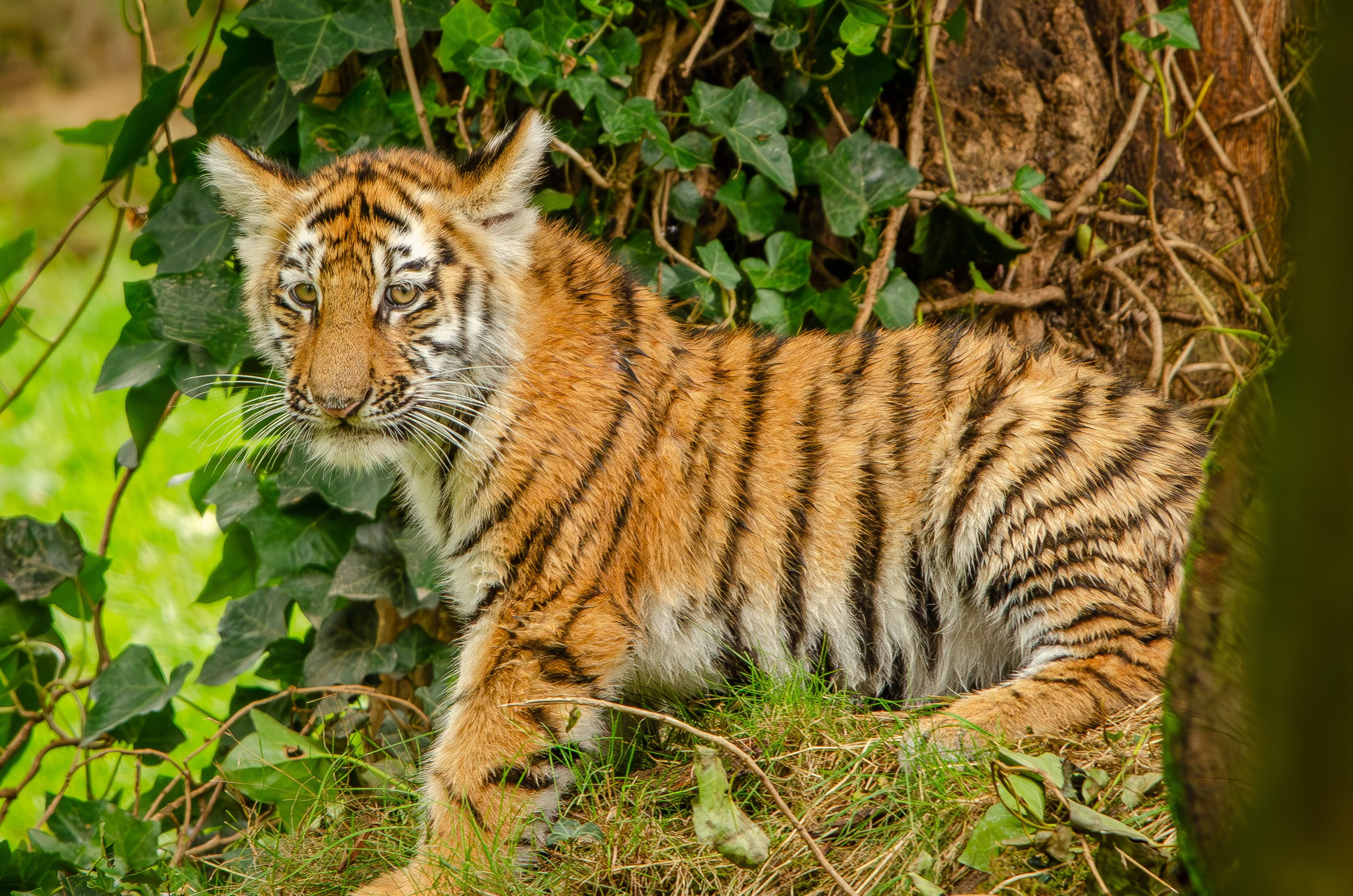
On July 31, 2026, an adult female Amur tiger named Umit bounded from a pickup truck into the wilderness of southeastern Kazakhstan, marking the first time a tiger has been released into the wild in the country in over seven decades. The last confirmed sighting of a Caspian tiger in Kazakhstan occurred generations ago before the subspecies was driven to extinction by human hunting and habitat loss. The newly released tigress, whose name means “hope” in the Kazakh language, was introduced to the sprawling 450,000-hectare Ile-Balkhash State Nature Reserve. According to a government statement released on August 3, 2026, conservationists fitted Umit with a high-tech satellite tracking collar to monitor her spatial movements, hunting success, and adaptation behavior in real time.
WHO ARE THE KEY PLAYERS
Umit the Amur tiger is the central subject of the reintroduction initiative, serving as the pioneer feline monitored via satellite collar by wildlife experts. The Government of Kazakhstan manages the overall national territory and issued the official August 3 statement detailing the release protocols within state-protected lands. Field ecologists and conservation scientists attached to the Ile-Balkhash State Nature Reserve execute the daily monitoring and habitat protection protocols.
UNDERSTANDING THE LOCATION
Ile-Balkhash State Nature Reserve spans 450,000 hectares, roughly equivalent to 1.1 million acres, situated in southeastern Kazakhstan near Lake Balkhash. The reserve features dense tugai riverine forests, vast reed beds, and wetland ecosystems designed to mimic the historical natural habitat of the region's native predators and prey species such as wild boars and deer.
BACKGROUND AND CONTEXT
Historically, the Caspian tiger roamed across Central Asia, including parts of Kazakhstan, until agricultural expansion, commercial hunting, and the systematic clearing of riverbank forests decimated populations by the mid-20th century. The global conservation community, in partnership with the Kazakh government, spent years restoring local prey bases and rehabilitating the natural environment to prepare for this multi-decade reintroduction strategy.
EXPLAINING IMPORTANT REFERENCES
The Amur tiger, also known as the Siberian tiger, is a closely related subspecies used as a functional surrogate for the extinct Caspian tiger in this restoration project. A satellite tracking collar is an electronic device attached to an animal's neck that transmits global positioning system coordinates via satellite to researchers, allowing them to track the animal's location without direct visual contact.
IMPACT ANALYSIS
This reintroduction signals a major step forward for global biodiversity restoration, proving that large-scale mammal rewilding can succeed when governments and conservation groups commit long-term resources. Ecologically, the presence of an apex predator helps control herbivore populations, thereby stabilizing vegetation growth and maintaining a balanced riverine ecosystem. Economically, the initiative could boost eco-tourism in rural parts of southeastern Kazakhstan, creating local jobs in guiding, hospitality, and park administration.
WHAT HAPPENS NEXT
Wildlife biologists will closely track Umit's telemetry data over the coming months to assess how well she hunts and navigates her new territory. Conservation authorities plan to evaluate the success of this initial release before deciding on subsequent translocations of additional tigers into the reserve.
HERO PERSPECTIVE
Umit, an adult female Amur tiger, leapt from a pickup truck into the 450,000-hectare Ile-Balkhash State Nature Reserve on July 31, 2026, wearing a satellite tracking collar. Her release marks the first time a tiger has roamed the wild in Kazakhstan since the last confirmed sighting over seventy years ago, as detailed in the Kazakh government statement issued on August 3, 2026.
CLOSING
The return of the tiger to Kazakhstan demonstrates that long-term ecological restoration can reverse historical environmental losses, paving the way for a more balanced and biodiverse future in Central Asia.