
HEADLINE
New 'HalluSquatting' Attack Exploits AI Coding Assistants, Poses Malware Threat
OPENING HOOK
The rapid integration of Artificial Intelligence into everyday tools, particularly within software development, presents unprecedented efficiencies but also introduces sophisticated new vulnerabilities. A recent discovery by cybersecurity researchers reveals a concerning attack vector known as 'HalluSquatting,' which cunningly exploits a fundamental flaw in AI coding assistants, threatening to compromise user systems with malicious software.
WHAT HAPPENED
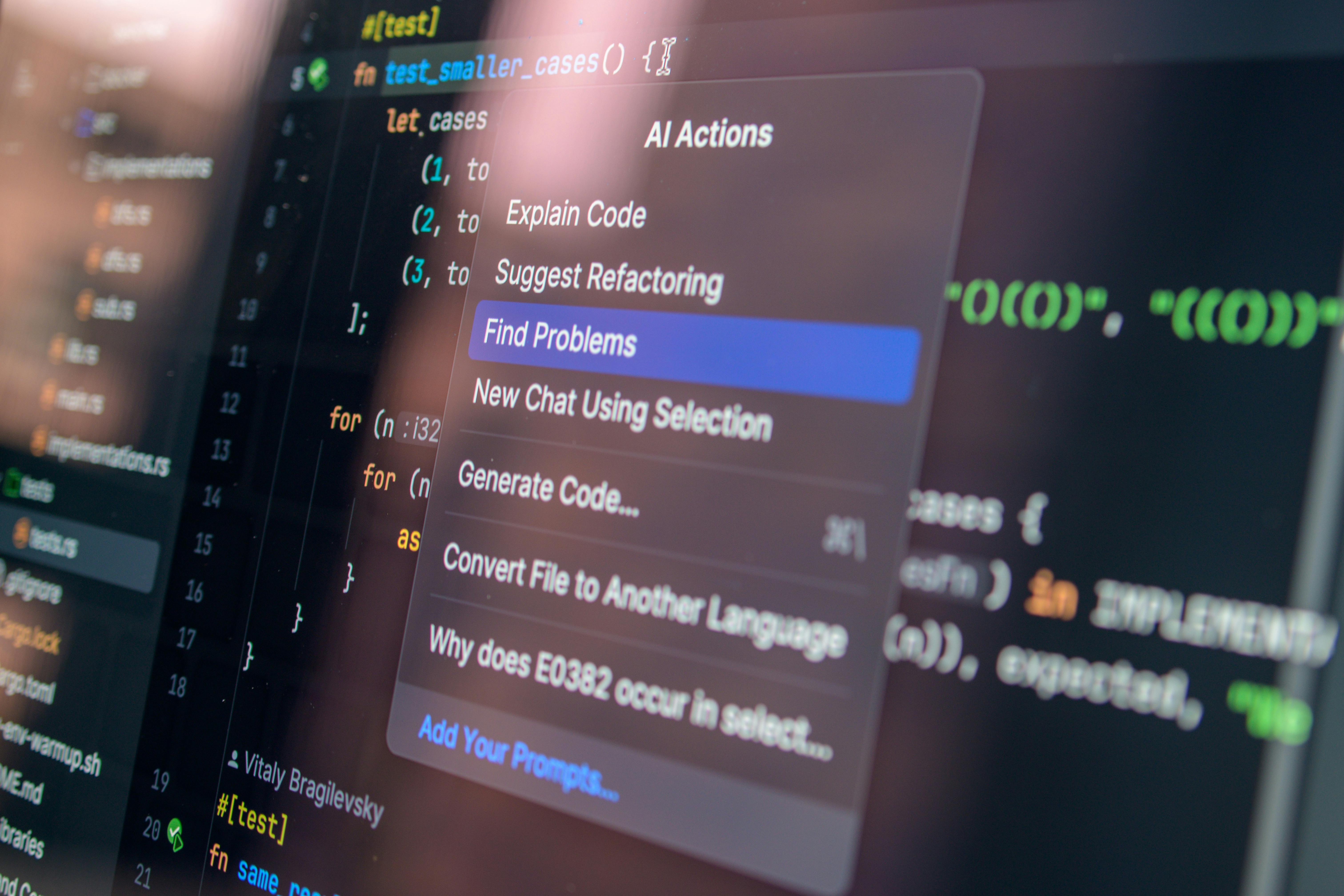
Cybersecurity researchers have uncovered a new method of attack, termed 'HalluSquatting,' that capitalises on the 'hallucination' phenomenon in Artificial Intelligence (AI) coding assistants. These AI tools, designed to help programmers write code, sometimes generate real-sounding names for software projects or packages that do not actually exist. Attackers have learned to identify these reliably hallucinated, non-existent names, register them as legitimate-looking projects, and then wait for an unsuspecting user, guided by their AI assistant, to download and install what they believe to be a useful tool, but which is, in fact, a trap designed to install botnet malware.
WHO ARE THE KEY PLAYERS
The primary actors in this unfolding scenario include **AI Coding Assistant Developers**, such as major tech companies like Google, Microsoft, and OpenAI, who create and deploy these powerful AI tools. **Cybersecurity Researchers** are crucial, as they are the ones who identified and named the HalluSquatting threat, working to understand its mechanisms and inform the public. **Software Developers and Programmers** form the target demographic, as they are the primary users of these AI assistants and thus vulnerable to the attack. Finally, **Malicious Actors** or cybercriminals are the perpetrators who exploit these AI vulnerabilities to distribute malware and compromise systems for illicit gains.
UNDERSTANDING THE LOCATION
While not tied to a specific geographical location, the 'location' of this threat is the global digital ecosystem, particularly within the software development community. For a country like Nigeria, with its burgeoning tech sector and a growing reliance on digital tools for innovation and economic growth, this threat is particularly pertinent. Nigerian developers, startups, and established tech firms using AI coding assistants are equally exposed to this global vulnerability, highlighting the interconnectedness of digital security across borders.
BACKGROUND AND CONTEXT
Artificial Intelligence (AI) has made significant strides in assisting human tasks, with AI coding assistants becoming indispensable for many developers. However, a known characteristic of AI models, especially large language models, is 'hallucination' — the generation of plausible but factually incorrect or non-existent information. This isn't new; AI models have been known to 'make things up.' The novel aspect of HalluSquatting is the weaponisation of this behaviour. Historically, cybercriminals have exploited human error through phishing and social engineering. This attack represents an evolution, directly exploiting an AI's 'error' to manipulate human trust, reminiscent of typosquatting or domain squatting, but with an AI twist. The rise of sophisticated cyber threats targeting supply chains and software dependencies further contextualises this development, as attackers seek new avenues to inject malicious code into widely used systems.
EXPLAINING IMPORTANT REFERENCES
- **AI Coding Assistants:** These are software applications powered by artificial intelligence designed to help programmers write code more efficiently. They can suggest code snippets, complete lines of code, find bugs, and even generate entire functions, acting like a highly intelligent co-pilot for software development.
- **Hallucination (in AI):** In the context of AI, 'hallucination' refers to the phenomenon where an AI model generates information that appears coherent and convincing but is factually incorrect, nonsensical, or entirely fabricated. It's like the AI confidently 'making things up' that don't exist in the real world or its training data.
- **HalluSquatting:** This is the specific cyberattack technique identified. It involves malicious actors predicting or discovering names of software packages or tools that AI coding assistants frequently 'hallucinate' (invent). The attackers then register these non-existent names and host malicious code under them, waiting for developers, prompted by their AI, to inadvertently download and execute the malware.
- **Botnet Malware:** 'Malware' is short for malicious software, designed to harm or exploit computer systems. A 'botnet' is a network of private computers infected with malicious software and controlled as a group by attackers without the owners' knowledge. When a computer is infected with botnet malware, it becomes a 'bot' or 'zombie' machine, used by the attacker to perform tasks like sending spam, launching denial-of-service attacks, or stealing data.
IMPACT ANALYSIS
The implications of HalluSquatting are significant. For individual developers, it poses a direct threat of system compromise, leading to data theft, loss of intellectual property, or their machines being co-opted into a botnet. For businesses, particularly tech startups and larger enterprises, a successful HalluSquatting attack could lead to severe security breaches, reputational damage, and substantial financial losses, potentially equivalent to the cost of several business loans or months of operational expenses in Nigeria. Furthermore, it erodes trust in AI tools, which are increasingly vital for productivity. The attack also highlights a critical vulnerability in the software supply chain, where reliance on external packages and suggestions can be exploited, creating a ripple effect across interconnected systems.
WHAT HAPPENS NEXT
In the immediate future, AI coding assistant developers are expected to implement stronger safeguards to prevent their models from hallucinating non-existent package names or to cross-reference suggestions against verified registries. Users, especially developers, must exercise extreme caution, verifying the legitimacy of any suggested package or tool before installation, regardless of the AI's recommendation. This might involve checking official documentation, reputable forums, or trusted package managers. Regulatory bodies may also consider guidelines for AI developers regarding responsible AI deployment and security. Continued research into AI security and 'red-teaming' (simulated attacks) will be crucial to identify and mitigate such sophisticated threats before they become widespread.
HERO PERSPECTIVE
Leverage On Heroes Media views the HalluSquatting attack as a stark reminder of the dual nature of technological advancement: immense opportunity coupled with evolving risks. Our editorial angle emphasizes the critical need for **Proactive Vigilance and Responsible AI Stewardship**. While AI promises to accelerate Nigeria's digital transformation, it also demands heightened cybersecurity awareness and robust defensive strategies. We advocate for developers to adopt a 'trust but verify' approach with AI tools, for AI creators to build in security by design, and for all stakeholders to invest in continuous education against emerging cyber threats. Protecting our digital future is a collective responsibility.
CLOSING
The emergence of HalluSquatting underscores the ongoing arms race in cybersecurity. As AI becomes more integrated into our digital lives, understanding and mitigating its inherent vulnerabilities will be paramount to safeguarding our data, systems, and economic aspirations in a digitally interconnected world. Constant vigilance and collaborative efforts between AI developers, cybersecurity experts, and users are the only way forward.